
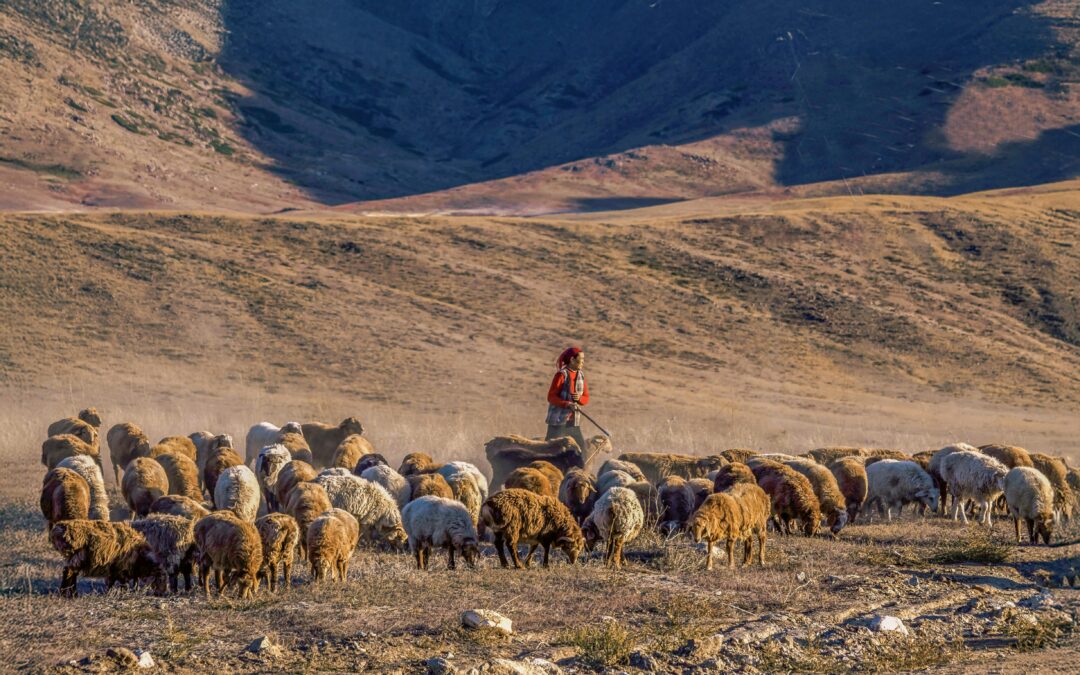
Picture © Man Fong Wong
On 11 February 2026, the Agroecology Coalition and the International Land Coalition co-organized the webinar “Agroecology & land: the role of pastoralists to protect land and combat desertification” The session brought together grassroots leaders, civil society organizations, and international institutions to highlight the essential role of pastoralist systems in restoring land, strengthening climate resilience, and advancing land justice, particularly in the lead-up to UNCCD COP17 and during the International Year of Rangelands and Pastoralists (IYRP 2026).
Rangelands Are Not Wastelands
Opening the session, Monicah Yator, Founder of Indigenous Women and Girls Initiative and co-chair of the Agroecology Coalition, called for global recognition of rangelands as vital ecosystems—not “wastelands.” She underscored their importance for climate resilience and biodiversity and emphasized the gender dimension of land restoration. Indigenous women, she noted, are custodians of seeds, livestock systems, and ecological knowledge, and must be central to restoration efforts.
Pastoralism as a Climate Solution
Najim Ataka of Réseau Billital Maroobè (RBM) presented a new initiative: “Safe and Sustainable Pastoralism as a Bold Agroecological Climate Solution.” For centuries, pastoralism has sustainably managed arid lands in West Africa that are often labeled unproductive.
Yet pastoralist systems are increasingly threatened by land conflicts and insecure tenure. Despite these challenges, pastoralism remains a powerful agroecological solution for climate adaptation. Mobility, its defining feature, prevents land degradation, enhances resilience in drylands, and supports biodiversity. The RBM project seeks to document and classify pastoral practices, strengthen supportive policies, build a community of practice, and ensure that innovation complements rather than replaces indigenous knowledge.
COP17: A Political Moment for Rangelands
Marcos Montorio from the UNCDD Secretariat highlighted the significance of UNCCD COP17, taking place on 17–28 August 2026 in Ulaanbaatar, Mongolia. As the first of the three Rio Conventions to meet this year, COP17 provides a critical opportunity to align land, climate, and biodiversity agendas.
A landmark decision adopted at the previous COP marked the first time that all 197 Parties committed to conserving, sustainably managing, and restoring rangelands, placing them alongside forests, wetlands, and croplands in global sustainability efforts. COP17 will focus on turning this commitment into action through stronger policies, inclusive governance, improved land tenure security, and meaningful participation of Indigenous Peoples, pastoralists, and local communities. The conference also aims to catalyze concrete initiatives for sustainable rangeland management as a lasting legacy.
Tunisia: Scaling Up Agroecological Restoration
Hamda Aloui from the Ministry of Environment of the Tunisian government focused on the growing threat of desertification in Tunisia, where much of the country is arid or semi-arid and increasingly affected by prolonged droughts. While communities have developed resilient water management practices enabling agriculture and livestock production with minimal water, degradation remains a serious concern.
Out of Tunisia’s 16 million hectares, around 2 million hectares show signs of degradation. In response, Tunisia is advancing a strategy grounded in agroecology and nature-based solutions, with plans to restore 200,000 hectares of degraded land. The upcoming Desertif’actions 2026 event in Djerba will further mobilize civil society engagement.
Burkina Faso: Land Justice Is Climate Justice
Lazare Dambatia Tagnabou from the Ministry of Environment, Green Economy and Climate Change of Burkina Faso, described how over 80% of Burkina Faso’s population depends on land, yet desertification is intensifying poverty and food insecurity. Pastoralists are often unfairly blamed for degradation, but their mobility strengthens resilience and supports biodiversity.
Burkina Faso’s agroecological practices demonstrate that agroecology is not merely a set of techniques but a systemic approach to restoring soils and communities. Looking ahead to COP17, the call is clear: recognize pastoralists’ contributions, secure land tenure, especially for women and youth, and increase funding for restoration. Land justice, he stressed, is a prerequisite for climate justice.
Mobility Matters
Khalid Khawaledh, from the Dana and Qadisiyah Local Community Cooperative – Jordan, and World Alliance Of Mobile Indigenous Peoples and Pastoralists (WAMIP) reinforced that pastoral systems are extensive, mobile, and adapted to environmental variability. They transform grasses and natural vegetation into nutritious food without competing with crops. Through seasonal mobility, pastoralists prevent overgrazing, fertilize soils, reduce wildfire risks, and maintain open landscapes.
Unlike industrial livestock systems, pastoralism is regenerative, place-based, and socially embedded. However, when mobility routes are restricted or pastoralists are marginalized, the system becomes fragile. Degradation often results not from pastoralism itself, but from constraints imposed upon it.
Natasha Maru, representing the Rangelands and Pastoralists expert at the International Land Coalition, introduced the Mobility Matters campaign. The initiative broadens the understanding of land rights to include rights to land, territory, and mobility. It seeks to influence national and global policies, strengthen grassroots’ voices, and develop indicators to assess tenure security and mobility for pastoralists, ensuring that mobility is fully recognized within land governance frameworks.
A Shared Call to Action
A common message emerged from the discussion: pastoralists are not drivers of degradation. They are stewards of resilience. Agroecology, rooted in indigenous knowledge and strengthened by supportive policy, offers a pathway to restore degraded lands, secure livelihoods, and combat desertification.
As the global community prepares for the UNCCD COP17, this webinar reaffirmed that bold decisions, inclusive governance, and investment in pastoralist-led solutions are essential to achieving land degradation neutrality and climate justice.