
Bio–input Resource Centres (BRCs)
India
Welthungerhilfe India supports the creation of Bio-input Resource Centers (BRCs): community-based rural enterprises and knowledge hubs that address barriers to adopting agroecological practices by making locally produced bio-inputs, technical guidance and demonstrations accessible to farmers. The model reduces dependence on externally purchased chemical inputs, while also creating local business opportunities and strengthening circular use of farm biomass and livestock resources.
Lead organizations
Organizations involved in the project include Welthungerhilfe (WHH), an international development and humanitarian organization working to end hunger and poverty. In India, WHH works with local civil-society partners on food-system transformation, agroecology, nutrition, natural-resource management and green livelihoods, with a strong focus on community leadership and strengthening local institutions.
Other organizations involved include Abhivyakti Foundation, PRAGATI, PRAVAH and WASSAN, the Indian civil-society partners of WHH’s Green Evolution program, of which BRC is a component. Farmer Field Schools, community institutions, local entrepreneurs and relevant government extension actors are also engaged in BRC promotion and farmer education.
Country
The project is implemented in India (Jharkhand and Odisha).
Funding
The project had a total budget of around EUR 1.5 million, funded by the German Federal Ministry for Economic Cooperation and Development (BMZ).
Context
Indian agriculture has long depended on externally purchased fertilizers and pesticides, leaving farmers, smallholders in particular, exposed to rising input costs, supply disruptions, and uneven access to technical advice. At the same time, agroecological and natural farming approaches are receiving increasing public-policy attention, and the Government of India’s National Mission on Natural Farming is taking steps to promote diversified, agroecology-based farming. The Mission proposes 10,000 need-based BRCs to produce and supply natural farming inputs locally through an enterprise model. BRCs therefore respond to both a farmer-level need for accessible alternatives and a wider policy opportunity to strengthen local, low-external-input farming systems.
Main beneficiaries
The initiative primarily benefits small and marginal farmers who need affordable and timely access to bio-inputs and practical guidance. It also supports rural youth, women farmers, local agroecology practitioners, self-help groups, Farmer Producer Organizations and other community-based entrepreneurs who can operate BRCs or develop related services.
Strategy
Objectives
- Using BRCs as local drivers of agroecological transformation by improving farmers’ access to affordable, quality bio-inputs and knowledge.
- Reducing dependence on external chemical inputs.
- Strengthening local circular economies.
- Creating viable rural green enterprises.
Activities
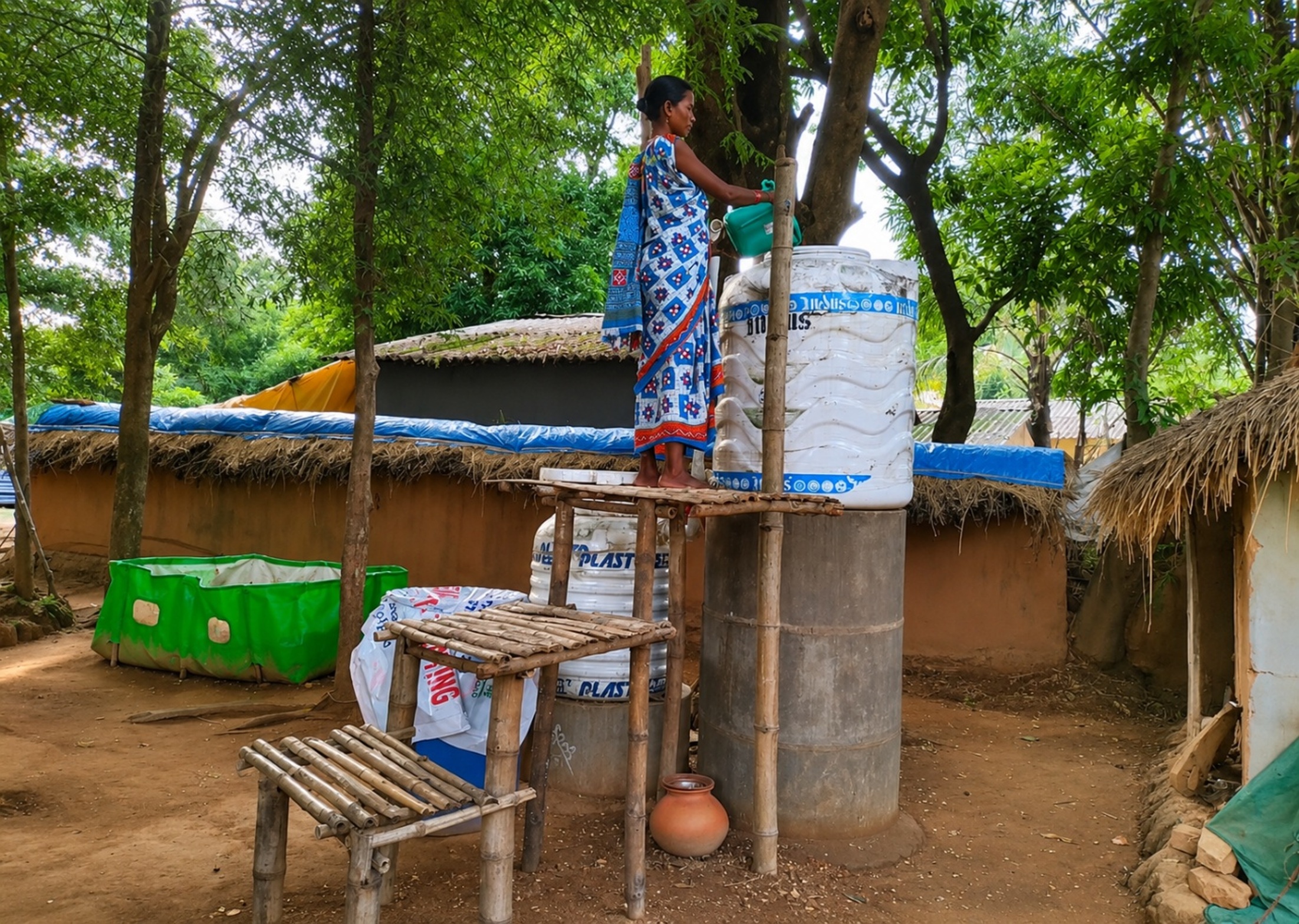
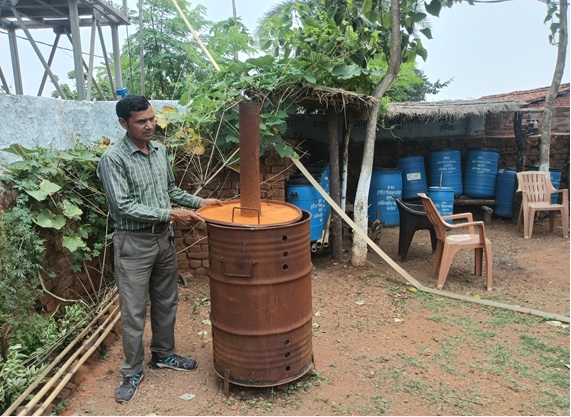
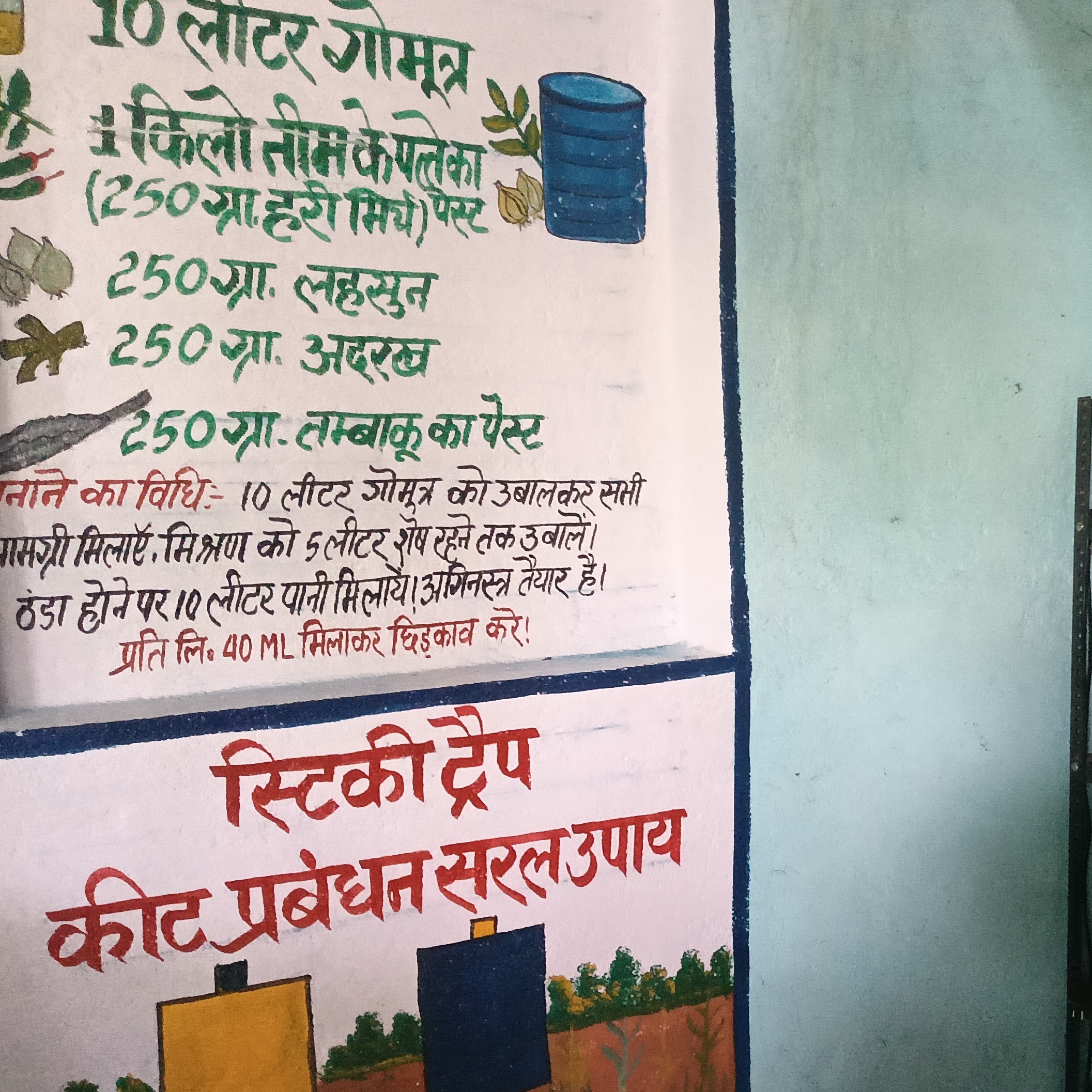
- Identifying and training BRC entrepreneurs and farmer trainers in the preparation, handling, storage and application of locally appropriate bio-inputs.
- Operating BRCs as local service hubs that produce and sell ready-to-use bio-inputs, provide seeds and seedlings where relevant, demonstrate preparation and use, and rent equipment such as sprayers and pest-management tools.
- Linking BRCs with Farmer Field Schools and demonstration farms, so that farmers can observe results and learn through practice.
- For WHH and partners, using field evidence, farmer demonstrations, and engagement with government extension actors to advocate for local bio-input systems and agroecological extension. This builds on India’s National Mission on Natural Farming, which proposes 10,000 need-based BRCs.
Results
- Depending on their maturity, each BRC entrepreneur with a diversified product portfolio can provide services to around 100-250 farmers and earn around Rs 7,500-25,000 per month.
- Field experience shows that, by reducing dependence on purchased chemical fertilizers and pesticides, locally produced bio-inputs can lower cultivation costs by around 30-40%. This figure should be treated as evidence of the program’s viability, and further consolidated through systematic monitoring.
- BRCs have also diversified into seedlings and nursery products, creating additional income streams and improving year-round viability.
- From January 2025 to September 2026, the Green Evolution program supported 30 BRCs in the states of Jharkhand and Odisha, each of which currently provides locally produced bio-inputs for around 150 acres of farmland.
Lessons learned
The project has demonstrated that farmers are willing to find and use alternative, organic fertilizers, often driven by economic necessity – when chemical fertilizers such as urea or DAP become scarce or unavailable, they rapidly switch to bio-inputs. The localized structure of BRCs thus protects farmers from volatile market prices, and prevents them from abandoning crops or facing severe yield loss when there is a shortage of chemical fertilizers. BRCs also allow the local micro-entrepreneurs, self-help groups, and Farmer Producer Organizations that run them to earn a good income. The project’s success has led to policy backing – the government has actively increased funding and credit support to expand BRC networks in order to ease the national fertilizer subsidy burden.
Limiting barriers
Adoption of agroecological principles in production faces a number of significant challenges. These include:
- Lack of exposure to and knowledge of different bio-formulations and bio-inputs.
- Lack of knowledge on handling, usage and storage of inputs.
- Limited direct support for farmers.
- Extra effort needed to locally produce bio-inputs, including the procurement of raw materials and their subsequent preparation.
- Maintaining quality of the prepared bio-inputs.
Quotes of participants
We can prepare these inputs ourselves using resources available in our village. This reduces our farming costs and helps us keep our soil healthy.
Before, I depended on daily labour. Now I run my own business, alone, with confidence. I feel independent. I feel that agriculture can truly change a person’s life if opportunities and guidance reach the right hands.
Hyperlinks
Contact
Anshuman Das, Welthungerhilfe India, Lead Expert, Agroecology and Food Systems, Anshuman.Das@welthungerhilfe.de
Pictures credits: WHH India
Main Principles and Elements featured: recycling, input reduction, co-creation of knowledge