Websites and Digital Tools
Explore Websites and Digital Tools on agroecology from our members below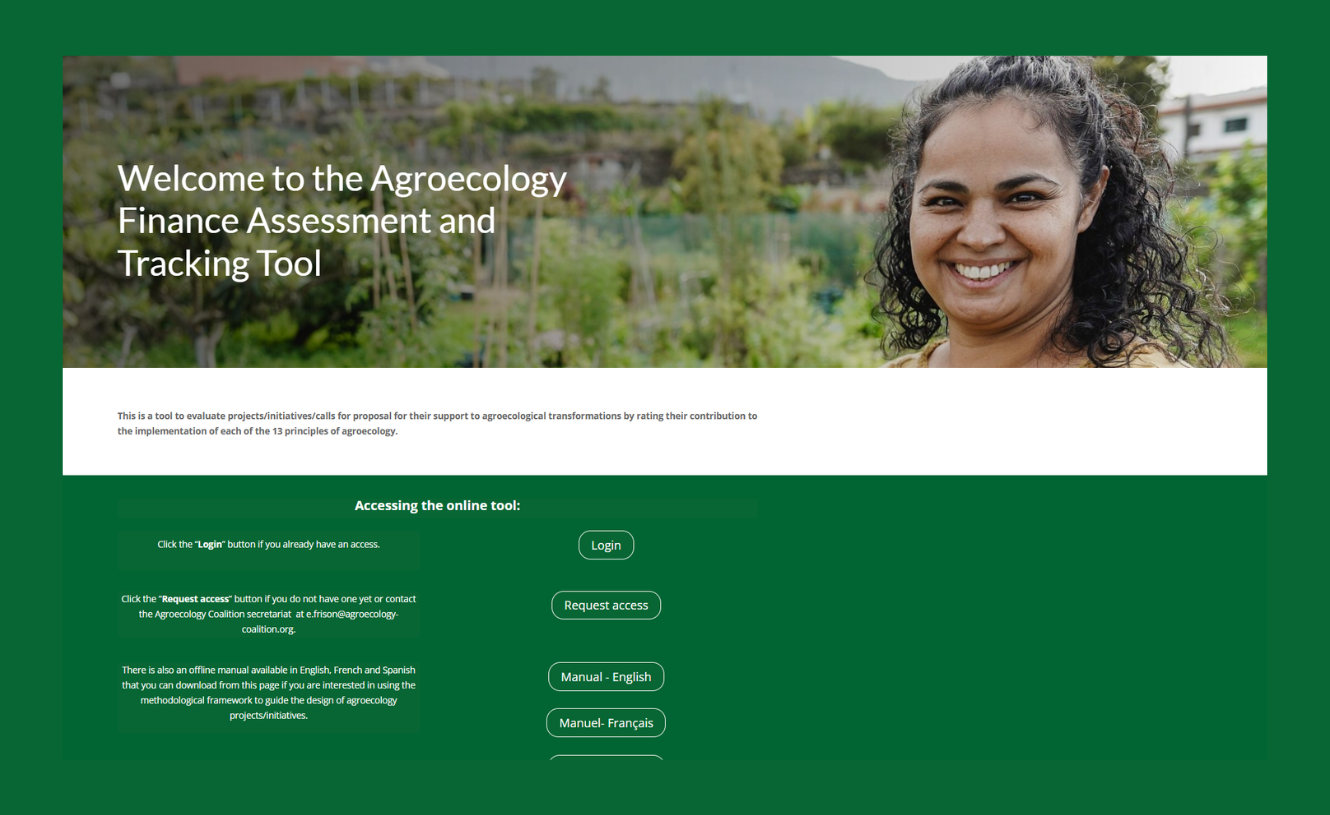
Agroecology Finance Assessment Tool
Agroecology Coalition
This is a tool to evaluate projects/initiatives/calls for proposal for their support to agroecological transformations by rating their contribution to the implementation of each of the 13 principles of agroecology.
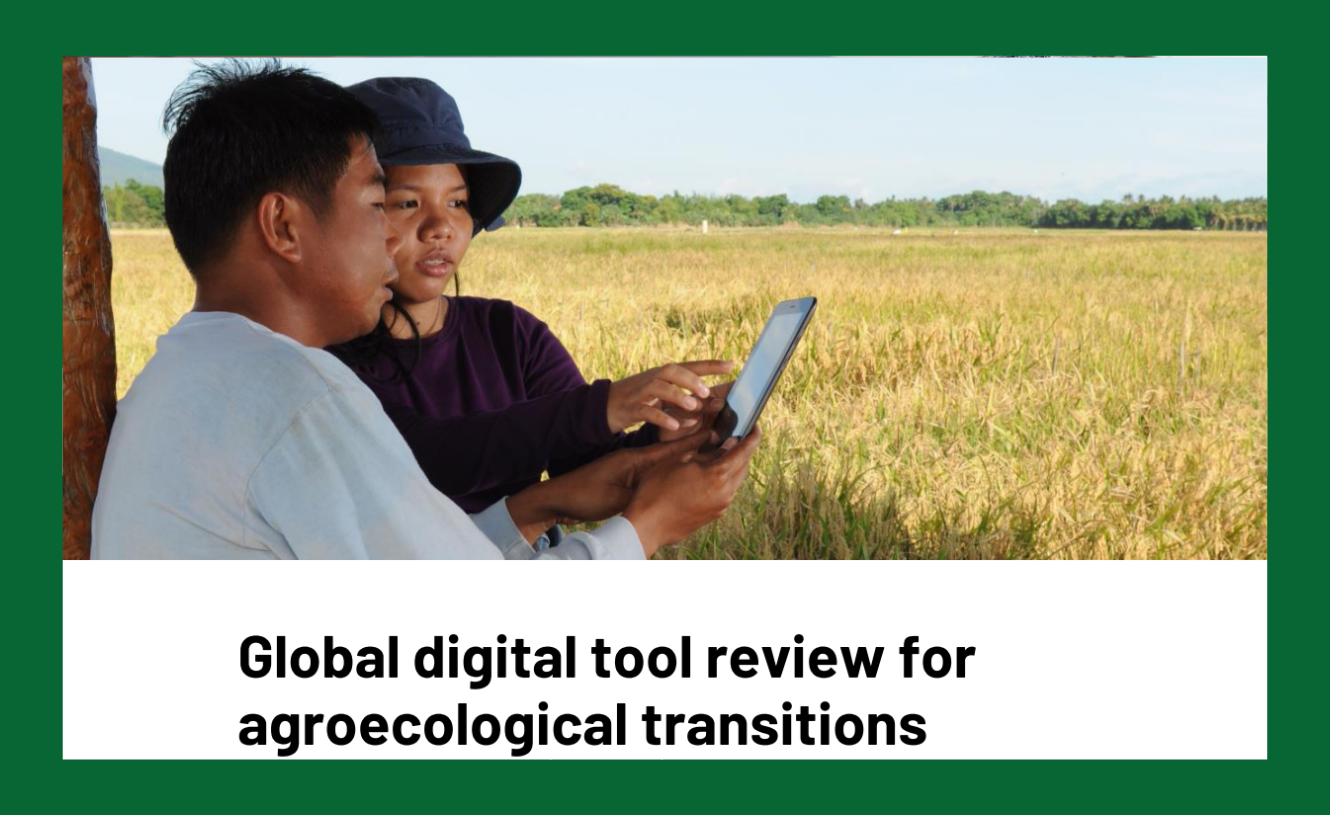
Global digital tool review for agroecological transitions
By Kyle M. Dittmer; Sadie Shelton; Sessie Burns; Eva (Lini) Wollenberg
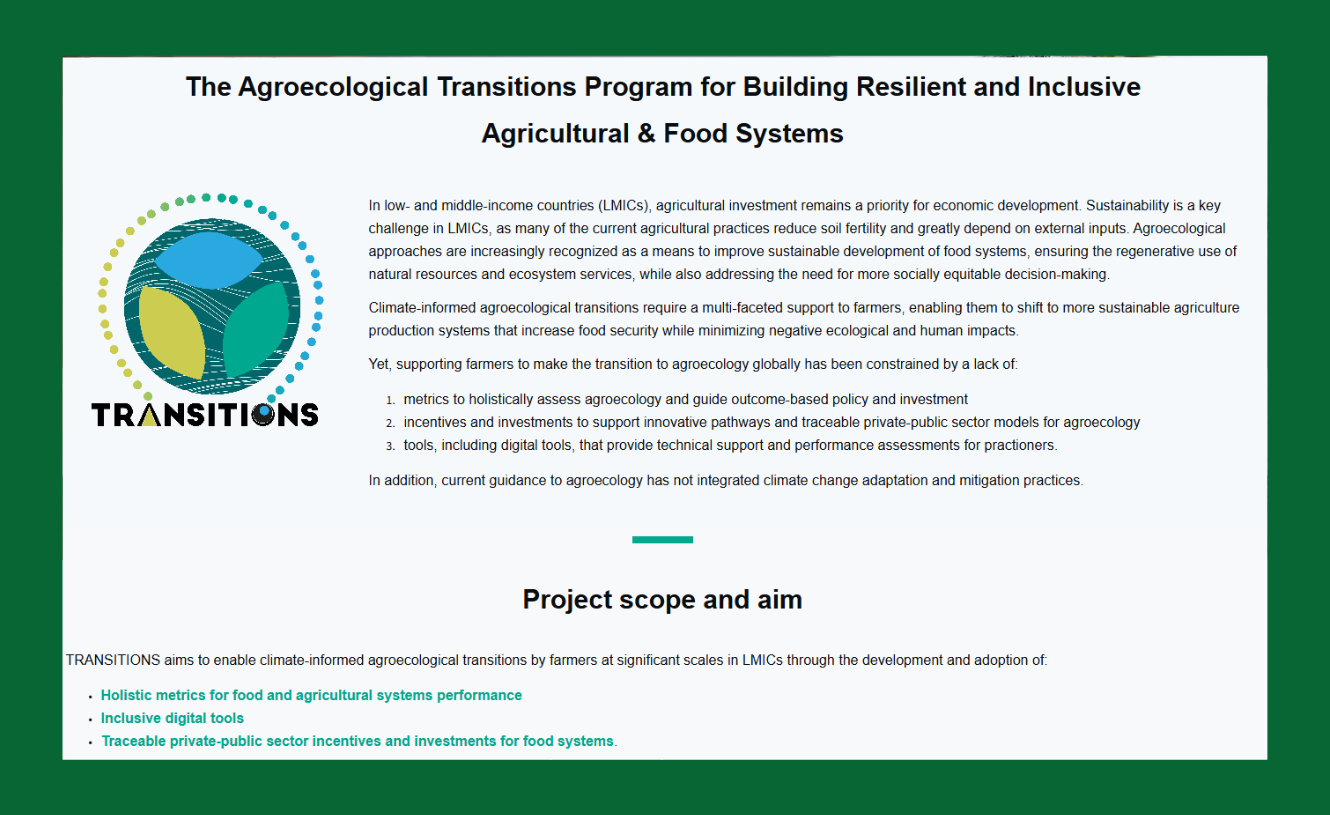
Agroecological TRANSITIONS Programme
Transitions
By The Alliance of Bioversity and CIAT, CIFOR-ICRAF, IRRI, IWMI, The Transformative Partnership Platform, University of Vermont
The Agroecological Transitions Program for Building Resilient and Inclusive Agricultural & Food Systems
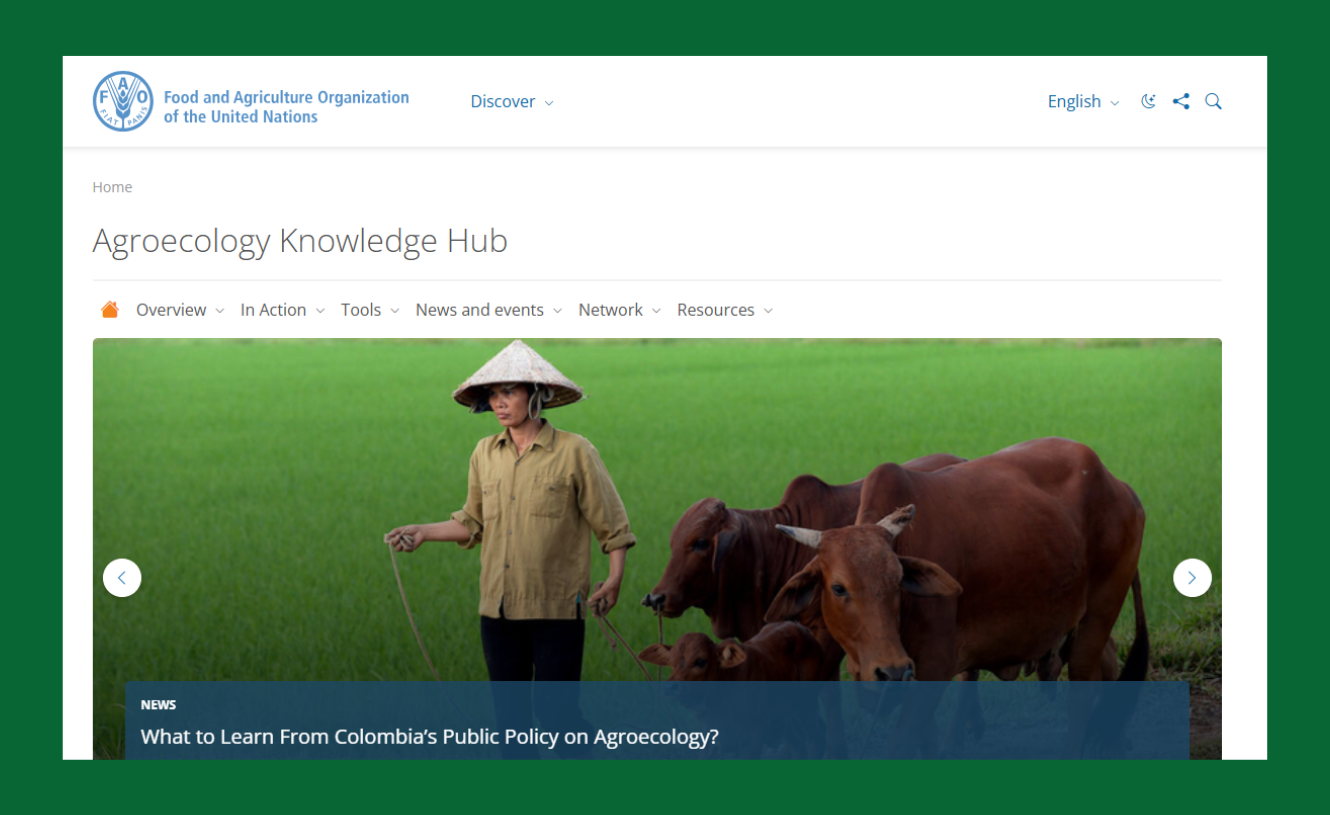
Agroecology Knowledge Hub
The Hub showcases evidence, policies, practices and science on agroecology. It also facilitates discussions via forums related to agroecology.
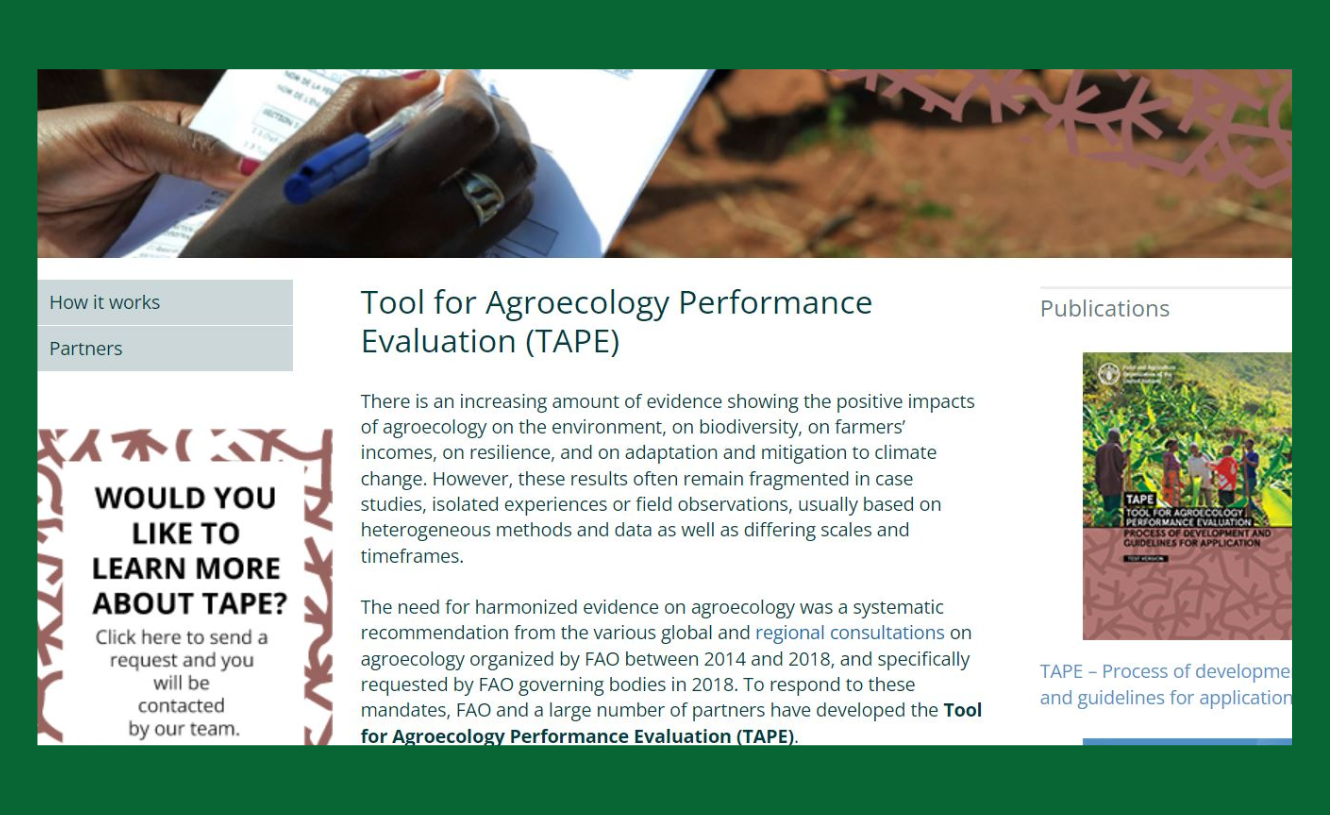
Tool for Agroecology Performance Evaluation (TAPE)
A comprehensive tool measuring the multi-dimensional performance of agroecological systems across the different dimensions of sustainability.
Knowledge Centre for Global Food and Nutrition Security
A knowledge center gathering various resources on agroecology.
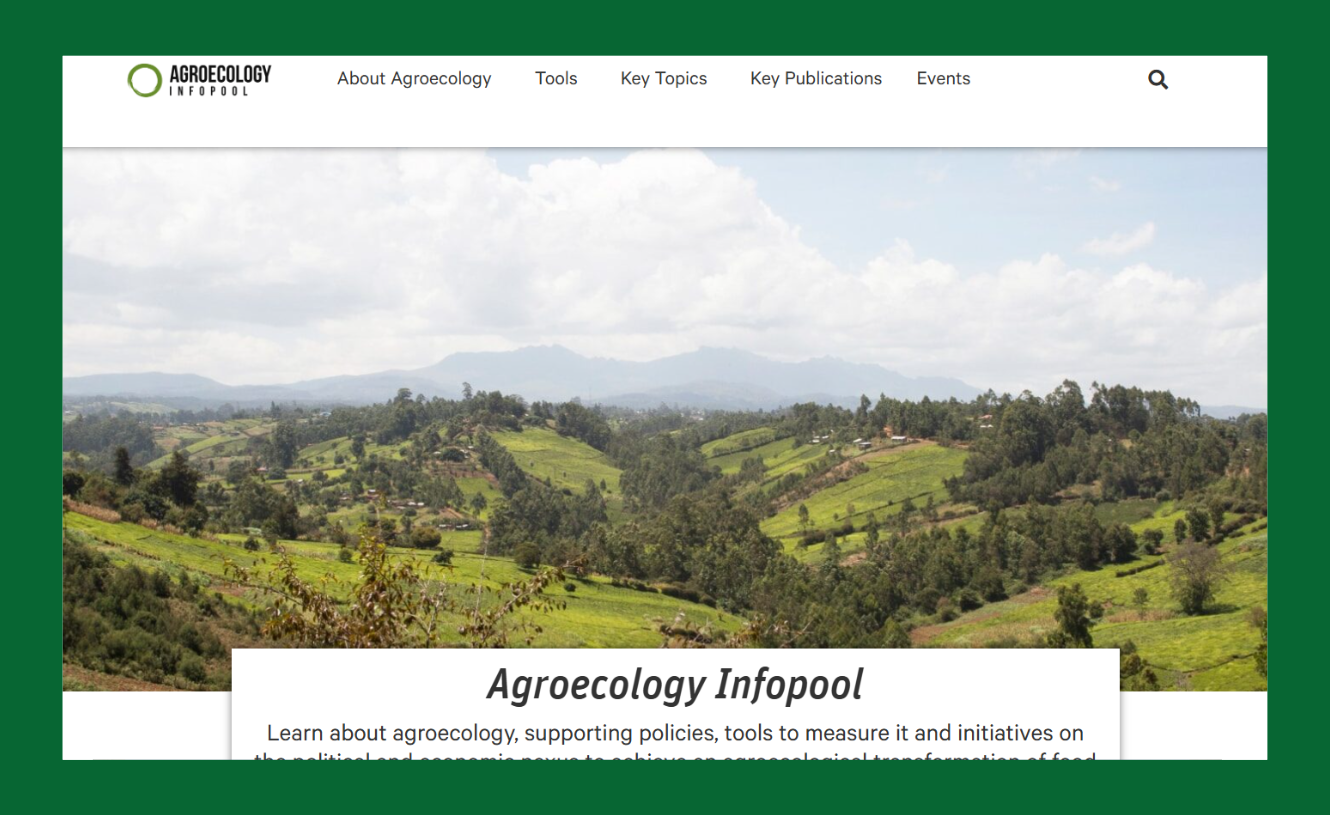
Agroecology Info pool
Convincing showcases, criteria tools to assess projects and in-depths analyses of Agroecology.
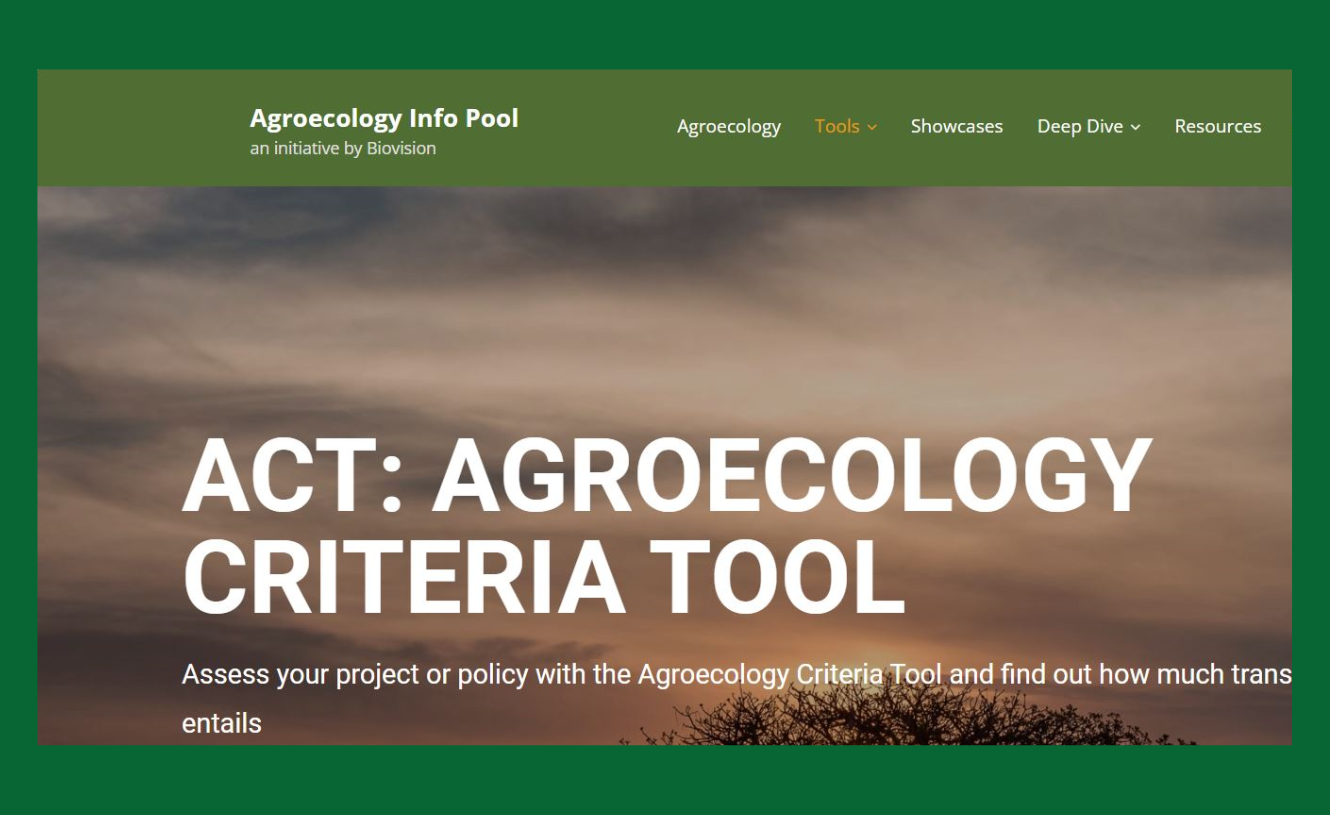
ACT: Agroecology Criteria Tool
A tool to assess projects or policies with the Agroecology Criteria Tool and find out how much transformative Agroecology they entail.
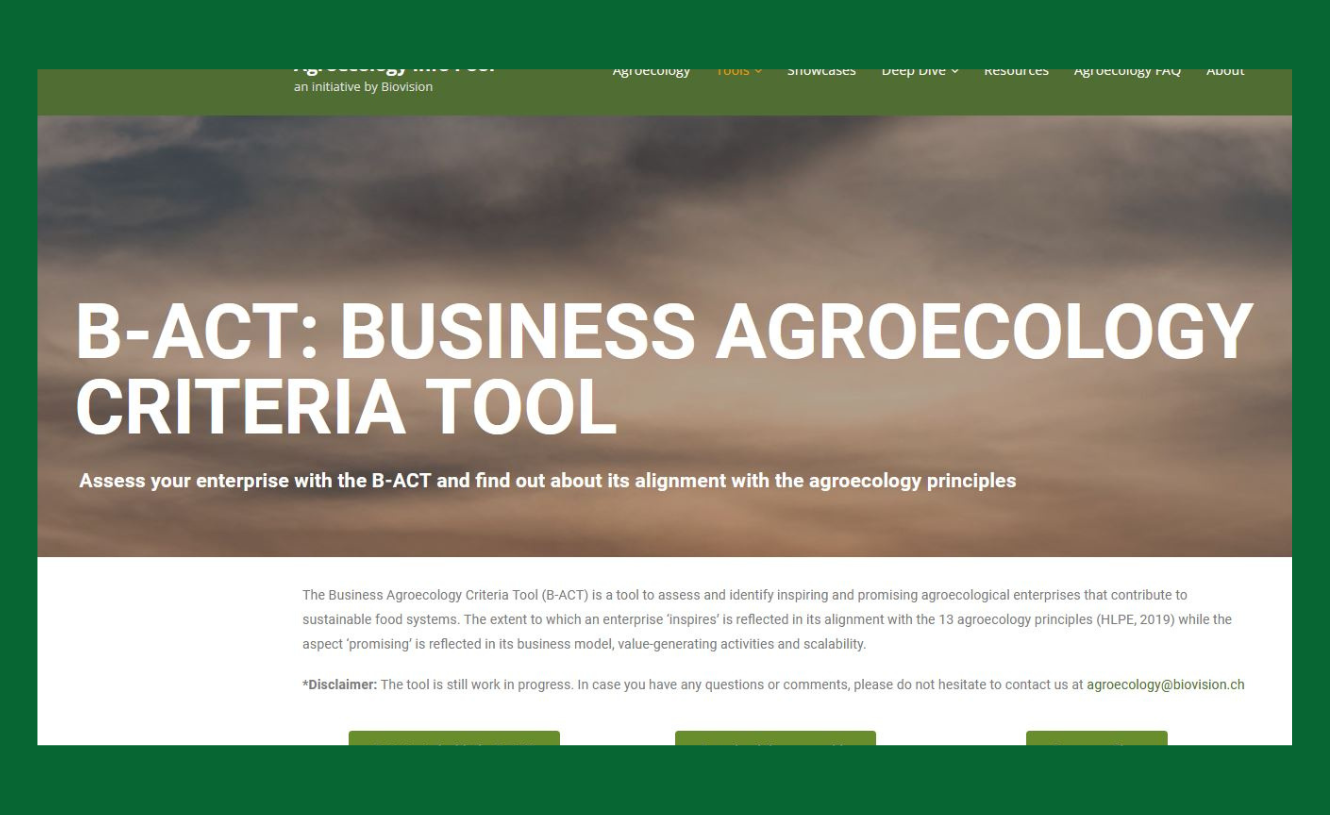
Business Agroecology Criteria Tool (B-ACT)
A tool to assess and identify inspiring and promising agroecological enterprises that contribute to sustainable food systems.
Agroecology TPP
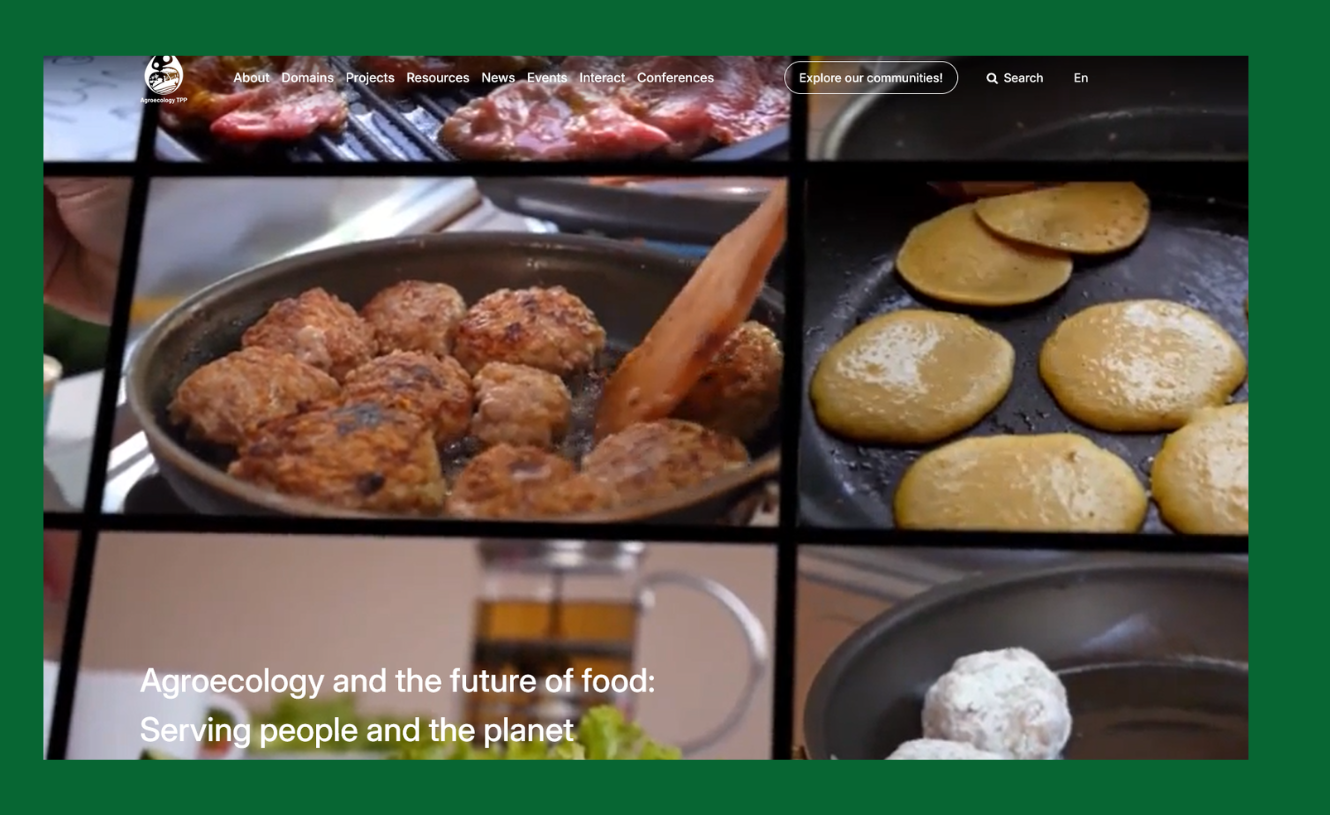
The Transformative Partnership Platform on Agroecological Approaches to Building Resilience of Livelihoods and Landscapes (Agroecology TPP) convenes a broad group of scientists, practitioners and policymakers working together to accelerate agroecological transitions to more sustainable agricultural and food systems.
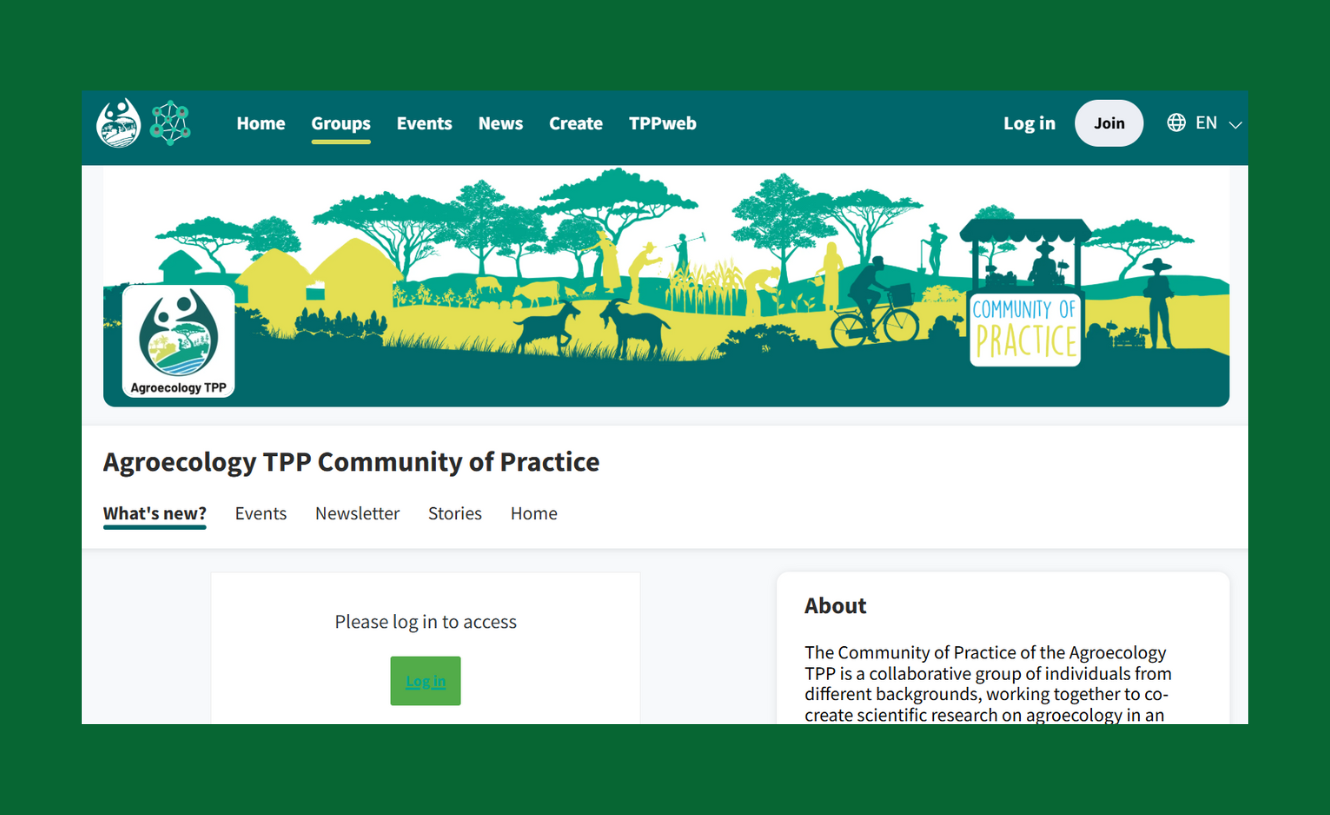
Agroecology TPP Community of Practice
The Community of Practice of the Agroecology TPP is a collaborative group of individuals from different backgrounds, working together to co-create scientific research on agroecology in an inclusive and transdisciplinary way.
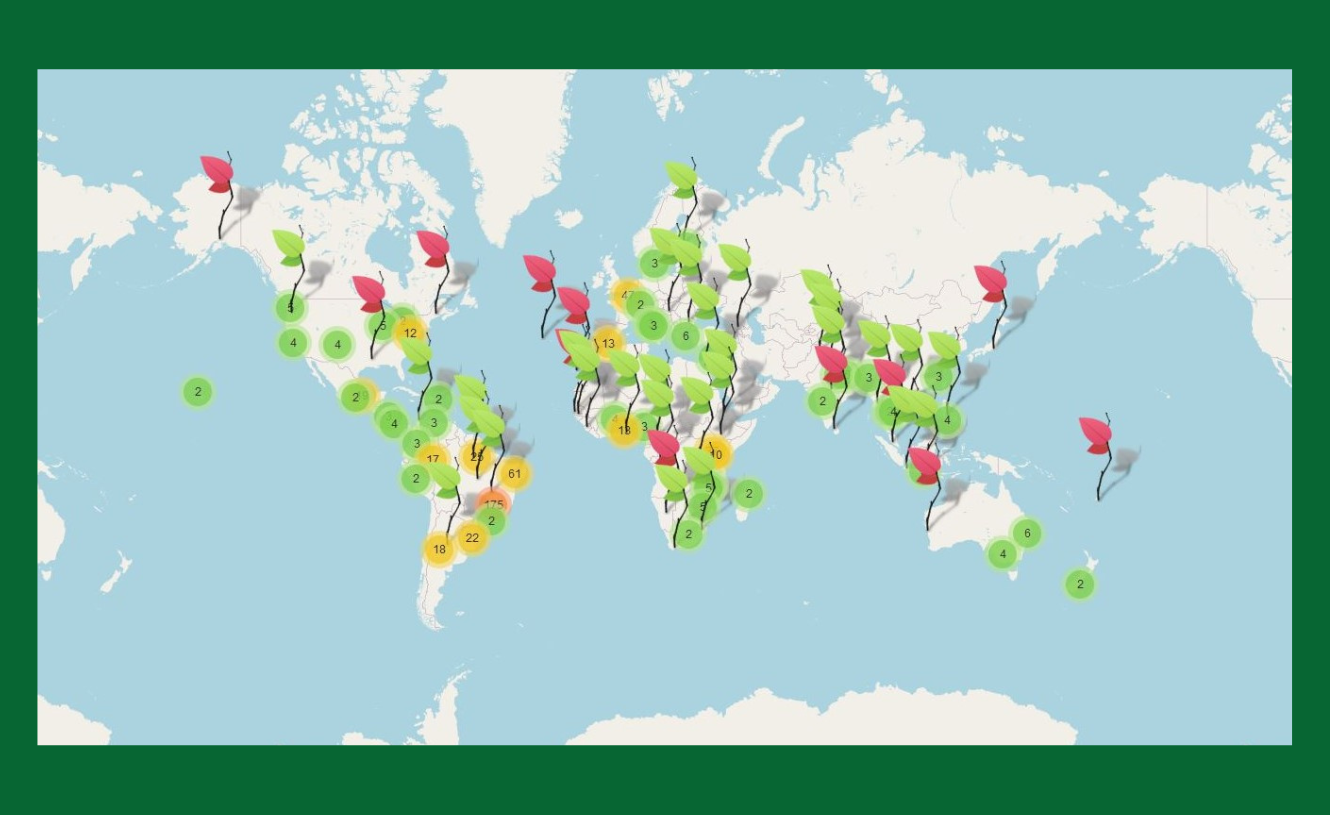
One Million Voices citizen science initiative
A citizens’ initiative giving a voice to all small-scale farmers who practice agroecology and to consumers.
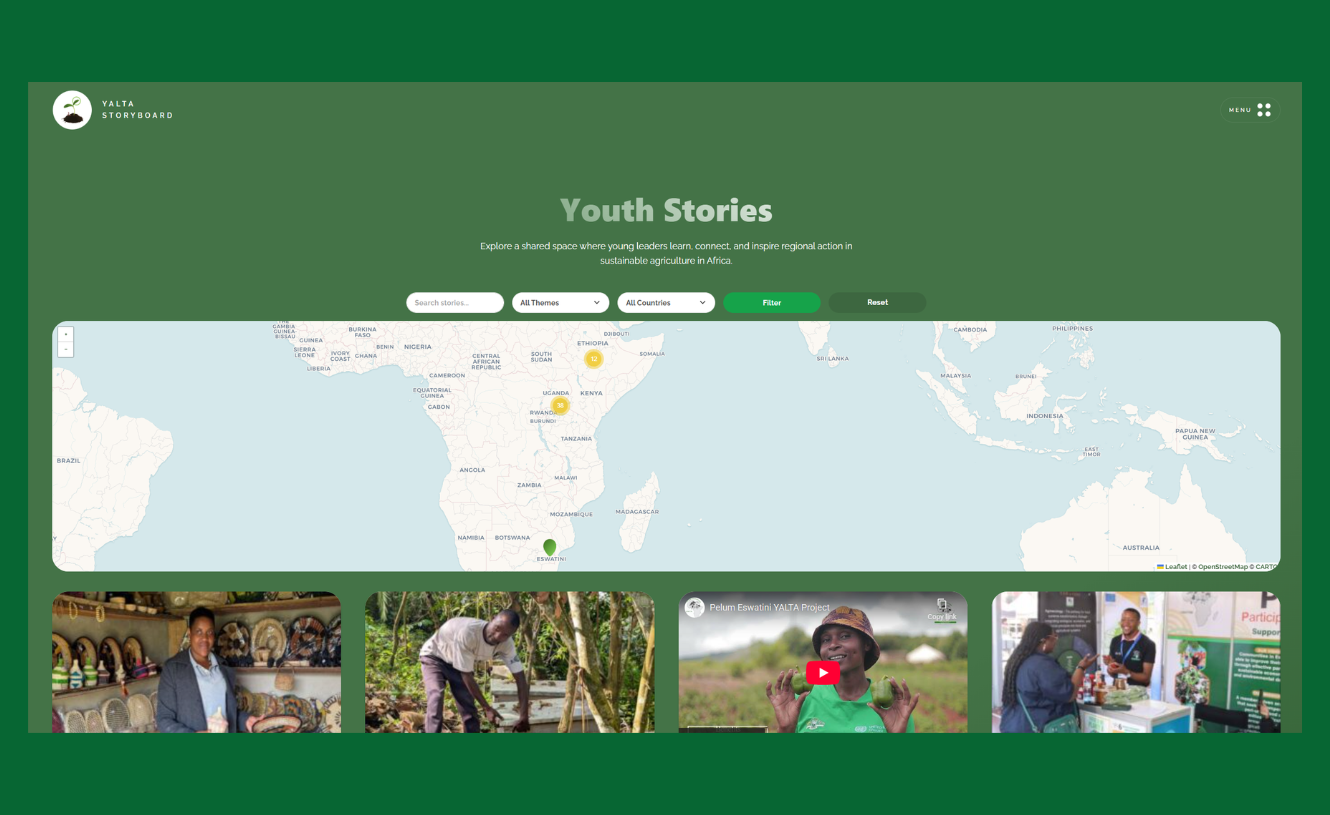
YALTA Story Board
by PELUM Association partnered with Netherlands Food Partnership
Food Forward NDCs
WWF, Climate Focus, NDC Partnership, Agroecology Coalition, CGIAR, FAIRR, Biovision, SRI-2030, UNEP
A guidance tool to support the enhancement and implementation of NDC ambitions for agriculture and food systems transformation
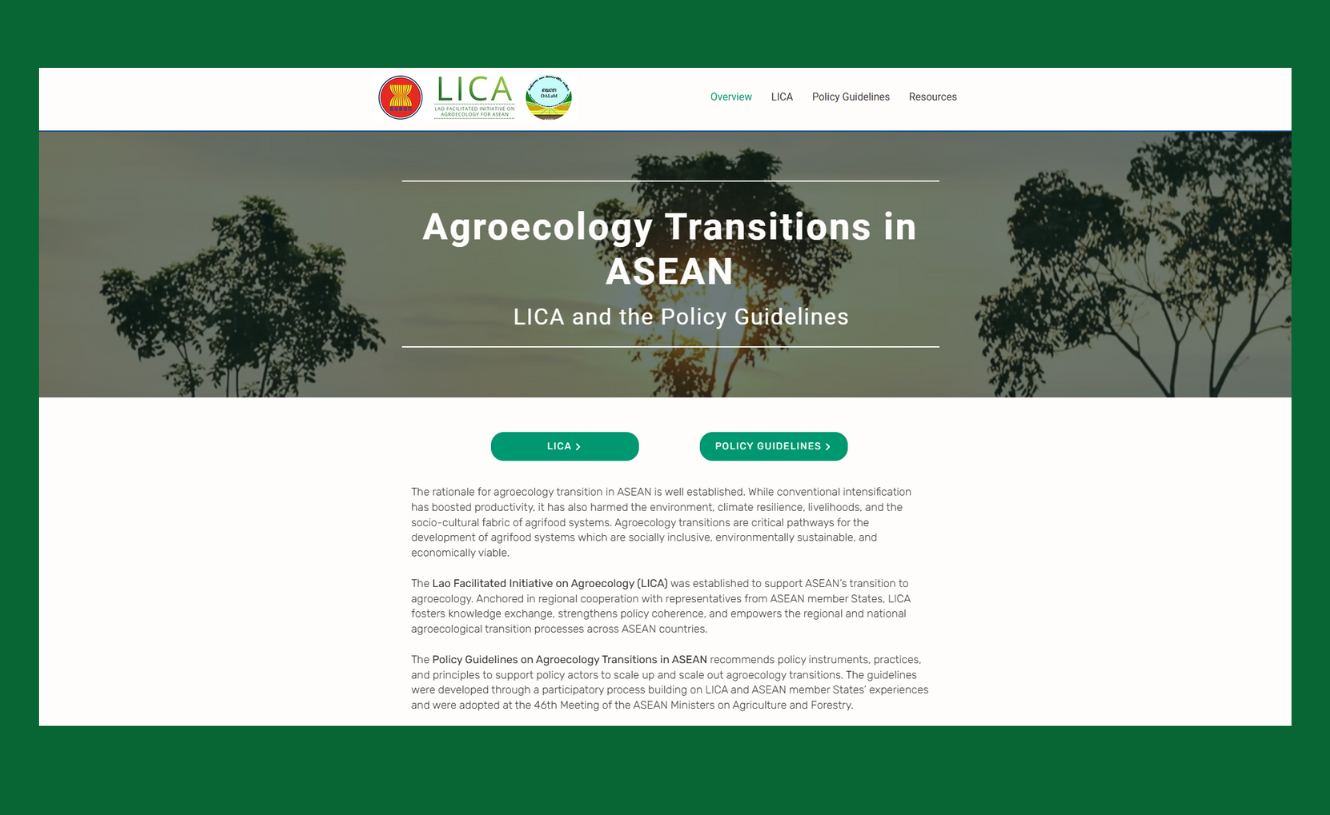
ASEAN Guidelines on Agroecology Transition
by the Lao Facilitated Initiative on Agroecology (LICA)

BOOST- AE: the collaborative platform on the agroecological transition
A collaborative platform for analyzing experiences, sharing knowledge and solutions, and methodological support, for agroecology adapted to countries in the South.
Agroecology for Europe (AE4EU)
A three-year project, aiming to enable a successful transition to agroecology through a strong development with ambitious and longer-term joint actions at the European level in research, innovation, networks, training and education
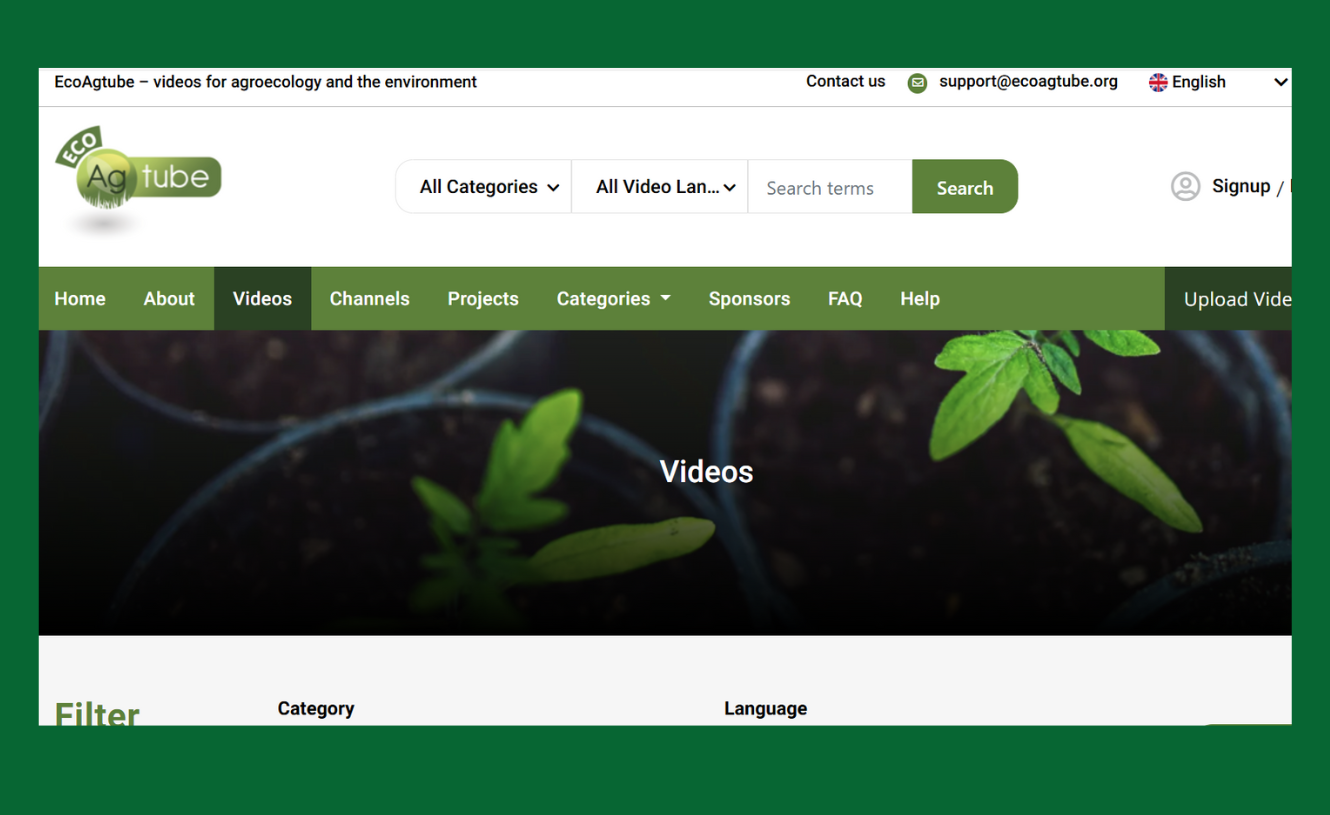
EcoAgTube
Repository of videos in several local languages on sustainable agriculture practices.

"Agroecology Hub" on FABO
“Agroecology Hub” by DCA on the FABO platform.
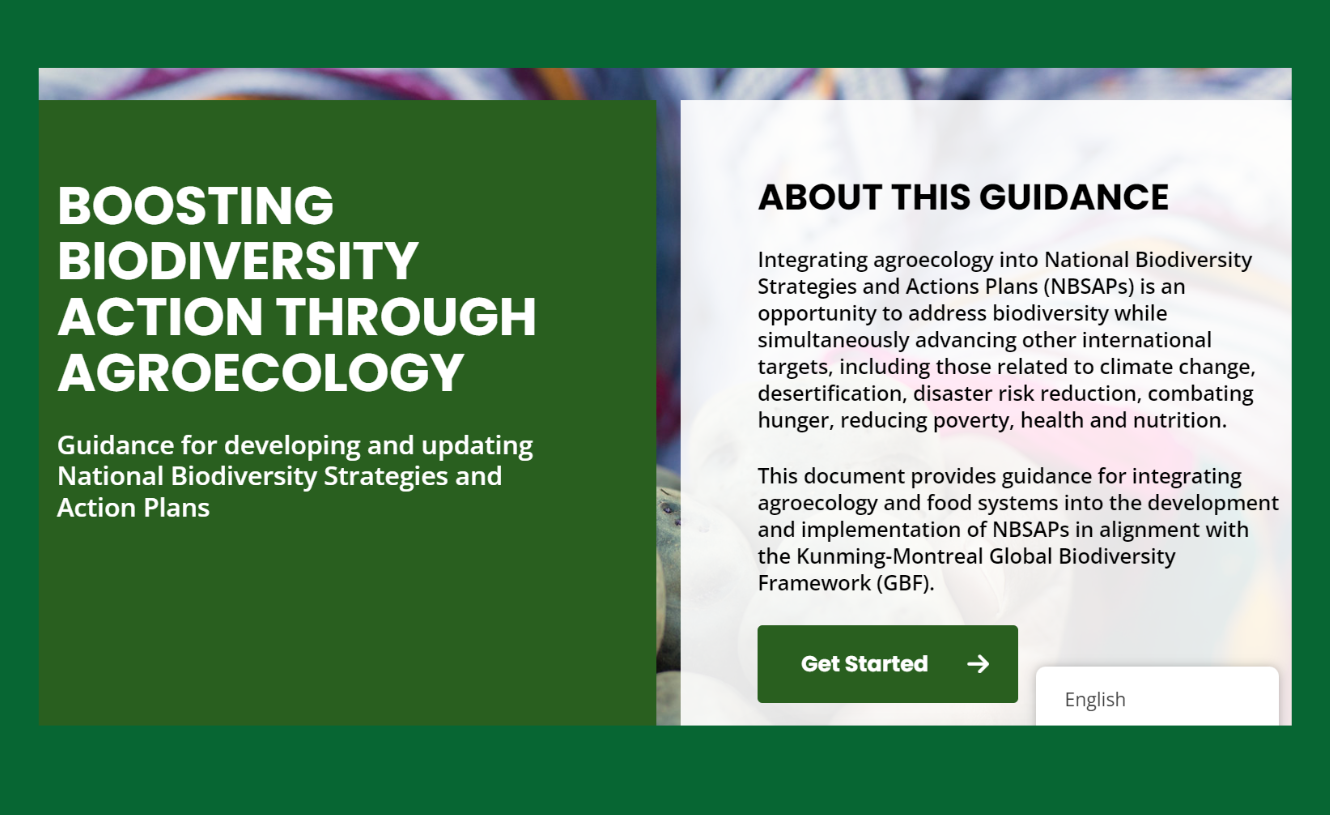
Boosting Biodiversity Action Through Agroecology: Guidance for developing and updating National Biodiversity Strategies and Action Plans
Global Alliance for the Future of Food, Biovision Foundation, Agroecology Coalition, WWF International, Alliance of Bioversity International and the International Center for Tropical Agriculture
Integrating agroecology into National Biodiversity Strategies and Actions Plans (NBSAPs) is an opportunity to address biodiversity while simultaneously advancing other international targets, including those related to climate change, desertification, disaster risk reduction, combating hunger, reducing poverty, health and nutrition.
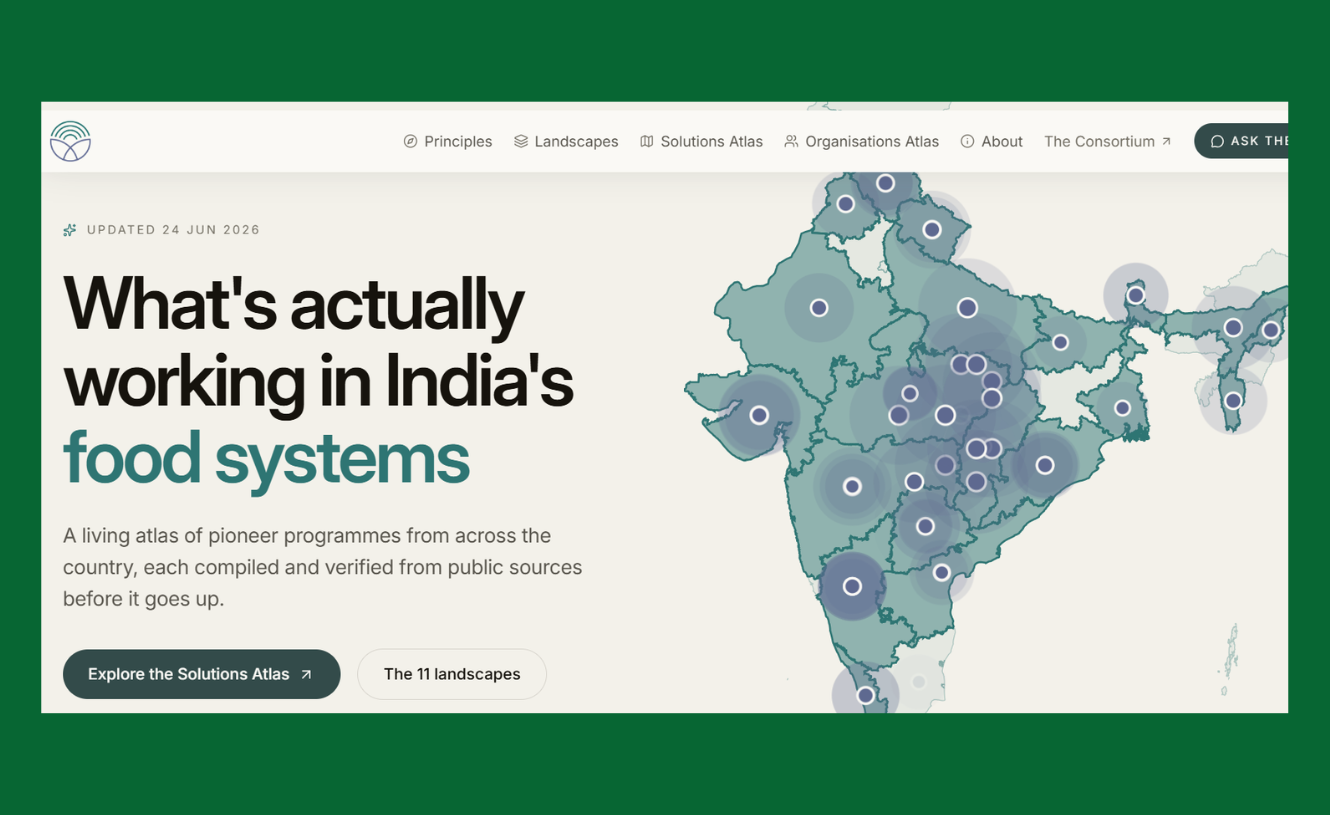
The Solutions Atlas: Agroecology in India
By the Consortium for Agroecological Transformations
Every food-systems programme on the Hub, plotted on India. Each dot is an auto-compiled, source-verified fact sheet.