
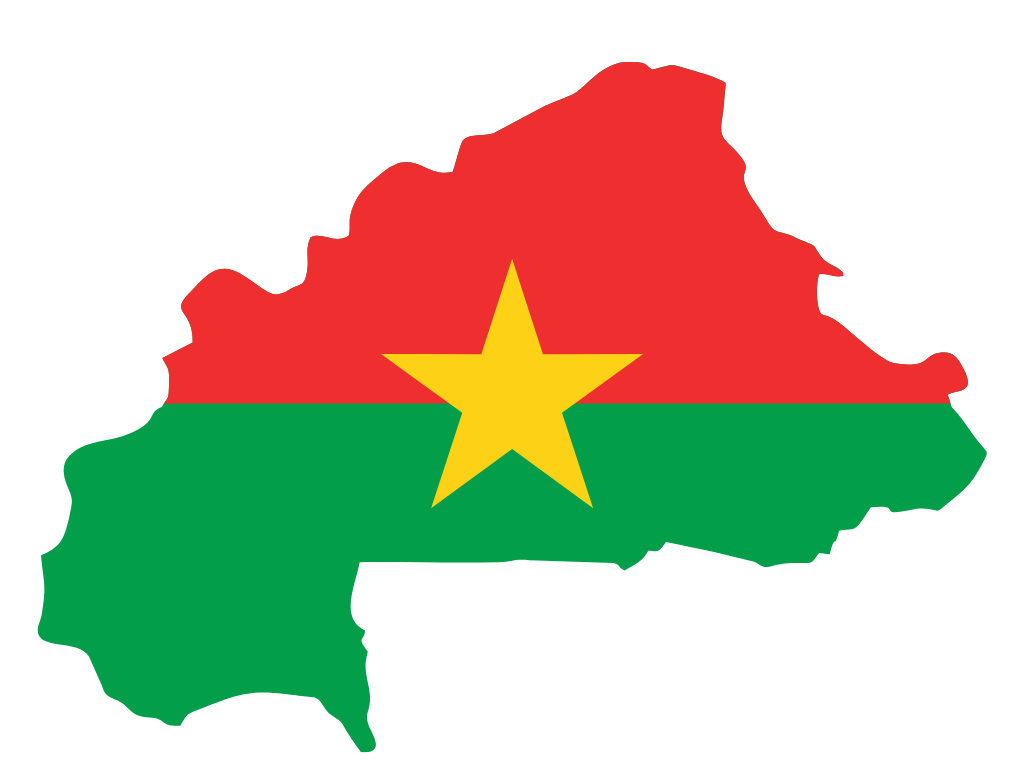
BURKINA FASO
MEMBER OF THE AGROECOLOGY COALITION SINCE 2021
Summary of the National Strategy for the Development of Agroecology (SND-AE)
Launched in January 2023
Implementation Period – 2023 to 2027
Abstract and Main Features
La stratégie nationale de développement de l’agroécologie (SND-AE) du Burkina Faso – Burkina Faso’s National Strategy for the Development of Agroecology, in English – builds on existing achievements and partnerships to promote an agroecological coordinated transformation of agroecosystems, aiming to boost both environmental resilience and nutritious food production.
It aims to employ a strong communication system to ensure stakeholder ownership and international support, a robust and adaptable monitoring and evaluation system for informed implementation, and regular evaluations to remain aligned with evolving national contexts and assess progress toward the Strategy’s goals.
Some of the main features of the Strategy include:
- Scaling-up of agroecology nationwide with integration into regional/local plans and the diffusion of proven practices.
- Strengthening of various agroecological practices: agroforestry, natural regeneration, organic fertilizers, bio-inputs, pastoral resource management, integrated watershed management.
- Support and protection of traditional knowledge (zaï, demi-lunes, natural regeneration).
- Alignment with the SDGs and Agenda 2063, particularly SDG 15 (life on land).
- Alignment with the Malabo Declaration and the ECOWAS Regional Agroecology Program.
- Stress on the need for policy coherence by embedding this strategy in national planning: e.g. contributes to national plans like PNDES II (2021-2025), PNSFMR (land security policy), etc.
- Land tenure focus.
Objectives
The overall objective of the Strategy is to “sustainably increase productivity and production in agriculture, forestry, pastoralism, fisheries, and wildlife through agroecological intensification.”
In addition, this National Agroecology Strategy also has three specific objectives:
- Strengthening agroecology governance by integrating it into policies, establishing supportive legal frameworks, securing sustainable financing, and improving family farms’ access to land and agroecological markets.
- Scaling up agroecology nationwide by implementing projects, integrating it into local development plans, and widely promoting proven practices.
- Building stakeholder and advisory capacity by integrating agroecology into education, training producer organizations, and promoting research and development.
Key Target Groups
In the Strategy, Burkina Faso takes particularly into account two key target groups: women and youth. By acknowledging the role played by women in both farm work and income-generating activities, and the limited involvement of youth in family farming due to low attractiveness, hard labor, and lack of responsibility, Burkina Faso aims to improve their conditions and empower their agency in more equitable and sustainable agroecological national food systems.
Expected Results
The Strategy is expected to deliver the following outcomes:
- The resilience of agro-sylvo-pastoral, fisheries, and wildlife production systems is strengthened: through the adoption of risk management strategies to stabilize agricultural risks at 10% by 2027.
- The sustainable increase in agro-sylvo-pastoral, fisheries, and wildlife production is ensured: with the aim to increase the yield growth rate for the four main cereals (maize, rice, sorghum, and millet) from -3.87% in 2021 to 5% by 2027.
- The livelihoods and social well-being of rural populations are improved: by reducing the poverty rate from 41.4% in 2018 to 35% by 2027.
- Agroecological practices are adopted on farms: 50% adoption rate of agroecological techniques among producers and 35% of cereal production coming from agroecological farms, both to be achieved by 2027.
Strategy Development Process
The elaboration process of the Strategy started in 2021 and involved a participatory and bottom-up approach. It included the recruitment of a team of consultants, the establishment of a technical monitoring committee, and various multi-participatory workshops for the elaboration of diagnostic analysis and the final validation of the Strategy.
Ministries and Stakeholders Involved in the Process
- Government Ministries such as the Ministry of Agriculture and Livestock, the Ministry of the Environment and Water, the Ministry of Higher Education and Research, the Ministry of Economy, the Ministry of Education, etc.
- Local authorities.
- Chambers of Agriculture and farmers organizations.
- Civil Society associations.
- Agro-industrial organizations.
- Service provider institutions.
- Banks, microfinance institutions and financial partners.
Implementation
The Strategy envisions an implementation process defined by a three-year action plan and annual work plans (communication, action, and budget planning). The actors identified as responsible for the implementation of the strategy are mainly governmental, with the Ministry of Agriculture and Livestock taking the lead in the launch of the national programs and projects envisioned in the plan while being accompanied by the coordination and monitoring of a steering committee and a technical secretariat. A Monitoring and Evaluation plan will be elaborated and managed by a specific unit. A mid-term assessment and a revision are planned for the end of 2025.
Budget and Funding
The estimated budget for this National Agroecology Strategy is FCFA 19.516.433.000 (approx. USD 35 million).
Funding is expected to be secured through:
- Government allocations
- Traditional or new bilateral and multilateral partnerships
- Guarantee funds and credits funds for producers as contributions from microfinance institutions (MFIs)
- International foundations and NGOs
- Crowdfunding through a fundraising tool operating through an online platform, allowing a group of contributors to collectively choose to directly and transparently finance identified projects.
- Green Fund: Through the development and implementation of transformative projects and programs that could obtain its funds.
- Advocacy for the redirection of funds in the mining sector toward agroecology investments.
- Inclusion of Land Degradation Neutrality (LDN) targets in development policies, projects, and programs to attract further donors.
N.B. This summary did not receive any official review by Burkina Faso’s Ministry of Agriculture and Livestock
Do you want to send any suggestion or feedback about the information in this page?
Image Credit: Swiss Agency for Development and Cooperation (SDC)