Growing Benin’s Organic Cotton Sector
Benin
The Growing Benin’s Organic Cotton Sector initiative supports the transition from conventional cotton production to organic and agroecological farming systems in Benin. Led by PAN UK in partnership with OBEPAB, the project aims to improve farmer livelihoods, reduce dependence on hazardous pesticides, strengthen climate resilience, enhance soil health, and build a sustainable organic cotton sector. Through farmer training, cooperative development, varietal research, women’s empowerment, and soil health monitoring, the initiative demonstrates how agroecological approaches can generate economic, social, and environmental benefits while supporting sector-wide transformation.
Lead organizations
- Organisation Béninoise pour la Promotion de l’Agriculture Biologique (OBEPAB), founded in 1996, promotes ecological agriculture and organic production systems in Benin. Working closely with farming communities, it supports organic cotton production, farmer training, women’s empowerment, and agroecological innovation.
- Pesticide Action Network UK (PAN UK) works to reduce the harmful impacts of pesticides and supports sustainable agricultural alternatives. Through its partnership with OBEPAB, PAN UK has supported the development and scaling of Benin’s organic cotton sector.
Other partner organizations : Deutsche Gesellschaft für Internationale Zusammenarbeit (GIZ), Paul Reinhart AG, Aid by Trade Foundation (AbtF), Société pour le Developpement de Coton (Sodeco)
Country
The project is implemented in three regions in Benin: Kandi, Glazoué, and Djidja.
Timeline
Project’s phase 1 (November 2021 – October 2024)
Project’s phase 2 (November 2024 – October 2027)
Funding
The project had a total budget of EUR 2,590,000 across two phases with funding from: Traid, Aid by Trade Foundation, Paul Reinhart AG, and the Deutsche Gesellschaft für Internationale Zusammenarbeit (GIZ) GmbH on behalf of the German Federal Ministry for Economic Cooperation and Development (BMZ).
Context
Benin is the largest cotton producer in West Africa, producing approximately 647,290 tones of cotton annually. The cotton sector supports roughly one-third of the country’s population and represents a major source of income for rural households. However, conventional cotton production has generated significant environmental and health challenges because of the intensive use of pesticides and fertilizers, a factor that has also led to farmer debts. Between 40% and 90% of conventional cotton farmers report pesticide poisoning, while an estimated two-thirds of agricultural land shows signs of degradation.
Since 1996, OBEPAB and PAN UK have promoted agroecological, chemical-free farming systems as an alternative to conventional cotton production. By 2021, approximately 4,000 farmers had been supported through organic agriculture initiatives.
Main beneficiaries
The project primarily benefits smallholder cotton farming households in Benin, particularly those seeking alternatives to chemically intensive production systems. Women are a key target group through activities that support literacy, leadership development, cooperative participation, and improved access to land and economic opportunities. Agricultural cooperatives, extension agents, and local institutions also benefit through training and capacity-building activities.
Strategy
Objectives
The initiative aims to strengthen Benin’s organic cotton sector by improving farmer incomes, reducing reliance on hazardous pesticides, enhancing soil health, increasing climate resilience, expanding market opportunities for organic cotton producers and valuing indigenous knowledge. The project also seeks to build institutional support for organic agriculture through engagement with government agencies, extension services (field agents), research institutions, and private sector stakeholders.
Specific Objectives are to:
- Increase organic cotton production.
- Improve farmer incomes through premium markets and reduced input costs.
- Strengthen resilience to climate and market shocks.
- Reduce health harms associated with pesticide exposure.
- Value indigenous knowledge.
- Improve soil health and biodiversity.
- Empower women through leadership and economic participation.
- Strengthen cooperative and extension service capacities.
- Support research and innovation in organic cotton production.
Activities
The project combines farmer training, research, institutional strengthening, and community development interventions. The project is composed of two phases. Under the first phase (November 2021 – October 2024), the focus was on scaling up the number of organic cotton farmers in Benin to double organic cotton production, as well as increasing farmer income, improving resilience to climate and economic shocks, and reducing harm associated with pesticide use. Under the second phase (November 2024 – October 2027), the focus shifted to establishing routes to scale for Benin’s organic cotton sector by strengthening capacities of government and private-sector actors to deliver quality training to farmers, and attracting investment into the Benin organic cotton sector by establishing strong partnerships across national and international supply chains..
Key activities include:
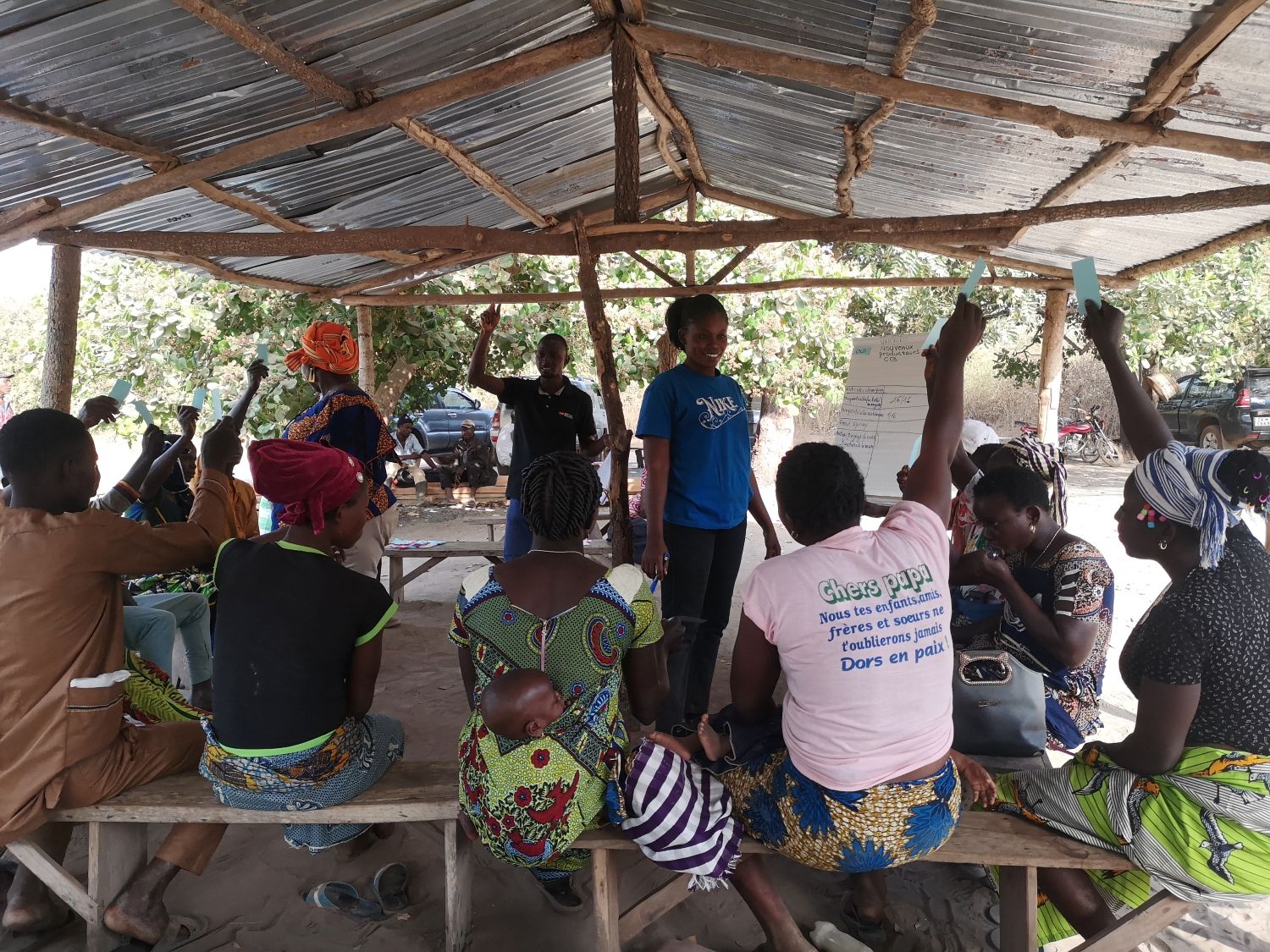
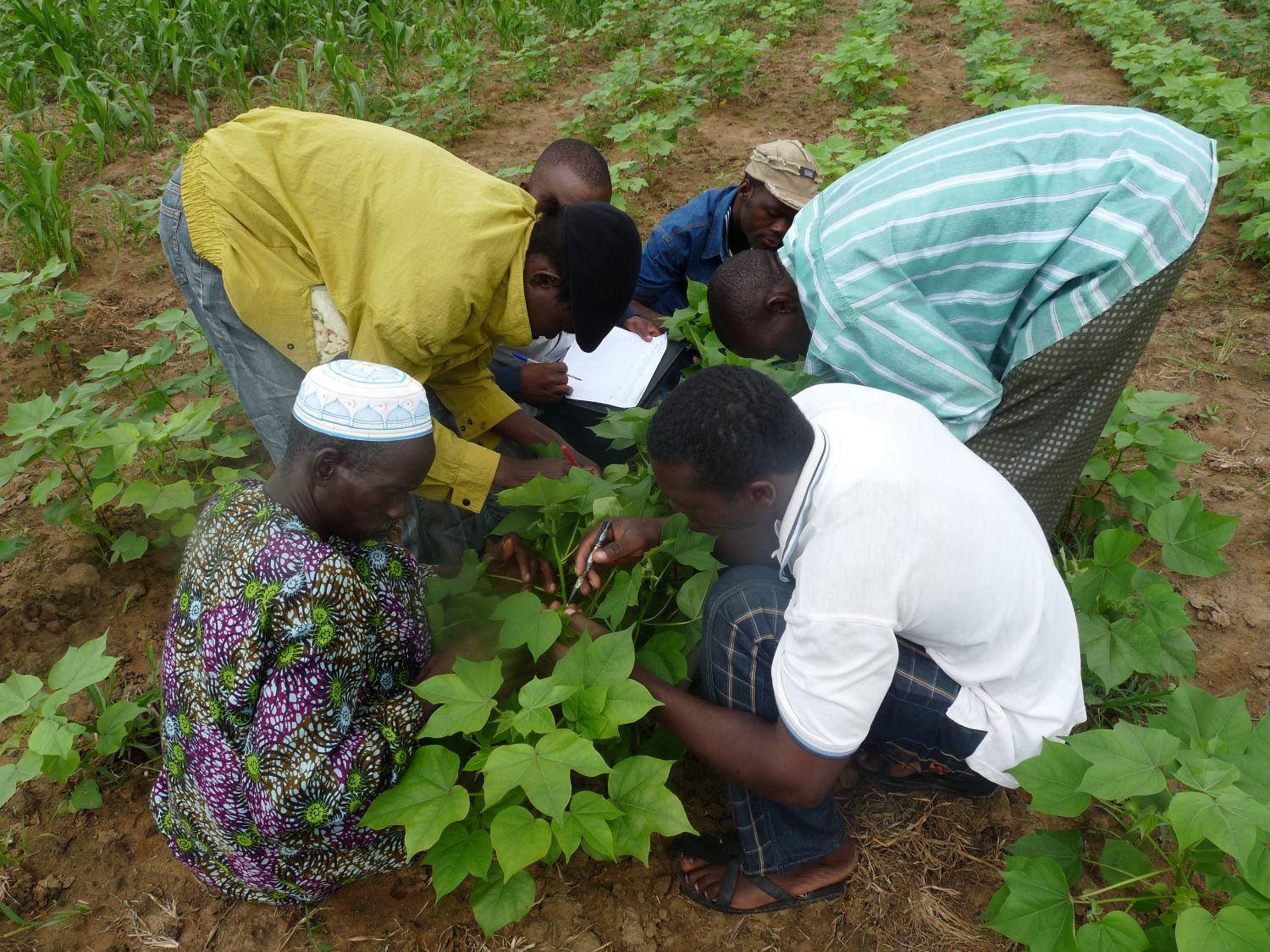
- Farmer Field Schools and technical training programs for new and existing organic farmers.
- Farmer exchange visits and peer-learning opportunities.
- Capacity building for cooperatives and agricultural extension agents, specifically OBEPAB field agents, CSO field agents, and national extension service providers.
- Farmer participatory agroecology and cotton varietal trials conducted with the Cotton Research Institute (IRC).
- Women’s empowerment initiatives focused on literacy/numeracy, leadership, cooperative participation, and access to land.
- Dedicated women’s cotton co-ops.
- Technical support to shea butter enterprises.
- Sensitization of women and men on women’s rights and leadership opportunities (‘schools for husbands’).
- Soil health monitoring using laboratory analysis, biodiversity assessments, and participatory soil monitoring approaches.
- Promotion of agroecological pest management practices and locally sourced agricultural inputs, such as food sprays, biopesticides, biochar and bokashi.
Results
The project has produced significant economic, agronomic, and social benefits for participating farmers.
- 9,470 farmers receiving training and support, with women representing approximately 30% of participants (a threefold increase in women’s representation compared to the conventional cotton sector).
- Number of organic cotton producers doubled between 2021 to 2024, with5,893 certified producers.
- Sustainably cultivated cotton area increased to more than 11,000 hectares, thus having an 85% increase.
- Organic cotton farm incomes increased by approximately 65% compared to non-organic farms, driven by reduced expenditure on external inputs and premium prices.
- A new cotton variety (Y667-1) achieved approximately 20% higher yields and was widely preferred by farmers during participatory evaluation.
- Women’s leadership increased substantially, with 181 women co-operative leaders supported, and a 40% increase in the proportion of women with partial control over household income.
- 43% of all supported farmers aged below 35 years old.
- Reduction in acute pesticide poisoning that is experienced by a high proportion of non-organic cotton farmers in Benin.
- Significant improvements in soil health compared to non-organic farms: improved nutrient availability, nitrogen, pH levels, water retention, and biodiversity in the soil. This was monitored through earthworm counts and laboratory soil analyses.
- 75% increase in soil organic matter (SOM) and soil organic carbon (SOC).
- 37% increase in decomposition rates, seen through the “soil your undies” method.
- Soil macrofauna abundance was 2 to 13 times higher (individuals per m²).
Lessons learned
The initiative demonstrates that organic cotton production can provide strong economic incentives for farmers while generating environmental and health benefits. Evidence from the project shows that organic systems can achieve comparable or higher yields while reducing production costs through reliance on locally sourced inputs and ecological pest management strategies. Drops in yield are offset by significant savings in production costs delivering substantially higher profits to farmers.
The project also highlights the importance of combining high quality farmer training, cooperative strengthening, organic and agroecological orientated research partnerships, and market development to achieve sector-level transformation. By disseminating knowledge on best practices and sustainable farming techniques, the project empowers farmers to adopt environmentally friendly methods. Women’s inclusion and leadership development have been essential factors in strengthening community participation and project outcomes.
Limiting barriers
Several challenges continue to affect the long-term expansion of the organic cotton sector:
- Labor shortages, particularly for weed management.
- Rising organic certification costs and evolving market requirements.
- Constraints on land access, especially for women and vulnerable groups.
- Continued dependence on existing seed distribution systems.
- Limited scale of the organic cotton sector relative to conventional cotton production.
Looking ahead
Future efforts will focus on expanding and institutionalizing organic cotton production within Benin’s agricultural system.
Key priorities include:
- Continuing extension and farmer training programs.
- Aligning activities with Benin’s national strategy for ecological and organic agriculture.
- Strengthening government and private sector capacity to support organic production.
- Expanding research and innovation in organic cotton systems.
- Supporting a new GEF-funded project to mainstream organic cotton in Benin that is planned for 2026–2031.
- Further developing organic value chains and market opportunities.
Quotes of participants
With organic cotton, women are more visible and grateful. The women received land from their local government. They have their own plots where they can grow organic cotton. This gives me the opportunity to earn an income and support my children’s education. And I was able to build a house with durable materials. Other women have bought motorcycles.
Before, I had to wait for my husband to do everything. But now it’s different. I can read and count money. And I manage my own money. I can make my own decisions. [..] I never wanted to grow cotton because of the chemical inputs. They’re too dangerous, especially for children. But when I learned about organic cotton without chemical inputs, I decided to grow organic cotton. I learned how to restore soil fertility and about crop rotation. With my income, I was able to pay for my daughter’s sewing apprenticeship. And I was able to buy her a sewing machine.
Over the last three years of project execution (2021-2024), I have obtained an annual yield of at least 1500kg/ha thanks to the training I received. Indeed, contrary to my peers, I produce organic cotton in a cropping system alongside legumes such as angle peas and soybeans. I used 250 kg of palm kernel fertiliser and 21 of extracts of neem for phytosanitary purpose. In addition to this, I apply food spray and mechanical control of weeds, leading to abundant harvests.
Currently, I have undertaken trade in food products thanks to additional income from my organic cotton plus income from market gardening and soybean production. In addition, thanks to cotton funds, I was assisted by my husband to acquire oxen for ploughing the fields. The production of organic cotton allowed me to gradually acquire financial autonomy. I can meet my own needs and my family responsibilities.
Hyperlinks
Pesticide Action Network UK – Cotton in Benin, West Africa
Sustainable Agriculture Supply Chains Initiative – Growing Benin’s organic cotton sector
Traid – Growing organic: Bani’s story
Textile Exchange – Empowering Cotton Communities through Organic Farming in Aklampa, Benin
Contact
- Alexander Stuart, International Project Manager – Agroecology, PAN UK, alex@pan-uk.org
Pictures credits:
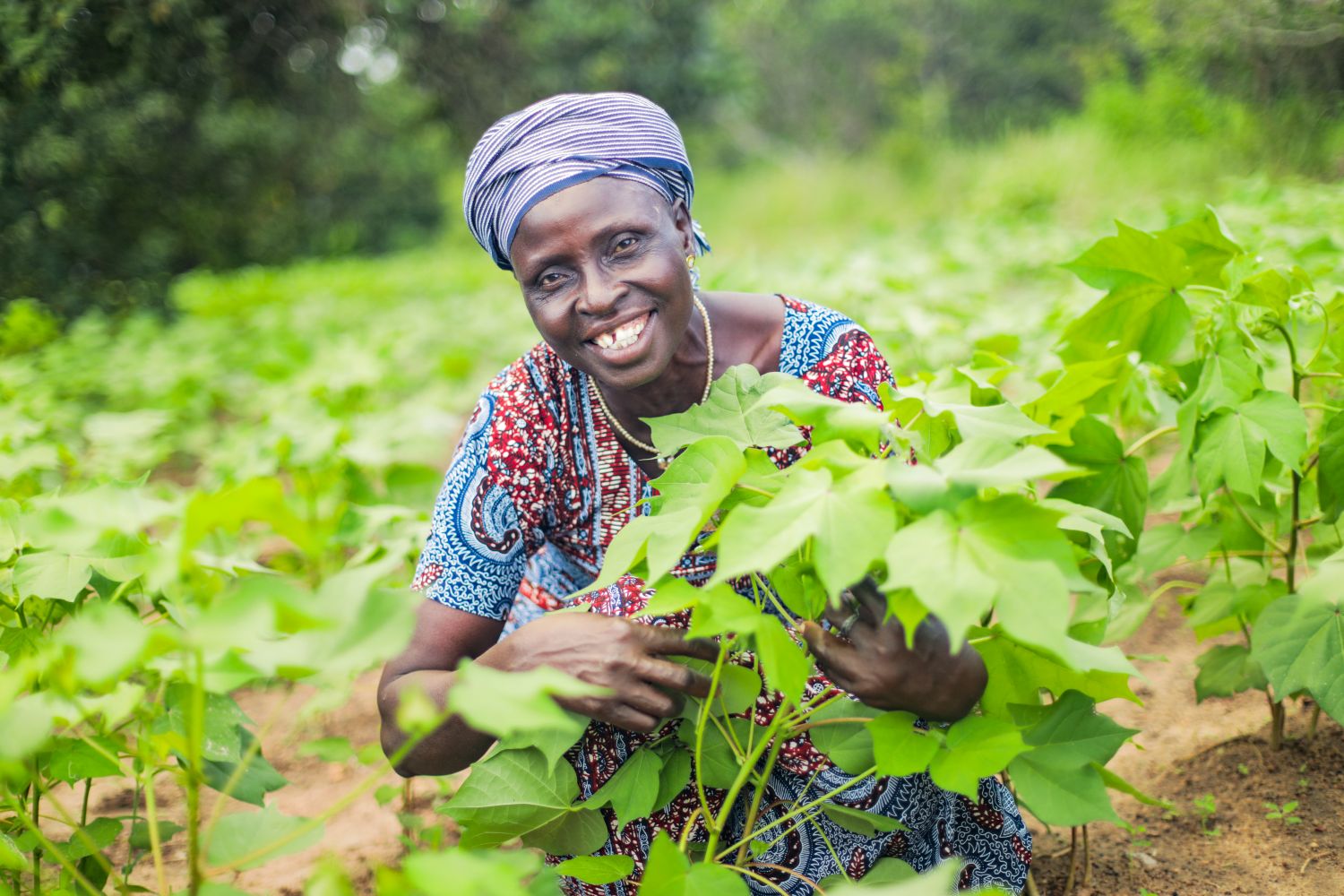
Cover picture: Gbèmèho Elisé Fanou
Women’s Co-operative discussing Integrated Pest Management (IPM): PAN UK
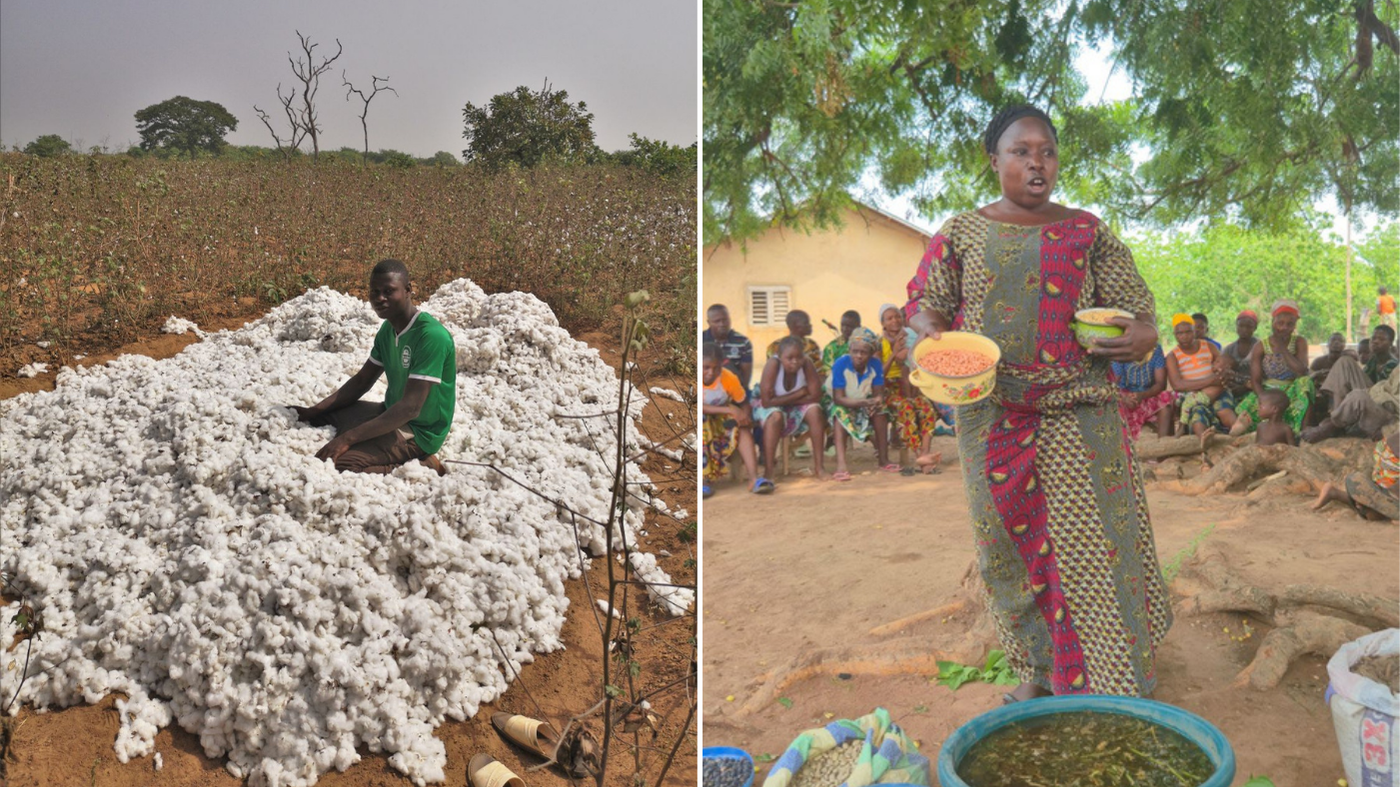
Organic cotton farmer during harvest: PAN UK
Romaine Gankou demonstrating the different bio-inputs farmers are learning to add to the soil to increase fertility: PAN UK
Farmers learning agroecological farming methods in the field as part of the Farmer Field School: PAN UK