Community Supported Agriculture as a Pathway from Farm Biodiversity to Healthy Diets
Colombia
Led by the CSA Colombia Network (Red CSA Colombia), Community Supported Agriculture (CSA) promotes a collaborative and solidarity-based food system in which consumer families, known as co-farmers, provide advance financial support to family farms and share the benefits and risks of food production. In return, families receive diverse, healthy foods produced through agroecological practices. Since the first CSA was established in Medellín in 2020, the network has grown to 23 active CSAs across seven departments, involving 20+ farming families, 67 farmers, more than 361 consumer families and over 1083 urban consumers (updated September 2026). The initiative connects agroecological production, biodiversity conservation, farmer autonomy, conscious consumption and stronger local economies. Through external support for seeds, plants, training and technical assistance, seed exchanges and farmer-led crop diversification, CSA network enables farmers to conserve native and locally adapted varieties while producing diverse seasonal food boxes. These boxes reconnect consumers with diverse, nutritious and culturally significant foods, linking biodiversity on farms directly with dietary diversity and local food cultures.
Lead organizations
Organizations involved in the project include CSA Colombia Network (Red CSA Colombia), a non-profit organization that brings together a citizen-led movement around agroecology and conscious consumption. The CSA network gives a concrete way to rebuild the connection between how food is produced and how it is consumed.
Other organizations involved include: Fundación Mi Sangre, a social organization founded in Colombia in 2006. Low Carbon City, a citizen-led movement that mobilizes communities, experts, and partners across Latin America to design and implement urban climate solutions and reduce emissions. Comfama, a nonprofit employer-funded family compensation fund providing social welfare services in Antioquia, Colombia. Alliance Biodiversity and CIAT.
Country
The project is implemented in seven departments of Colombia: Antioquia, Bolívar, Santander, Quindío,Cundinamarca, Risaralda and Valle del Cauca. The first CSA was established in Medellín in 2020, and by 2026 the network had expanded to 23 active CSAs.
Timeline
The project started in 2022 and is ongoing.
Funding
The project had a total budget of 150.000 USD funded by Hivos, through Fundación Mi Sangre, an international development organization that helps build social movements that strive for just, inclusive and sustainable societies. The G20 Global Land Initiative, brings people, ideas and resources together to protect healthy land and restore degraded lands around the world. Comfama. EAFIT University. Alliance Biodiversity and CIAT.
Context
In Colombia, Campesino, Family and Community Agriculture (ACFC) produces 70%+ of the food the country consumes, occupies 60%+ of agricultural land, and generates more than half of the sector’s employment (Resolution 464 of 2017, MADR; UPRA, 2023). Yet despite this central role, Colombia’s food system is characterized by a growing disconnect between agricultural production and food consumption, especially between family farmers and urban consumers. Conventional markets often determine what farmers produce through preferences for crops, sizes, shapes and uniformity, narrowing family farmers’ production choices and creating fewer incentives to maintain diverse crops and locally adapted varieties. The CSA Colombia Network emerged in response to this disconnect as a citizen-led movement around agroecology and conscious consumption, beginning with its first CSA in Medellín in 2020.
Within this context, Community Supported Agriculture (CSA) provides an alternative relationship between production and consumption. Consumer families commit financially to farms in advance and, in return, receive diverse and healthy foods produced through agroecological practices, with farmers and consumers sharing the benefits and risks associated with production. This arrangement gives farmers greater autonomy to decide what to cultivate according to soil conditions, climate, knowledge and care, rather than primarily responding to standardized market requirements. It consequently creates space for crop diversification, native and locally adapted seeds, and culturally significant foods that have become difficult to find in conventional markets. For consumers, this biodiversity becomes tangible through seasonal food boxes containing a wider range of vegetables, fruits and herbs, reconnecting urban diets with local food traditions, seasonal eating and agricultural biodiversity.
Main beneficiaries
The primary beneficiaries are family farmers and urban consumer families participating as co-farmers. By 2026, the network involved 20+ farming families, 67 farmers, more than 361 consumer families and over 1083 people in cities accessing food through CSA.
Strategy
Objectives
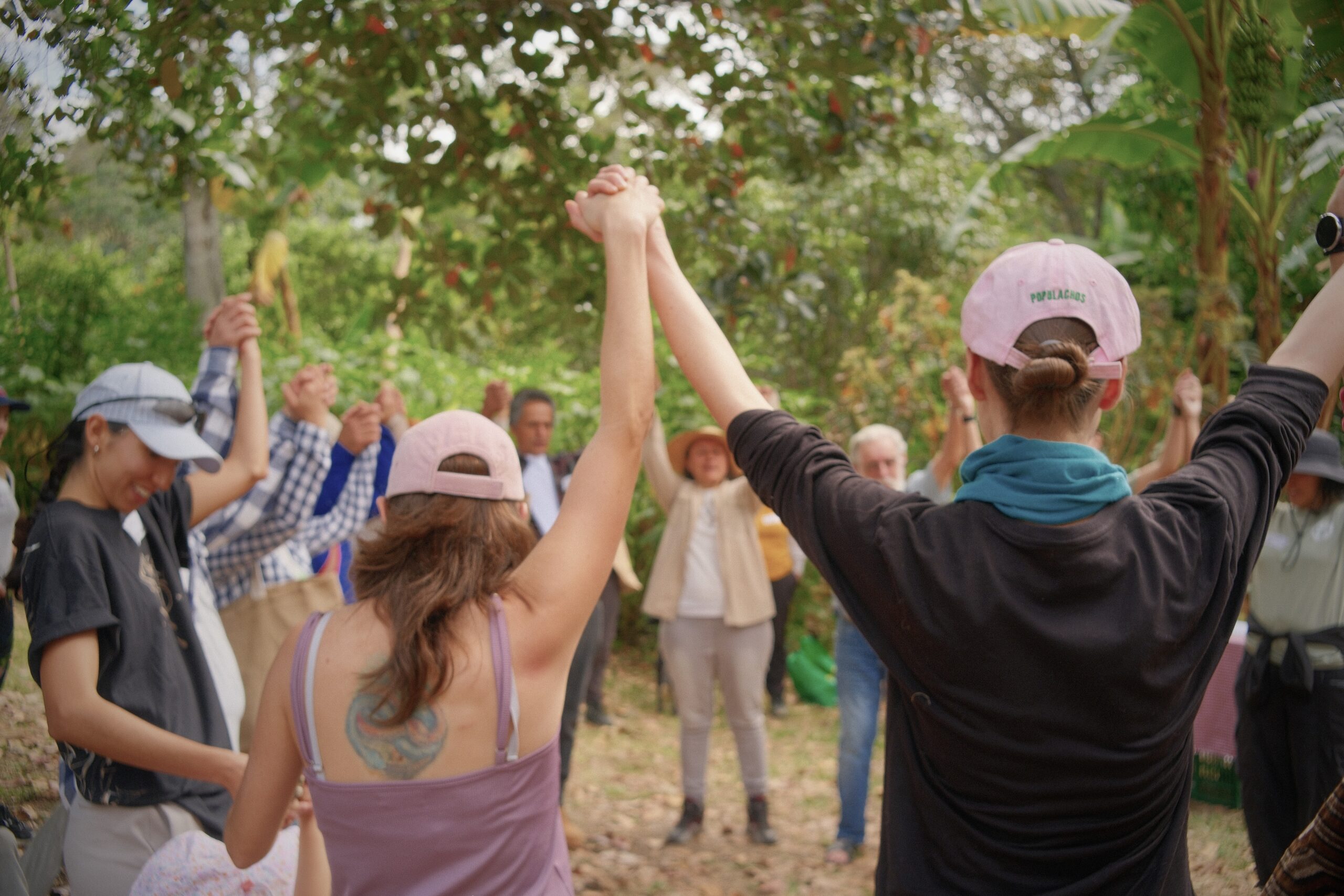
The overall objective is to rebuild the relationship between farmers and consumers through a solidarity-based food system that supports agroecological production, agricultural biodiversity, healthy diets and stronger local economies. CSA moves beyond conventional food distribution by establishing shared responsibility among farmers and co-farmers for food production, soil health and landscapes.
Specific Objectives are to:
- Strengthening of farmer autonomy and economic stability through advanced consumer commitments and shared responsibility for production risks and benefits.
- Increasing on-farm biodiversity through diversified agroecological production and conservation of native, creole and locally adapted seeds.
- Connecting farm biodiversity with healthy and diverse diets by supplying consumers with varied seasonal food boxes and educating them on the uses of this biodiversity at home.
- Revitalising local food cultures by reintroducing crops and foods that have become less available through conventional markets.
- Strengthening relationships between producers and consumers through conscious consumption, mutual learning and shared responsibility for local food systems.
Activities
The CSA Colombia Network supports the creation of Community Supported Agriculture arrangements between family farmers and consumer families (co-farmers). Consumers make financial commitments to farms in advance, providing farmers with greater income stability and sharing some of the risks associated with food production. Farmers subsequently provide participating families with seasonal boxes of healthy and diverse foods produced through agroecological practices, creating a direct relationship between production and consumption.
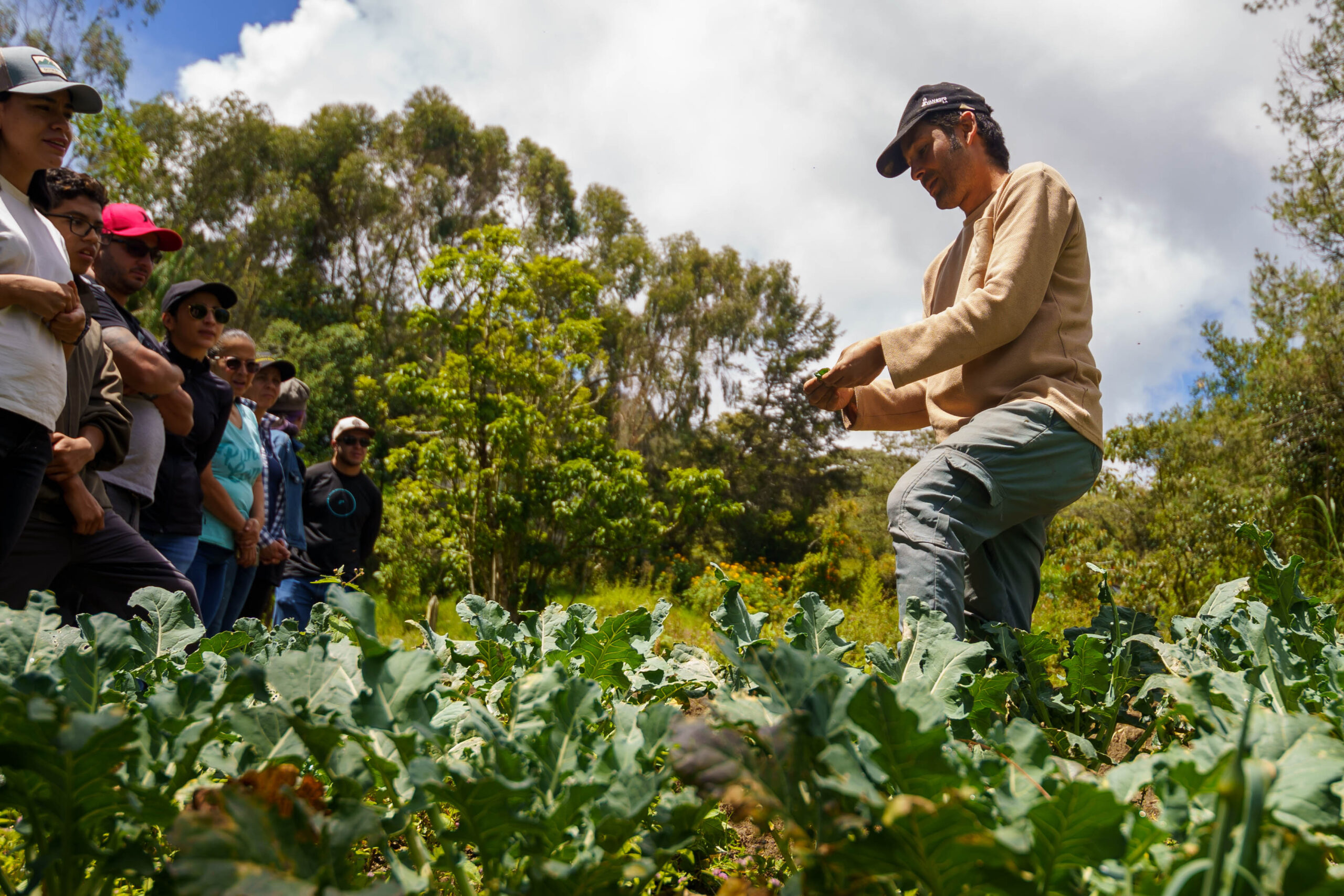
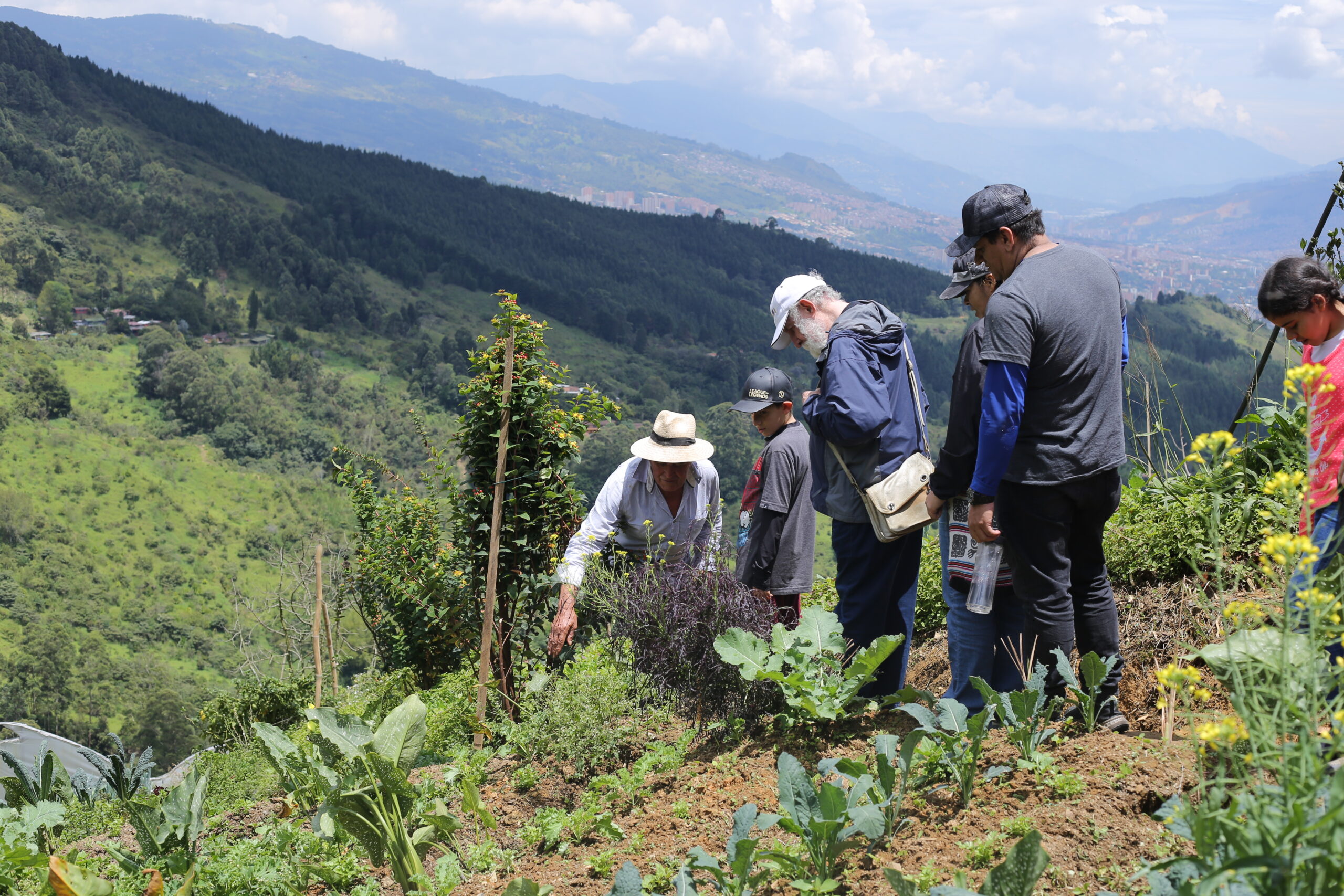
A major area of activity is supporting agroecological transition and on-farm biodiversity. Through cooperation-funded projects, farmers receive seeds, plants, training, technical assistance and resources for on-farm investment. Support covers short-, medium- and long-term crops, as well as plants used for packaging and landscape connectivity. This financing allows farmers to experiment with new crops and practices and invest in biodiversity without placing their livelihoods at excessive financial risk.
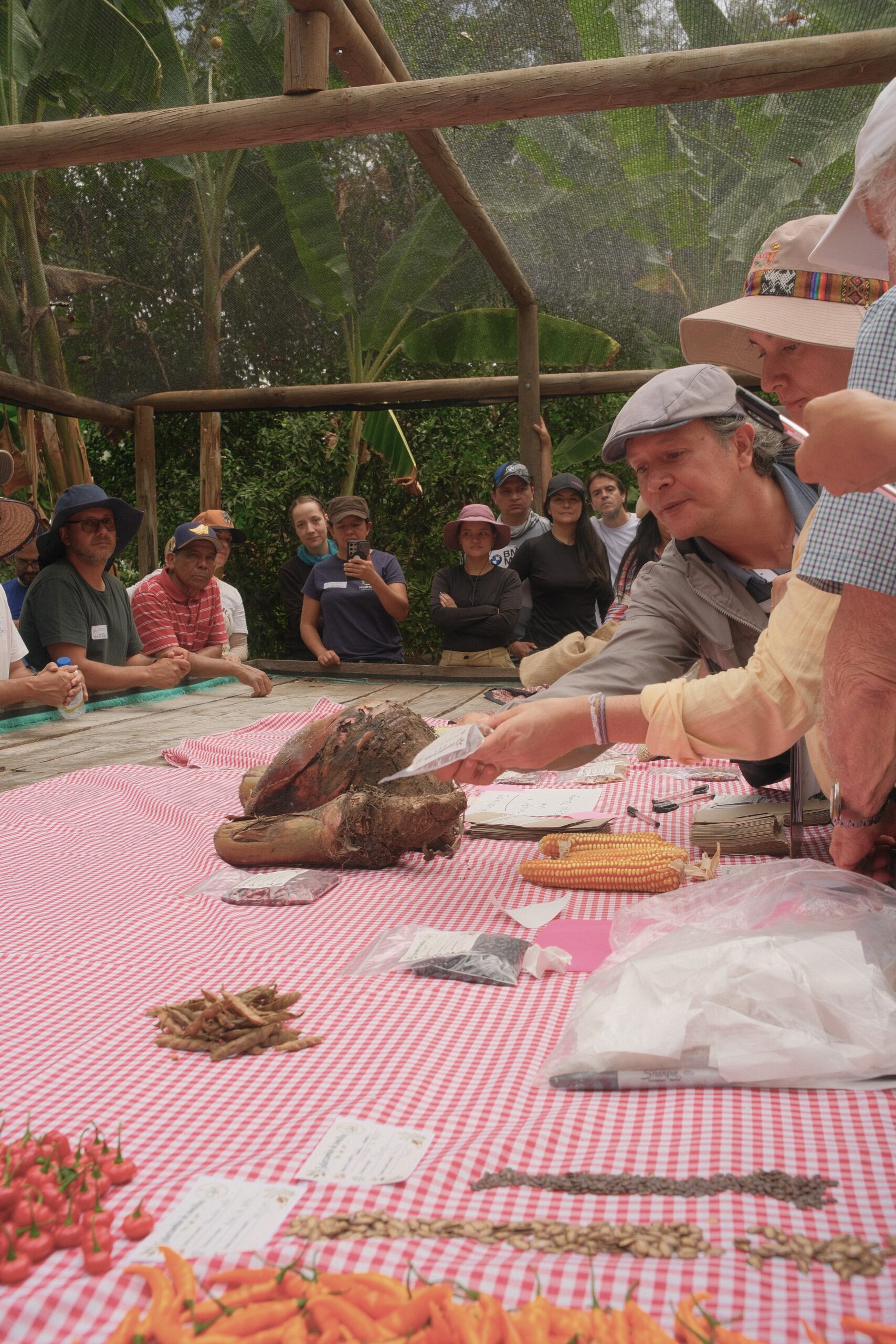
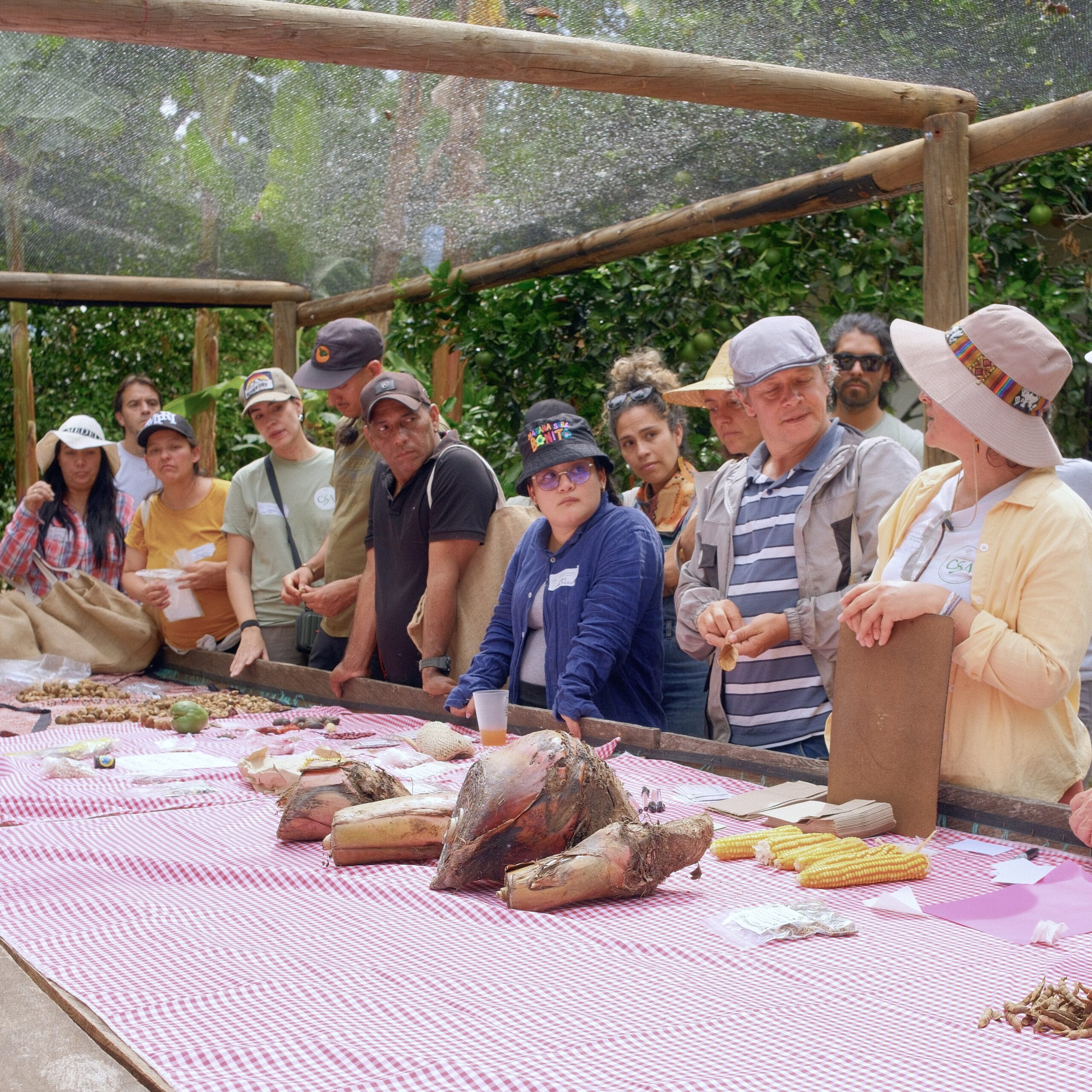
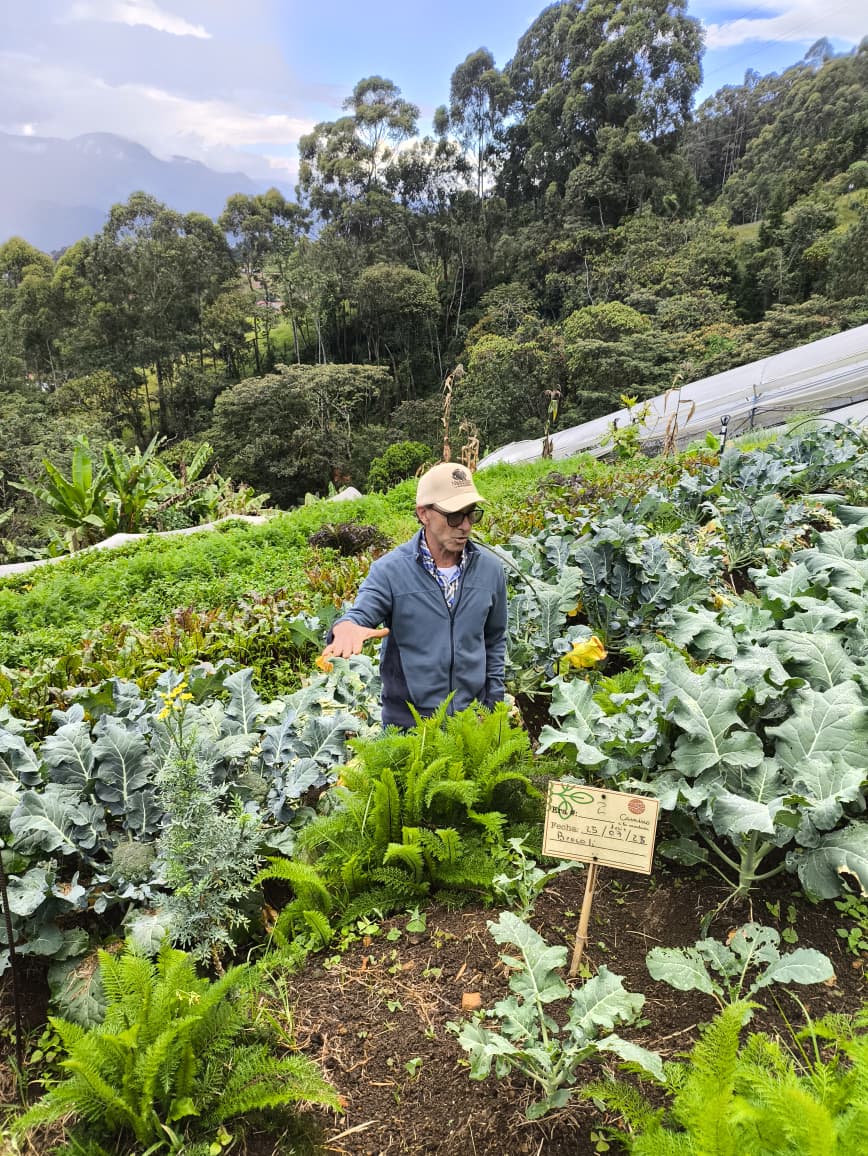
The network also organizes seed exchanges during training and farmer-to-farmer knowledge-sharing activities. Farmers exchange native, creole and locally adapted seeds, alongside knowledge about their cultivation and management. Through these activities, participating farmers become seed guardians, conserving and reproducing locally adapted varieties and circulating them among farming communities. Farmers are simultaneously encouraged to diversify their farms and determine what they grow according to soil, climate, knowledge and care, rather than conventional market requirements for standardized crops, sizes and appearances.
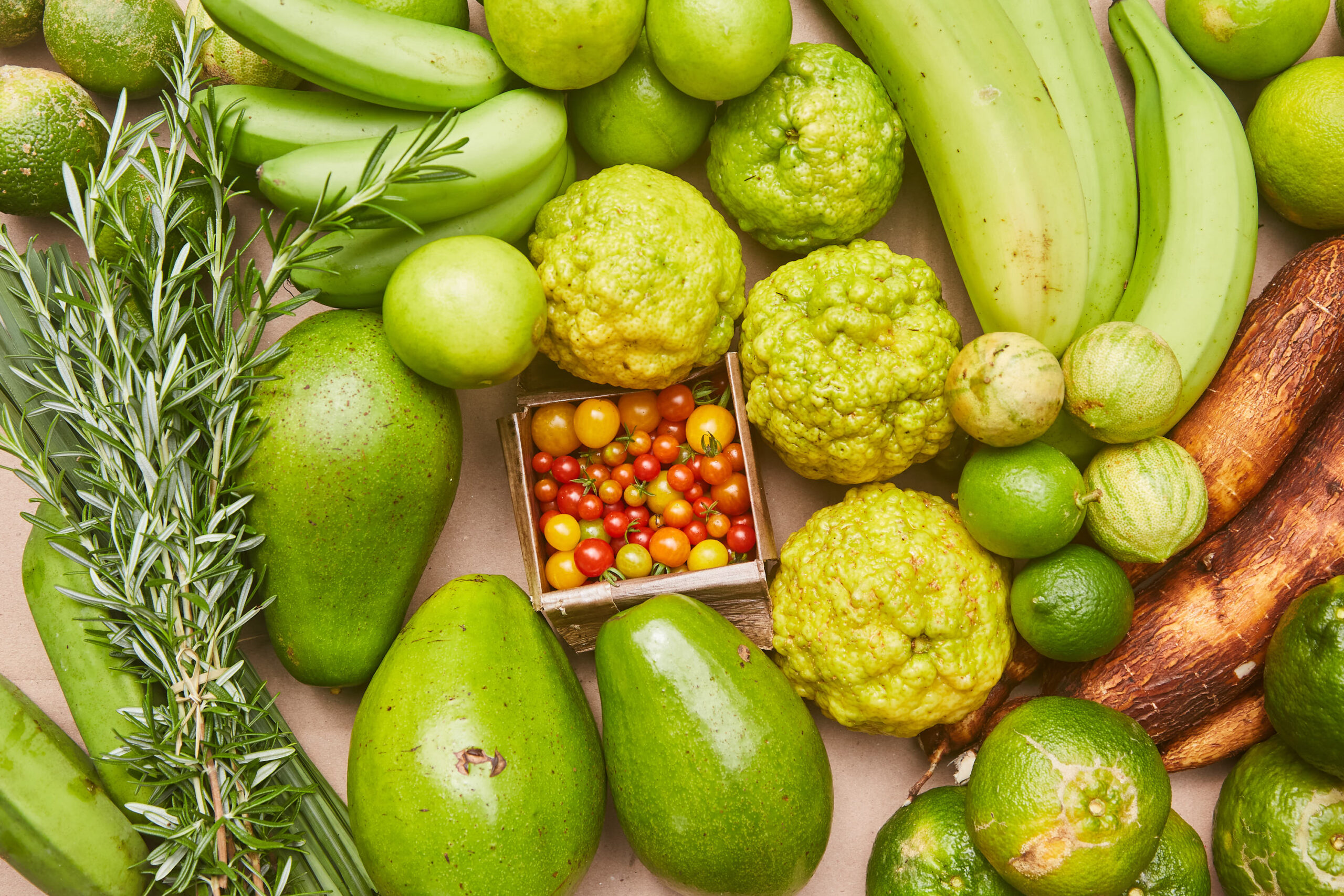
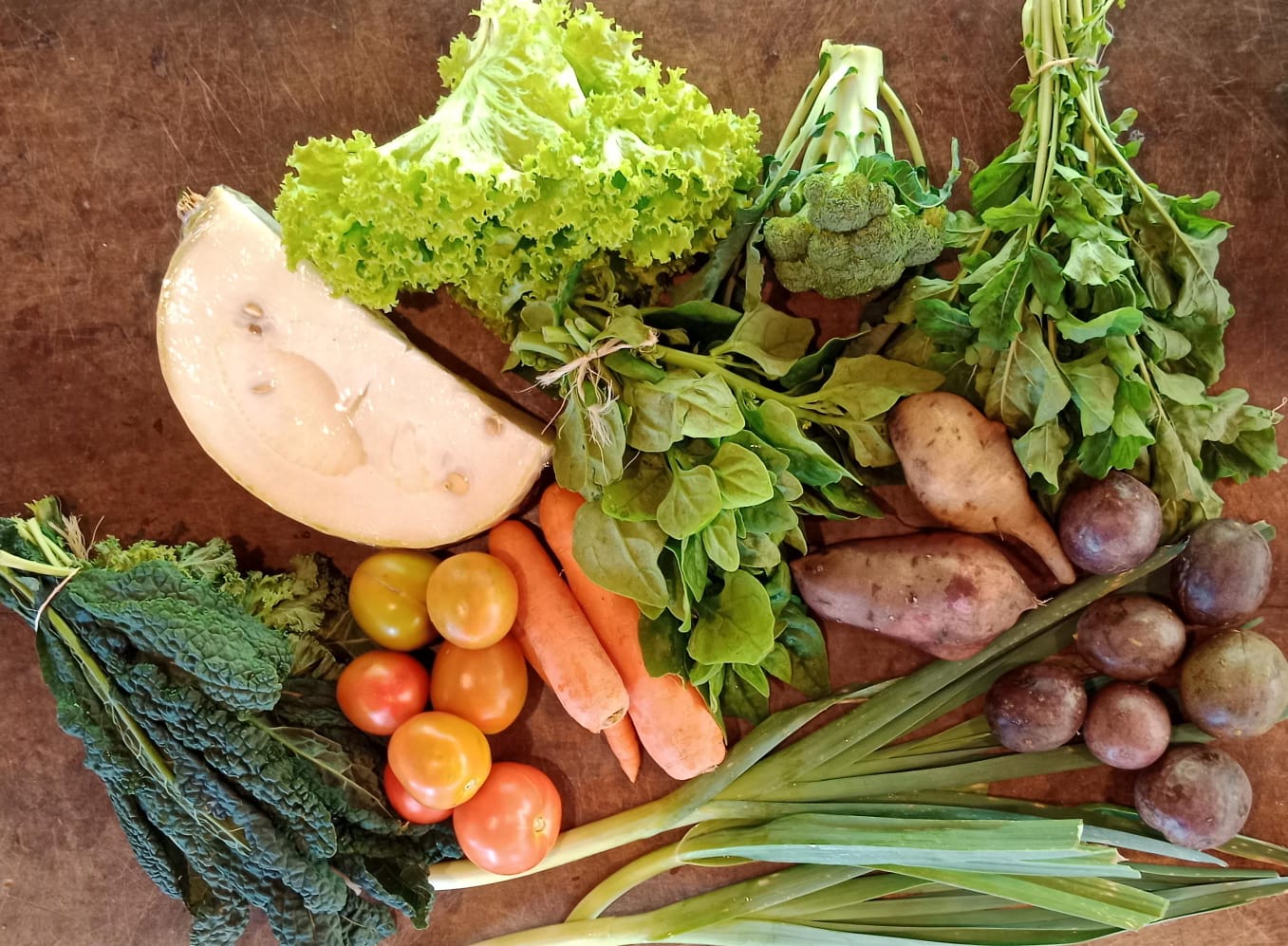
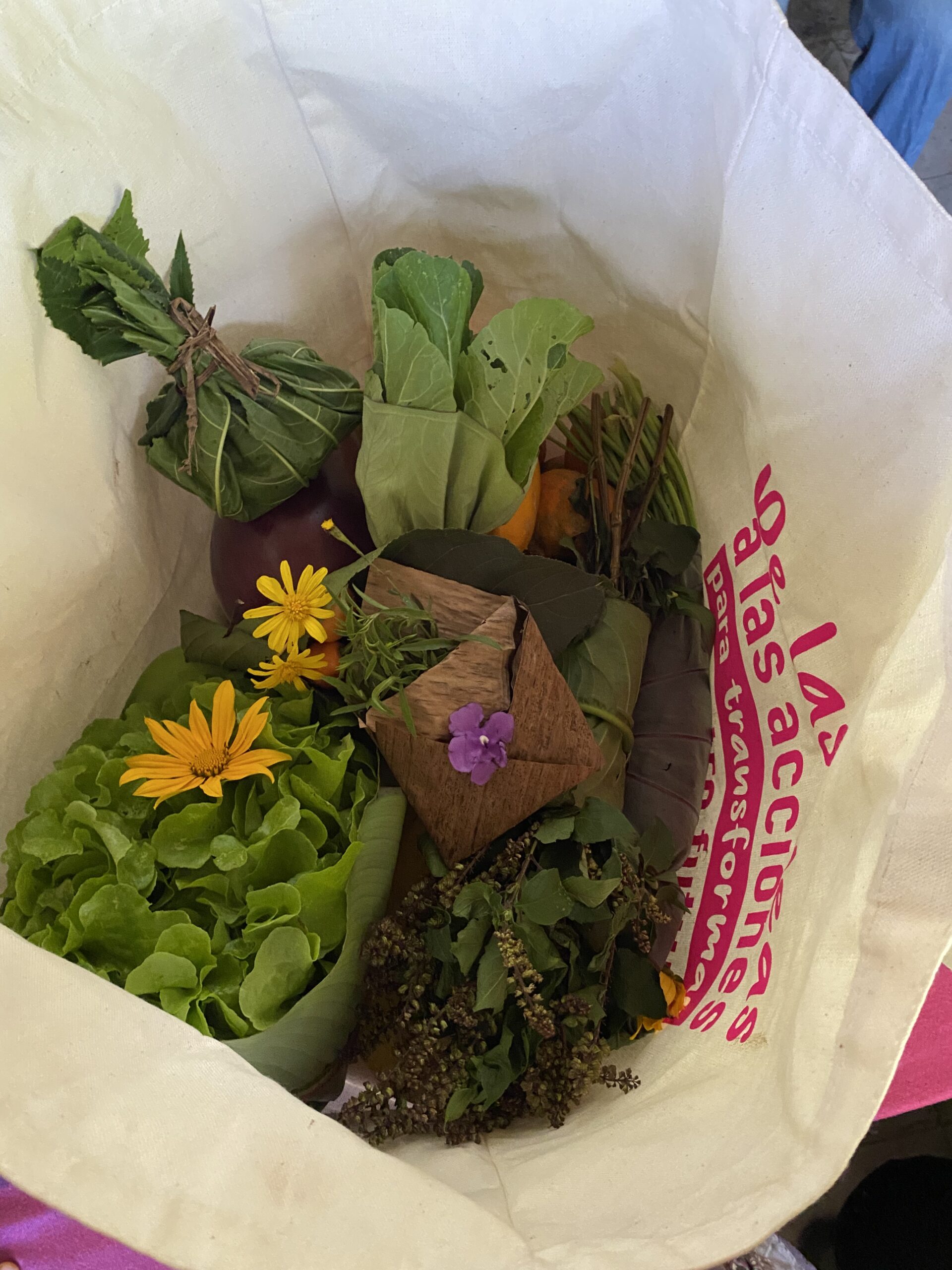
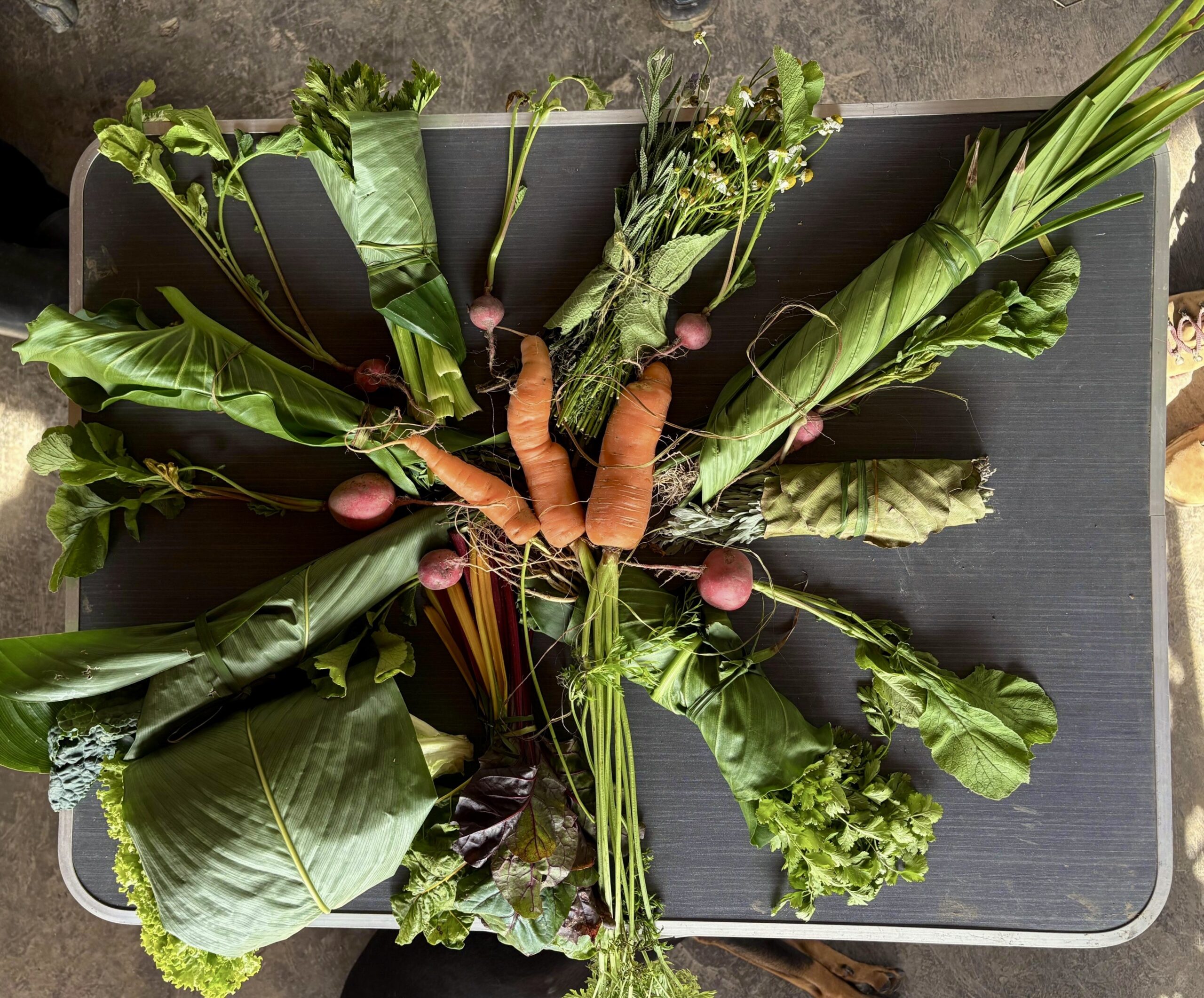
Another important activity is translating this farm diversity into diverse seasonal food boxes for urban consumers paired with education on how to use them. Boxes contain different vegetables, fruits, herbs and other seasonal foods, including crops that participating families may not ordinarily encounter in conventional markets. This distribution is complemented by recipes included with the foods, workshops and WhatsApp groups where consumers exchange recipes, preparation ideas and food-storage information. These activities help consumers learn how to prepare unfamiliar foods, adapt to seasonal eating and rediscover culturally significant foods that have disappeared or become scarce in conventional markets.
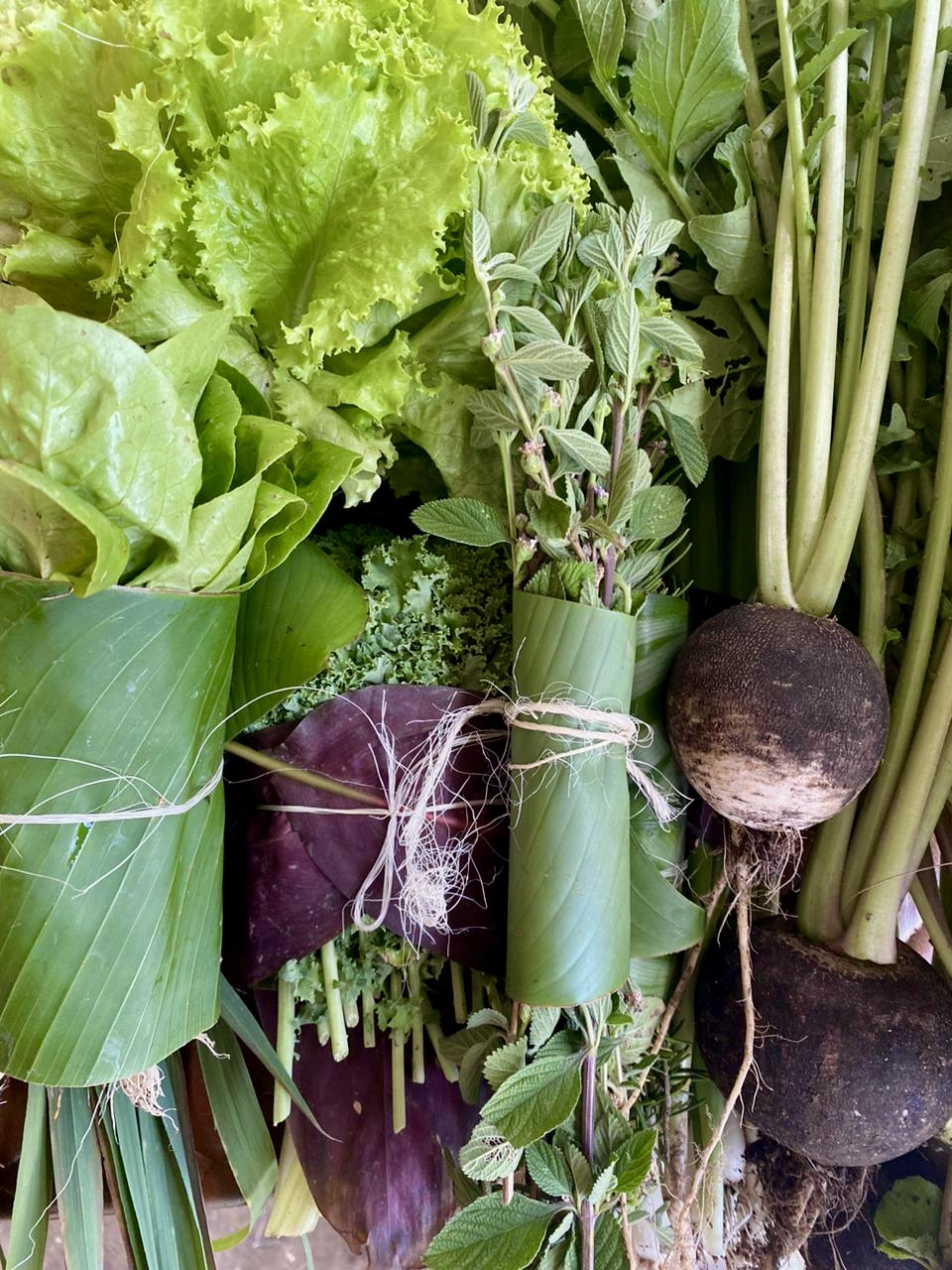
The CSA model also undertakes activities to reduce the environmental footprint of food distribution, including growing and using plant materials for packaging as an alternative to plastics. At farm level, composting is practiced, while farmers generally harvest produce shortly before distribution because centralized storage and refrigeration facilities are not currently available.
The network is developing new financing and market partnerships to sustain and expand CSA as international cooperation funding declines. This includes engagement with the private sector and corporate wellness programmes, through which companies can facilitate direct payment for CSA food boxes for employees. Expanding this approach is identified as an important direction for 2026. The network is also exploring opportunities for engagement with government programmes, although formal relationships with agricultural and health ministries and institutional markets such as schools have not yet been established.
Results
The CSA Colombia Network has expanded considerably since the establishment of its first CSA in Medellín in 2020, reaching 23 active CSAs across seven departments: Antioquia, Bolívar, Cundinamarca, Risaralda, Quindío, Santander and Valle del Cauca. The network currently brings together more than 20 farming families and 67 farmers with over 361 consumer families, reaching more than 1083 urban consumers through direct CSA food provisioning. These farms together account for 134 hectares under agroecology production.
Beyond its geographical expansion, the CSA model has strengthened farmer autonomy and on-farm biodiversity by reducing farmers’ dependence on conventional market requirements for crop types, sizes, shapes and uniformity. Farmers can make production decisions according to soil conditions, climate, local knowledge and care, creating greater space for diversified agroecological production. Seed exchanges have further supported the conservation and circulation of native, creole and locally adapted varieties, with participating farmers taking on roles as seed guardians who conserve, reproduce and share both seeds and associated knowledge. External support for seeds, plants, training and technical assistance has also enabled farmers to experiment with new crops and make biodiversity-related investments that would otherwise carry substantial livelihood risks.
Importantly, increased diversity on farms is carried through to what urban families receive and eat. The first CSA alone grows more than 150 different edible species. This diversity is translated to families through seasonal CSA boxes that contain a wider diversity of vegetables, fruits and herbs, including crops that have become uncommon in conventional supermarkets. This has helped bring local and culturally significant foods back into household diets, including foods associated with consumers’ memories of meals prepared by parents and grandparents. Greater crop diversity therefore extends beyond the farm to create more varied food boxes, expose consumers to different flavours and nutrients, and reconnect urban consumption with seasonality, local biodiversity and food culture.
Lessons learned
The CSA experience showed that consumer education is essential for sustaining participation. Recipes included in food boxes, WhatsApp groups, workshops, conservation tips and recipe sharing help consumers prepare unfamiliar seasonal foods, reduce waste and make better use of diverse local produce. A key lesson for scaling is that finding committed consumers is a greater constraint than finding interested farmers. With international cooperation funding declining, company wellness programmes have emerged as a practical route for expanding the consumer base and facilitating direct payments to farmers.
The experience also highlighted post-harvest limitations. Without refrigeration or storage, farmers generally harvest one day before distribution, while large seasonal harvests that exceed CSA demand must still be sold through conventional markets. Agroecological transition requires continued technical and financial support. Farmers undertake practices such as on-farm composting with technical advice, while external support for seeds, plants and training has enabled experimentation with diversified production.
Limiting barriers
The expansion and sustainability of the CSA model are constrained by a combination of climatic, financial, behavioural, institutional and infrastructural barriers. Increasing climate variability creates uncertainty around production and seasonal availability, affecting farmers’ ability to maintain a consistent and diverse supply of food. Agroecological transition also requires sustained, long-term financing for seeds, farm investments and technical support, but declining international cooperation funding has increased pressure on CSA initiatives to develop alternative financing mechanisms. This has prompted greater interest in private-sector partnerships, especially corporate wellness programmes that facilitate direct purchasing of CSA food boxes, as a potential pathway for scaling the model.
Maintaining long-term commitment from consumer families requires changes in established food habits, as CSA members must adapt to seasonal availability, greater dietary diversity and crops that may be unfamiliar or require different preparation practices. These challenges are heightened by standardized food systems and market expectations that have influenced preferences around what foods should be available and when. Scaling is further limited by weak institutional integration and post-harvest infrastructure. CSA is not yet formally linked to agricultural or health ministries, while institutional barriers have prevented participation in school food procurement. The absence of storage and refrigeration facilities also requires farmers to harvest approximately one day before distribution, constraining the flexibility and scale of food delivery.
Looking ahead
We will continue supporting the formation of new CSAs, primarily institutional ones. The logic behind this is straightforward: as the CSA model spreads, more farming families will gain a fair, steady income and be able to adopt agroecological and climate-resilient practices that protect soils and biodiversity, while more urban families gain access to agroecological food.
This expansion builds on the horizontal governance model that Red CSA Colombia’s General Assembly agreed to adopt in August 2026, organized around territorial nodes with elected representatives, balancing territorial engagement with regional autonomy and support.
Quotes of participants
The CSA has given us hope, security, and the support of all our fellow co-farmers. It lets us plant in a sustained way over time, without worrying that things will go to waste, and with the peace of mind that the food will be consumed. It has allowed us to hire two workers on the farm, with full benefits. And it has given our household a stability that brings us peace of mind.
The CSA has strengthened our family’s economic security, because we have a steady income and know what we can count on going forward. It let us plant different crops without worrying too much about whether they’ll sell. It lets us grow foods that are simpler to work with, things that are unfamiliar to us but that do really well, and that has let us fill the baskets with a lot of love.
Agrodiversity in our food comes to life within the CSA through the relationship our farmer cultivates with nature, attending to every detail to provide us with healthy food, while remaining committed to caring for us all and everything surrounding that food. As a CSA member. I feel happy and grateful to be part of this food sovereignty initiative.
Hyperlinks
Contact
Andrea Gómez, Red CSA Colombia, andreagomez@redcsacolombia.org
Pictures credits: Red CSA Colombia