STREAM+
Applying Agroecology for Sustainable Rangeland and Agricultural Development
Mongolia
Funded by the European Union and BMZ and implemented by FAO and GIZ, STREAM+ (2024–2028) applies agroecology to improve livelihoods and ecosystem resilience in Selenge, Khentii and Khuvsgul aimags. Building on the earlier STREAM programme (2021–2024), the project combines agroforestry and ecosystem restoration, sustainable production and value chains, integrated landscape management, and policy and institutional development. Its interventions include rangeland reseeding, spring and water protection, beekeeping, sustainable beef and cashmere value chains, tree planting, shelterbelts, irrigation, nurseries, and deep wells. The project has already supported 30+ hectares of reseeding, protection of five springs, 30,000 trees planted, MNT 1.1 billion in agroforestry sales, organization of herders into producer groups, strengthened local planning capacity, and training for more than 4,700 people, linking ecological restoration with production, markets, and local governance.
Lead organizations
Organizations involved in the project include: the United Nations Food and Agriculture Organization of the United Nations (FAO) and Deutsche Gesellschaft für Internationale Zusammenarbeit (GIZ), the German international cooperation agency.
Other organization involved includes the Government of Mongolia, through Mongolia’s Ministry of Environment and Climate Change and Ministry of Food, Agriculture and Light Industry.
Country
The project is implemented in Selenge, Khentii, and Khuvsgul aimags (provinces) of Mongolia.
Timeline
The project started in 2024 and will end in 2028.
Funding
The project had a total budget of EUR 13 680 000 and is funded by the European Union and BMZ.
Context
Mongolia’s livestock sector is closely tied to its extensive rangelands, with about 82% of the country’s territory considered agricultural pastureland. However, large areas of rangeland are already degraded, creating pressure to better align livestock production with available pasture resources. Land management has also traditionally been planned separately across agricultural, urban and other land uses, limiting an integrated response to degradation. STREAM+ therefore supports integrated landscape planning and national rangeland monitoring to identify degraded areas, guide restoration and strengthen land-management capacity from local to ministerial levels. The project works within Mongolia’s existing policy framework, including the Land Law, Forest Law, Food Law and Geographical Indications Regulations.
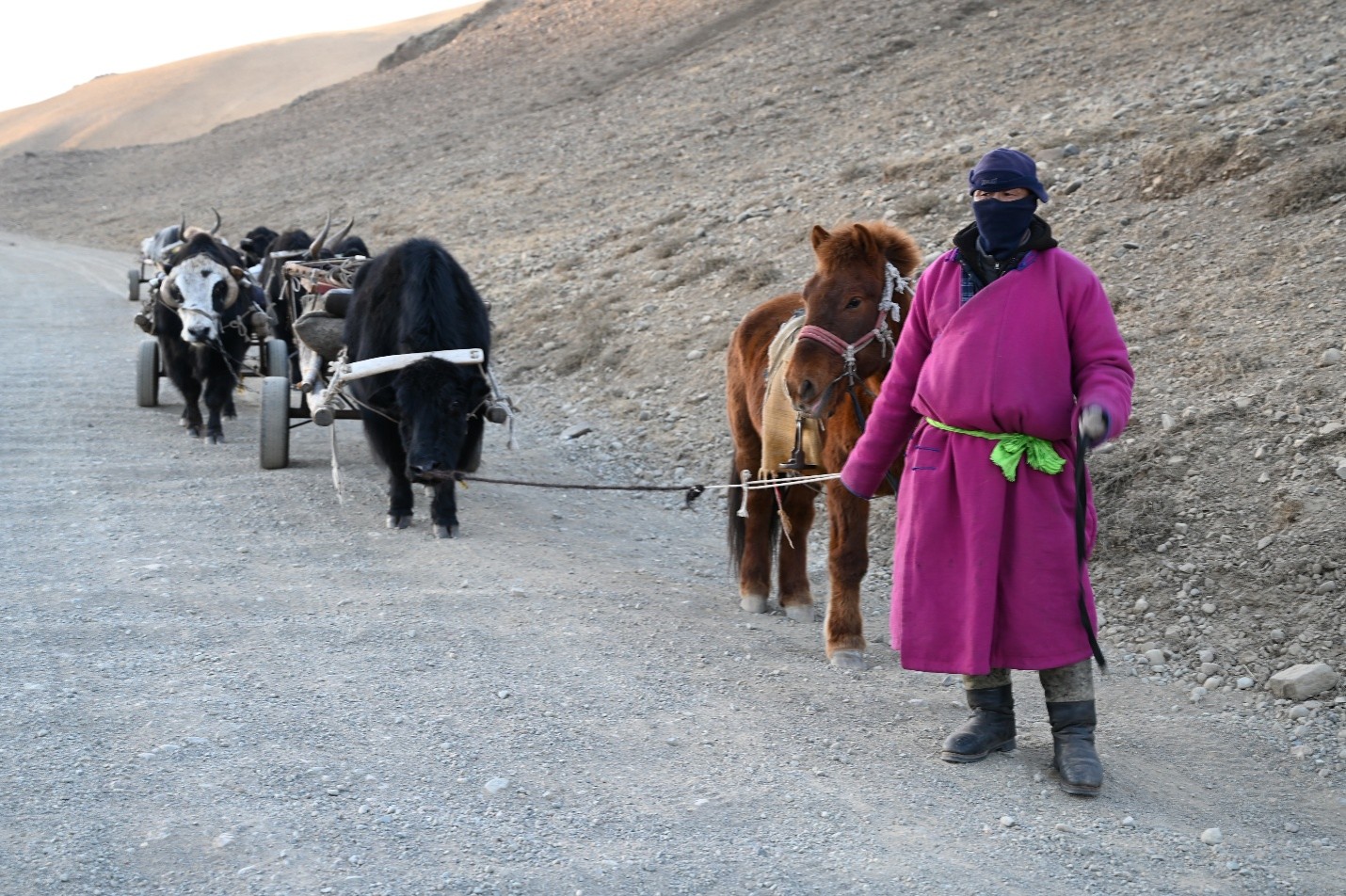
Livestock numbers are a central concern because increasing herd size has traditionally been an important means of increasing herder income, while placing additional pressure on rangelands. STREAM+ addresses this by focusing on higher productivity per animal rather than larger herds. In the beef value chain, crossbreeding is used to reduce the period cattle remain on pasture from about 31 months for native breeds to 18 months for crossbreeds, while maintaining comparable marketing weights. In the cashmere sector, community-based breeding seeks to improve cashmere quality and value without increasing goat numbers. Alongside livestock management, the project uses rangeland restoration and agroforestry to address degraded pasture, water resources and shifting sand, linking ecological restoration with herder livelihoods and agricultural production.
Main beneficiaries
The main beneficiaries are herders, livestock producers, and rural communities in Selenge, Khentii, and Khuvsgul aimags. Herders benefit from support to improve livestock productivity, beef and cashmere value chains, rangeland management, agroforestry and producer organization, while local communities benefit from restored pasture, protected water sources and diversified production opportunities. The project has also strengthened the capacity of local and provincial authorities, technical staff, and other stakeholders involved in land-use planning and rangeland management. More than 4,700 people have been trained through the project.
Strategy
Objectives
STREAM+ aims to improve livelihoods and ecosystem resilience through sustainable value chains and agroforestry, while reducing pressure on Mongolia’s rangelands. The project links livestock productivity with rangeland restoration, integrated landscape management and sustainable value chains so that herder incomes can improve without relying on continued increases in livestock numbers.
Specific objectives include:
- Restore degraded rangelands and ecosystems through reseeding, spring protection, water conservation and agroforestry.
- Reduce grazing pressure by improving livestock productivity and shortening the time animals remain on pasture.
- Develop sustainable beef and cashmere value chains that increase the value obtained per animal rather than increasing herd size.
- Strengthen integrated landscape management through provincial land management plans, Soum Territorial Development Plans and national rangeland monitoring.
- Develop agroforestry systems through tree planting, shelterbelts, irrigation, nurseries and deep wells.
- Strengthen local and government capacity to develop and implement land-management plans and improve multi-stakeholder governance.
Activities
STREAM+ supports integrated landscape management by working with government and local actors to develop provincial land management plans and Soum Territorial Development Plans that bring different land uses into a common planning framework. It also supports national rangeland monitoring and builds the capacity of local communities, government officials and technical personnel to prepare and implement land-management plans.
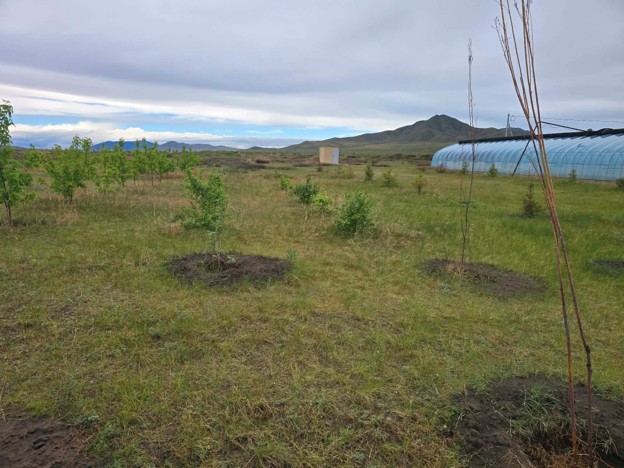
For ecosystem and rangeland restoration, activities include drone reseeding of degraded pasture, protection of springs, water conservation and beekeeping. The project also develops agroforestry systems through tree planting, shelterbelts, nurseries, irrigation systems and deep wells, including interventions in areas affected by shifting sand. Restored and protected areas are also used for crop production and haymaking for livestock feed.
In livestock production, STREAM+ works to increase productivity per animal and reduce pressure on pasture. The beef component uses artificial insemination and crossbreeding of native cattle with Red Angus, alongside fattening and sustainable beef value-chain development. The cashmere component supports community-based goat breeding and genetic improvement to improve cashmere quality and value without relying on larger goat herds.
The project also strengthens producer organization and sustainable value chains, connecting improved livestock and agroforestry production with processing and market opportunities. At the policy level, STREAM+ works within Mongolia’s land, forest, agriculture, food and geographical indication frameworks and supports dialogue on rangeland management, agroforestry and sustainable value-chain development. In preparation for UNCCD COP17, activities include preparation of the Rangeland Monitoring Report, field visits linked to the International Year of Rangelands and Pastoralists, and regional advocacy meetings.
Results
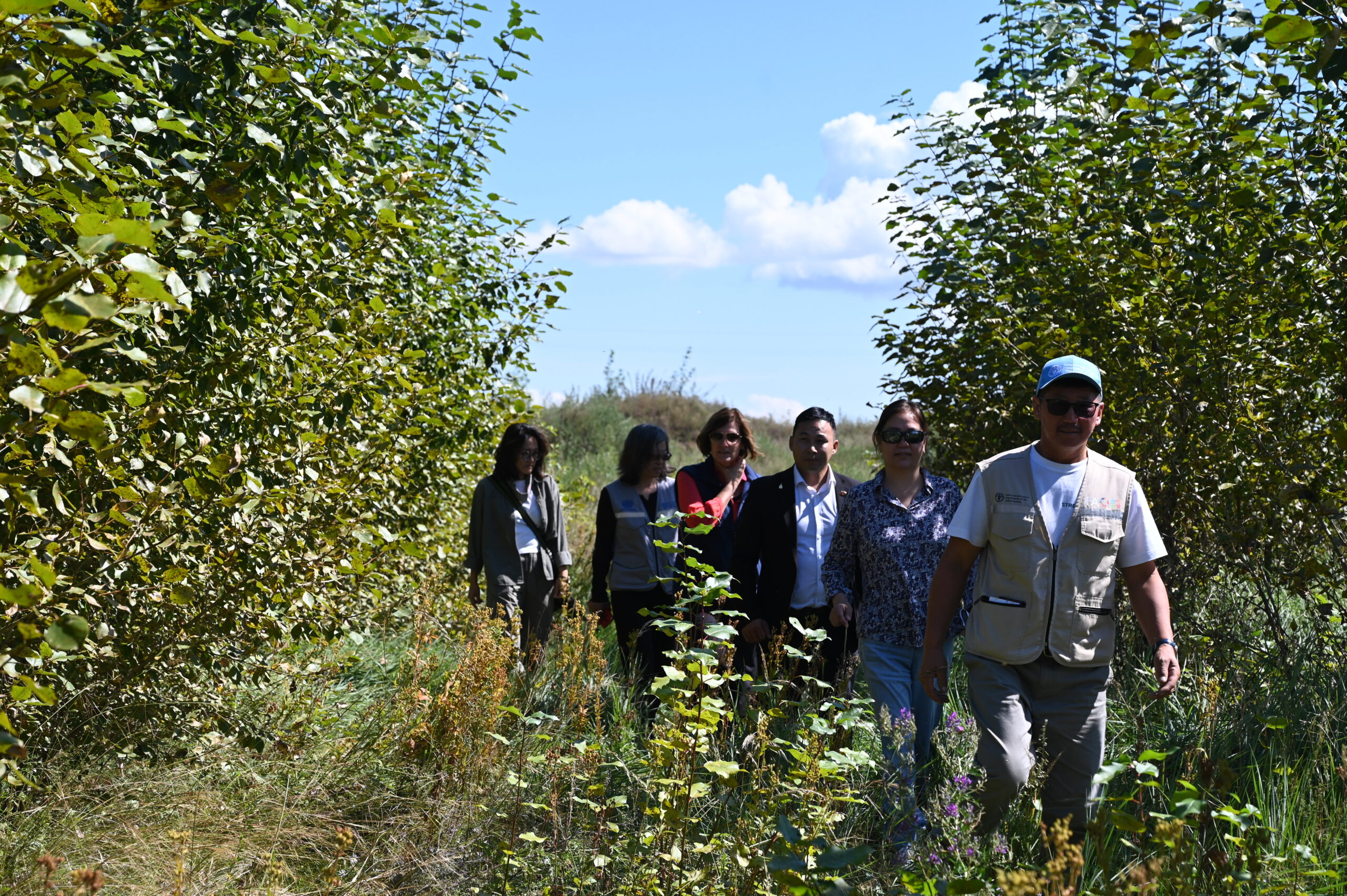
- STREAM+ has recorded results across rangeland restoration, livestock production, agroforestry, value chains and institutional capacity. More than 30 hectares of degraded rangeland have been reseeded, five springs protected, and about 30,000 trees planted, contributing to reduced grazing pressure and restoration of degraded areas. In agroforestry sites affected by shifting sand, tree planting and fencing have helped stop sand movement, while restored areas are being used for crop production and haymaking for livestock feed.
- In the beef value chain, Red Angus crossbreeding has reduced the marketing age of cattle from around 31 months for native breeds to 18 months for crossbreeds, cutting the time spent on pasture from approximately 930 to 540 days. Crossbred cattle reach a similar marketing weight while recording higher daily weight gain, providing a route to maintain production with less grazing time. In the cashmere value chain, community-based breeding has focused on improving cashmere quality and value while reducing reliance on increasing goat numbers.
- Agroforestry has also generated economic returns, with approximately MNT 1.1 billion in agroforestry sales, alongside the development of premium cashmere and export-ready products. Social and institutional results include the organization of herders into producer groups, strengthened local planning capacity, more than 4,700 people trained, and improved multi-stakeholder governance.
Lessons learned
The project showed that rangeland restoration at such a level cannot rely on reseeding alone. Mongolia’s rangelands have an estimated carrying capacity of about 25 million livestock, compared with more than 60 million currently grazing. STREAM+ therefore combines restoration with grazing rotation, resting of pasture, livestock management and land-use planning. Drone reseeding allows larger degraded areas to be covered at lower cost, using indigenous species such as alfalfa, clover and other locally occurring legumes, rather than introducing foreign species.
Another lesson was that reducing livestock numbers requires protecting herder incomes. Because livestock products are the main source of income for herders, reducing herd size without improving productivity is difficult. In the beef value chain, the project uses F1 Red Angus, a native cattle crosses that retain traits from local cattle while reaching about 340 kg in 15 to18 months, compared with around three years for native cattle. The crossbreeds require supplementary feed for part of the production cycle, but they reach market weight earlier and spend less time on pasture. The project limits the crossbreeding approach to F1 animals for production rather than further breeding.
The cashmere experience similarly showed that higher income does not have to come from increasing goat numbers. Community-based breeding focuses on improving the quality and value of cashmere so that herders can obtain better returns while maintaining or reducing herd sizes. This is important where growth in goat numbers has contributed to pressure on rangelands.
The experience also shows that integrated planning is important because pasture, livestock, water and crop production are interconnected. Moving away from separate plans for different land uses towards provincial and Soum-level integrated plans, together with rangeland monitoring, provides a basis for identifying degraded areas, organizing grazing rotation and deciding where restoration measures are needed.
Limiting barriers
The project operates within severe rangeland pressure and climate variability. Mongolia’s rangelands have an estimated carrying capacity of about 25 million livestock, while livestock numbers exceed 60 million. High stocking levels, combined with increasingly dry summers and harsh winters, contribute to pasture degradation and make livestock and crop production more difficult.
Reducing grazing pressure is complicated by herders’ dependence on livestock for income. Native breeds are well adapted to Mongolia’s climate but have relatively low productivity, encouraging reliance on larger herds. Crossbreeding can reach market weight earlier, but it requires supplementary feeding, adding costs for herders. Restoring degraded pasture is also difficult at Mongolia’s scale; conventional reseeding is costly, and recovery requires continued grazing rotation and pasture rest alongside reseeding.
Agroforestry faces additional constraints from low soil moisture, dry conditions, and wind erosion, especially in crop-producing areas. These conditions limit the types of trees that can be established and require locally adapted approaches, including berry trees and shelterbelts using species such as poplar and elm.
Looking ahead
Looking ahead to 2028, STREAM+ will continue to restore degraded rangelands while reducing livestock pressure, combining drone reseeding with indigenous species, grazing rotation, pasture resting, spring protection and water conservation. The livestock work will continue to focus on productivity and value per animal rather than increasing herd numbers, including improved beef production and community-based breeding for higher-quality cashmere. Agroforestry will remain an important area for expansion, especially in landscapes affected by wind erosion, low soil moisture and shifting sand. The project is building on the use of berry trees, shelterbelts, nurseries and locally suitable tree species, linking land restoration with berry production, improved pasture and hay production. This continues work initiated under STREAM, including agroforestry sites and shelterbelts established to address sand migration, soil erosion and land degradation. A further priority is to embed integrated landscape management more firmly in government planning. STREAM+ will continue supporting provincial land management plans, Soum Territorial Development Plans and national rangeland monitoring, alongside capacity development from community to ministerial level. This provides a route for moving tested approaches in rangeland restoration, agroforestry and grazing management into wider land-management practice.
Quotes of participants
If we don’t improve the productivity of our livestock and adjust herd numbers to the carrying capacity of the pasture, we have to move more frequently in search of better grazing. We are realizing that having fewer but more productive animals is more beneficial. We can also see for ourselves that crossbred animals are more productive.
I initially planted 108 trees here in memory of my mother. Later, the STREAM project helped us expand the site by planting more trees and developing it into an agroforestry area to stop the movement of sand. Today, the shifting sand has been stabilized, and the area has become a beautiful green space where we also grow fruits and berries. I am truly happy to see how this place has transformed and created a much better environment for our community.
Hyperlinks
Contact
Pictures credits: @Ichinnorov, STREAM+