
Vietnam
MEMBER OF THE AGROECOLOGY COALITION SINCE
National Agricultural Context

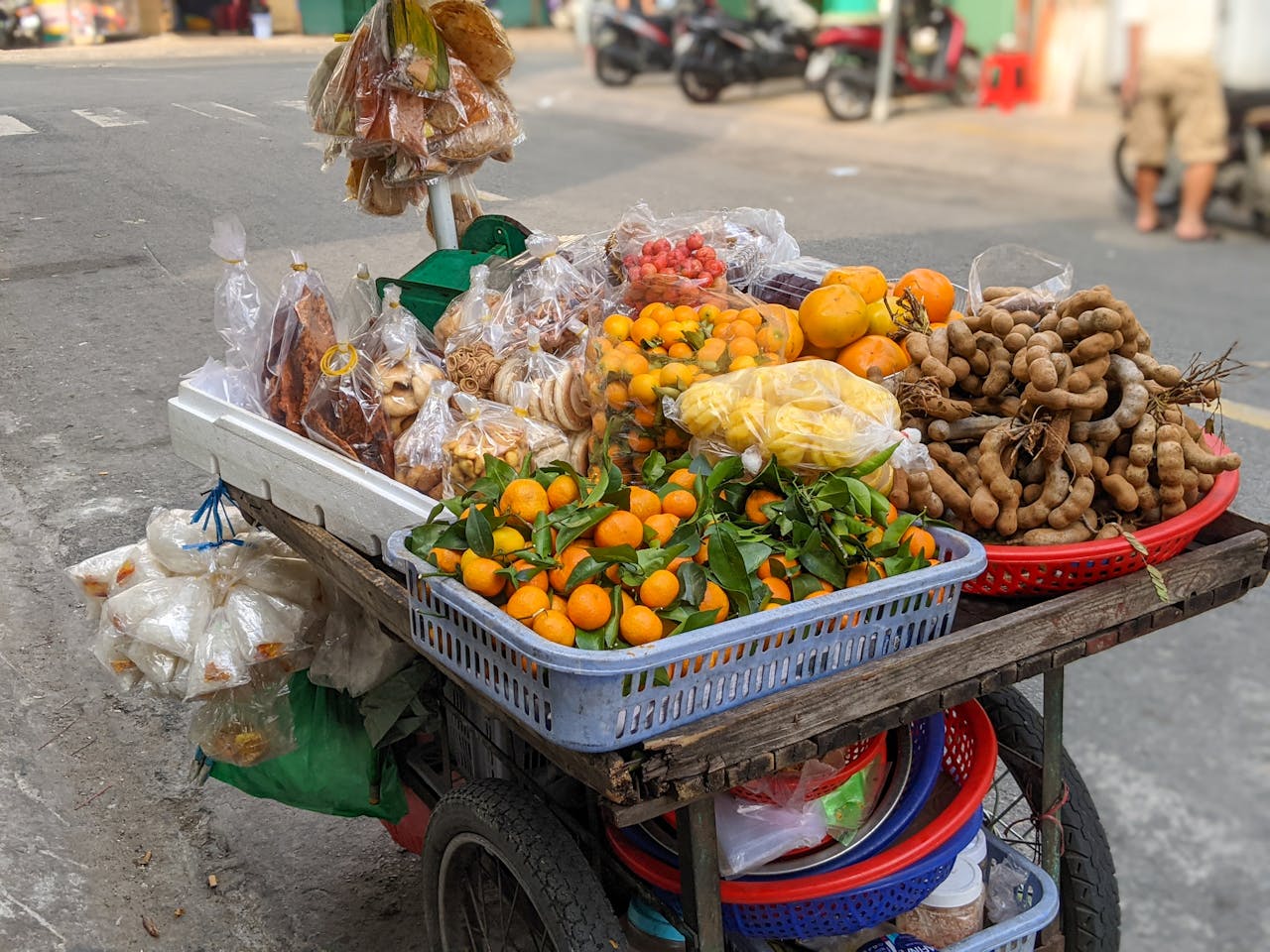
Vibrant Street Food Cart in Hue, Vietnam. Picture by Dan, Pexel.
us on sustainable practices, improved traceability, and reduced environmental impact.Photo by Đan from Pexels: https://www.pexels.com/photo/vibrant-street-food-cart-in-hue-vietnam-33180826. PicPhoto by Đan from Pexels: https://www.pexels.com/photo/vibrant-street-food-cart-in-hue-vietnam-33180826/Photo by Đan from Pexels: https://www.pexels.com/photo/vibrant-street-food-cart-in-hue-vietnam-33180826/Photo by Đan from Pexels: https://www.pexels.com/photo/vibrant-street-food-cart-in-hue-vietnam-33180826/Photo by Đan from Pexels: https://www.pexels.com/photo/vibrant-street-food-cart-in-hue-vietnam-33180826/
Food and agriculture policies strategies and laws
• Decision On Approval of the National Action Plan on Food Systems Transformation in Vietnam towards Transparency, Responsibility, and sustainability by 2030
Through this strategy, Vietnam aims to reshape the country’s food system toward transparency, responsibility, and sustainability. Closely tied to agroecology, the strategy seeks to enhance global competitiveness, ensure food safety, and improve livelihoods, especially in rural and disadvantaged areas. It promotes climate resilience, cultural identity, and alignment with the Sustainable Development Goals. Implementation involves multiple ministries and stakeholders, with a focus on sustainable practices, improved traceability, and reduced environmental impact.
Other relevant national policies/laws or strategies
• Vietnam’s National Strategy on Green Growth (2021-2030)
Vietnam’s Updated National Strategy on Green Growth (2021–2030) is a comprehensive policy framework aimed at transitioning the country toward a green and carbon-neutral economy. The strategy emphasizes economic restructuring, innovation, and sustainable development. It integrates climate action, digital transformation, and green infrastructure development, while promoting responsible lifestyles and environmental harmony. Key targets include reducing greenhouse gas emissions intensity by 15% by 2030 and 30% by 2050 compared to 2014 levels. The strategy also encourages private sector investment and modern governance to drive green growth.
• Emissions Trading Scheme (ETS) (Pilot Phase in 2025)
In June 2025, Vietnam launched the pilot phase of its first emissions trading scheme, targeting major carbon-emitting sectors such as steel, cement, and thermal power. This initiative is a significant step towards achieving net-zero emissions by 2050. While the scheme initially focuses on industrial sectors, its long-term implications for energy production and environmental policies could indirectly influence agricultural practices and food systems through changes in energy costs and environmental regulations.
International commitments of relevance to agroecology
• National Food Systems Pathway:
In Vietnam’s National Food Systems Pathway transforming the food systems is associated with agroecology development, improving competitiveness, strengthening resilience to shocks and contributing to enhancing the reputation of Vietnamese agricultural products globally. This is mentioned as strictly linked to conducting research on mechanization suitable to promote agroecology and integrating it with other low emission agriculture practices in value chain linkages. The pathway envisages as outputs for 2023-25 the adoption of new policies on agroecology and low emission agriculture. While as outputs for 2023-30 technical regulations, standards and guidelines of agroecology and low-emission agriculture are envisaged. Mention is also made for research and development models on varieties and technical measures for crops, livestock, fisheries, and mechanization for agroecology. Training materials on techniques to respond to climate change, disaster risk reduction and agroecology are identified as further knowledge resources to be developed and disseminated.
• Land Degradation Neutrality:
While it does not mention agroecology specifically it still mentions the launch of the country’s National Organic Agriculture Program (NOAP) through which Vietnam plans to accelerate the widespread implementation of organic agriculture while positioning itself as a major contributor to the targets of NAP – DLDD.
|
Agricultural Production |
Ecological Indicators |
||
|
Institutional & Economic Agricultural Context |
Agrobiodiversity & Sustainable Practices |
||
|
Ministry in charge of food system/ agriculture |
Federal Ministry of Agriculture and Forestry, Climate and Environmental Protection, Regions and Water Management (BMLUK) |
61.1 ABDI1
|
|
|
4.7% |
39.2 ABDI |
||
|
31.5% |
48.6 ABDI |
||
|
1.2% |
N/A |
||
|
3.1% |
27.24% |
||
|
Male: 61.0% |
Energy & Resource Efficiency |
||
|
Female: 39.0% |
19.6% |
||
|
Agricultural Production Outputs |
Water |
||
|
Sugar beet: 2.68 |
0.10 million ha |
||
|
Maize: 2.11 |
77.70 10^9 m3/year |
||
|
Wheat: 1.74 |
157.37 USD/m³ |
||
|
Forests |
|||
|
Barley: 0.77 |
47.2 % |
||
|
Potatoes: 0.59 |
2.82 (1000ha/year) |
||
|
Livestock Emissions Intensities |
|||
|
Meat, pig: 0.45
|
13.8292 kg CO2eq/kg |
||
|
Protected Areas & Conservation |
|||
|
Meat, cattle: 0.20 |
1678 |
||
|
Meat, chicken: 0.13 |
29.63% |
||
|
Other: 0.03 |
0% |
||
|
Climatic conditions 1991-2020 |
|||
|
-5.07 |
|||
|
22.01 C |
|||
|
139.22 mm |
|||
|
Further statistics for open consultation from national resources |
|||
Ongoing Programs/Projects Related to Agroecology
Recent News and Innovations
Agroecology Coalition member organizations in Vietnam
Member organizations with headquarters in Vietnam:
- Plant Resources Center (PRC)
Other member organizations operating with/in Vietnam
- Alliance of Bioversity International and CIAT
- Asian Farmers’ Association for Sustainable Rural Development
- Asian Partnership for the Development of Human Resources in Rural Areas (AsiaDHRRA)
- CBD Secretariat
- CIFOR-ICRAF
- Rainforest Alliance
- SNV
- United Nations Development Programme (UNDP)
- United Nations Environmental Programme (UNEP)
- United Nations Food and Agriculture Organization (FAO)
- United Nations International Fund for Agricultural Development (IFAD)
- United Nations World Food Programme (WFP)
Further resources on agroecology in Vietnam
Send us your feedback
Do you want to send any suggestion or feedback about the information in this page?
Vietnam's Blog
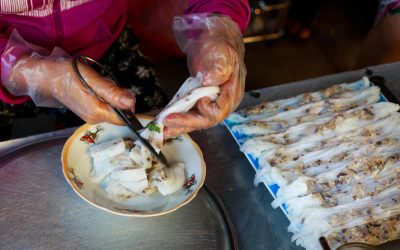
Nutrition and agroecology in Vietnam
Photo by Quang Nguyen VinhVietnam, a member of the Agroecology Coalition, is undergoing a significant transformation in its food system. Faced with a growing urban population and climate change impacts, the country is shifting away from an agri-food systems which is...