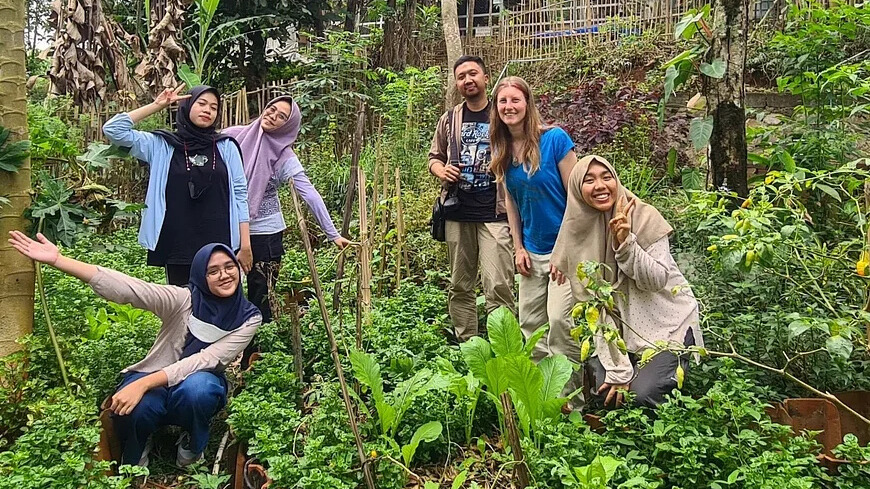
Photo: Kebun Hanif Regenerative Culture, Indonesia
This article was first published in May 2025 and was last updated in May 2026.
Youth organizations are among the members of the Agroecology Coalition. We are delighted to have them with us and to have the opportunity to listen to their voices and innovative ideas. These youth organizations are based all over the world—some have a global or regional focus, while the majority are based in African countries.
Discover more about our youth-led organisations and organisations with youth-oriented initiatives!
Global:
The International Student One Health Alliance (ISOHA) is a global network that unites student organizations, One Health clubs, and students across all academic levels to provide education, collaboration, and opportunities in this field through partnerships and joint initiatives. One Health (OH) emphasizes the interconnectedness of animal, human, and plant health within a shared environment, addressing issues such as zoonotic and emerging diseases, antimicrobial resistance, ecosystem health, and the human–animal bond. ISOHA also organizes conferences and events that foster knowledge exchange and strengthen global collaboration in advancing One Health principles.
- RAISE Consortium (India, Nepal, Kenya, Niger, Mali, Burkina Faso and South Africa)
The RAISE Consortium was launched in January 2022 to support the agroecological transition and implement the rights of peasants. RAISE’s partners focus on agroecology, right to food, right to seed, right to land, and effective participation of peasants, especially women, youth and children.
In South Asia, children and youth from rural communities actively participate in agroecological transformation. It focuses on raising awareness and strengthening the capacities of children and youth in forging a relationship between agroecology and the realisation of peasants’ aspirations throughout the entire food system. Discover more in our case study page!
YPARD actively promotes agroecology by equipping young professionals to lead sustainable food system transformations at both grassroots and policy levels. A key example is YPARD’s involvement in the Global Program for Smallholder Agroecological Producers and Sustainable Food Systems Transformation (GP-SAEP), which supports agroecological transitions for smallholder farmers across Africa and Latin America through 20 “Agroecology Fellows” who act as bridge between farmers and extension services.
The Fellows organize YPARD Cafes — dynamic youth-led knowledge exchange events that bring together farmers, agronomists, policymakers, and local enterprises. Such events focus on different topics such as strengthening farmer capacities in ecological techniques like biological pest control, vermicompost production, and agroforestry while demonstrating successful, locally adapted agroecological innovations. These efforts not only highlight the transformative potential of agroecology but also underscore the impact of young professionals in shaping sustainable food systems.
Africa:
The organization strives to have an economically empowered and enlightened community that works together to alleviate poverty and promote sustainable, healthy lifestyles for vulnerable children, youth and women. It has trained 520 youth on sustainable employment.
- Agri-Youth Forum (Tanzania)
Agri – Youth Forum is a Tanzania based youth-led organization dedicated to empowering youth and women through training, innovation, and policy advocacy for sustainable agricultural development. The organization participates in capacity-building initiatives, including workshops on tax justice, domestic resource mobilization, and combating illicit financial flows, aimed at developing trainers and advocates. Additionally, Agri- Youth Forum highlights and supports the critical role of women in agriculture, advocating for their recognition and addressing challenges such as land access, financing, and market inclusion.
AJDC-RDC prevents child recruitment into armed groups and supports the reintegration of ex-combatant youth through education, vocational training, and economic support. Sustainable agricultural practices are part of their reintegration programs. They are active in Democratic Republic of Congo, particularly in the South Kivu region.
The Association des Jeunes Agriculteurs du Mali (AJAM) focuses on training young farmers in sustainable and innovative agricultural practices while strengthening food security through community gardens and improved nutrition. It promotes solutions to reduce food waste, including composting and redistribution, and advocates for supportive agricultural policies by engaging with policymakers. The association also encourages community development by fostering networking and shared learning among young farmers to tackle common challenges.
The association aims to offer education and training opportunities to children living in the street in Togo. Among the education and activities offered, many of them have the focus on biodiversity conservation, eco-volunteering and climate awareness.
- Chitipa Youth Agroecology Initiative (Malawi)
The organization aims to engage youth in agroecological practices to enhance food security and environmental sustainability. The initiative promotes sustainable farming techniques, organic agriculture, and environmental conservation among youth in Chitipa District in Malawi.
- Community Water & Environmental Association (COWEA) (Tanzania)
Community Water and Environmental Association is a youth-led civil society organization based in Tanzania. Key topics covered by COWEA include agroecological farming practices (e.g. permaculture, organic, agroforestry, biodynamic), gender, and youth. COWEA addresses these key topics through activities such as capacity building, training, advocacy, and policy development.
- ECO-IMPACT Sénégal (Sénégal)
ECO-IMPACT Sénégal is an organization committed to environmental protection and community resilience, promoting sustainability, inclusion, and collaboration. It raises awareness, trains, and mobilizes local stakeholders (particularly youth) while advancing agroecology, biodiversity conservation, and eco-friendly practices through innovative projects tailored to Senegal’s environmental and socio-economic context. The organization also actively engages young people through capacity-building initiatives and regularly hosts webinars to share knowledge and foster environmental action.
Gayo is dedicated to empowering 850,000 youths by positioning young people and women at the forefront of sustainable agriculture, food systems transformation and community development.
On August 8, 2024, GAYO launched a new project titled “Agroecology for Climate Resilience at Household Level.” The project focuses on two key objectives:
- Spreading and deepening agroecological practices among 300 women and 100 youths in the Kanakantapa area of Chongwe district (Zambia).
- Demonstrating the benefits of agroecological transitioning to smallholder farmers.
The training focuses on equipping women and youths with essential skills in agroecology. After completing the training, participants will establish agroecology gardens at the Green Innovation Hub in Kanakantapa.
- Green Harvest International (Rwanda)
Green Harvest Initiative (GHI) is a Rwanda-based, youth-led organization founded in 2025 that promotes sustainable agriculture, climate resilience, and inclusive development in rural farming communities. Its mission is to empower smallholder farmers—especially youth, women, and persons with disabilities—to adopt sustainable practices, strengthen food security, and build resilient livelihoods. GHI’s work spans across topics such as environmental protection, climate resilience, sustainable impact, green innovation, livestock capacity building, nutrition, gender equality and social inclusion.
- KAYESE Community Organisation (Uganda)
KAYESE Community Organisation, based in Uganda, is dedicated to advancing integrated community development, livelihood promotion, and sustainable natural resource management, with a vision of a dignified Karamoja community capable of securing livelihoods, maintaining peace, and protecting the environment. Through partnerships with organizations such as Advocates for Natural Resources and Development (ANARDE) and Advocats Sans Frontières (ASF), KAYESE Community Organisation works to defend the rights of communities in mining hotspots in Moroto, advocating for safe extraction practices, equitable benefit-sharing, and stronger protections for affected communities. They focus on conserving biodiversity and the most important natural habitats while promoting climate change adaptation and mitigation, sustainable tourism and agro-tourism, and stronger livelihood resilience to help communities withstand environmental and economic challenges. They also work with youth, women, and indigenous people to advocate for human rights and inclusive development that strengthens the connection between people and nature.
- TUSHIRIKI (Tanzania)
TUSHIRIKI is a youth-led civil society organization founded by the local community of Mbeya district in Mbeya Region in Tanzania. TUSHIKIRI is dedicated to empowering underserved communities by bringing people together to actively participate in their own development. The organization works to promote collective efforts in addressing poverty, strengthening good governance, advancing gender equality, improving education policies, supporting agroecological farming practices (such as permaculture, organic, agroforestry, biodynamic), promoting privacy-enhancing technologies and stray animal management initiatives, protecting the environment, addressing community health challenges, improving nutrition and hygiene, defending human rights, and ensuring access to clean water.
- Young Farmers Club Fulafia (Nigeria)
The Young Farmers Club Fulafia, a youth-driven group at Federal University Lafia in Nigeria, is actively tackling hunger, climate change, and water challenges while promoting agricultural discipline among students and staff. Reinforcing a strong partnership between the student body and faculty leadership, the club continues to lead agricultural advancement on campus. Its president, Mark Vincent Oba, recently announced key initiatives including the Green Fulafia Project, fodder production, hydroponics, and agribusiness training, with sessions led by professors from Fulafia and ABU Zaria alongside industry experts from Tanzania and Zambia, focusing on production, value addition, marketing, and networking.
Young Indigenous Leaders for Nature and Climate (YILNAC Network) is an Indigenous African youth-led non-profit that mobilizes, educates, and empowers young Indigenous leaders and grassroots organizations to develop and share nature-based solutions to climate and ecological crises. Centering Indigenous knowledge, rights, and traditional livelihoods, the network supports research, capacity building, and strategic action while amplifying youth voices and stewardship of land and water. Guided by principles of free, prior, and informed consent and self-determination, YILNAC works to advance climate justice and inspire a new generation of Indigenous climate leaders grounded in their cultures and communities. Their agroecology activities are linked to reforestation and forest protection, biodiversity protection, climate and ecological literacy.
They are active in Democratic Republic of Congo,
- Young Volunteers for Environment Zimbabwe (Zimbabwe)
Young Volunteers for Environment Zimbabwe provides youth-led action for sustainable development and provision of an advocacy platform for meaningful environmental action in Zimbabwe. They aim to develop youth leadership skills by providing mentorship, training, and opportunities for youth empowerment and engagement in decision-making processes.
The group advocates for inclusive and sustainable development policies, focusing on youth participation.
YILAA is a network of 25 countries with offices in Benin, Senegal, Nigeria, Kenya and Canada. YILAA aims to promote the rights of young people and women and value their potential for land governance. They support training and research for young people in the land sector. The right to land is linked to agroecological principles. The network defends modern and customary land rights of young people and make reliable and transparent information available to organizations for decision-making through studies, data collection and research relating to young people’s access to land.
They also organize the CIGoFA (International youth and land conference in Africa), the most recent one took place in October 2024 in Arusha (Tanzania)
Arab World:
They are the first rural youth cooperative for agricultural development in Yemen. Their goal is to empower rural youth by providing training and development programs that enhance their agricultural skills and contribute to the sustainable development of rural communities. Free training courses include organic farming, water resources management, and crop productivity improvement.
Asia:
Krishi Updates is a digital agriculture platform that provides open-access ICT infrastructure to support collaborative knowledge sharing and skill development through blended learning. Designed to address limited digital capacity and infrastructure in food systems, particularly among marginalized rural communities, it focuses on improving access to agricultural education in the Himalayan region. Successfully piloted in Himachal Pradesh, India, the Krishi Updates Digital Agriculture model has delivered promising results, demonstrating its potential to effectively reach and upskill rural populations.
- Youth for Agricultural Development (YAD) (Pakistan)
YAD Pakistan is a youth-led civil society initiative based in Quetta, with a core of volunteers coming from different districts of Baluchistan. Using art to raise awareness, YAD advocates for a human rights-based, participatory and multi-sectoral development approach to long-term change and sustainable development . It aims to empower youth through education, vocational training, and community development initiatives.
Europe:
Part of Agroecology Europe association, the youth network focuses on advancing agroecological practices and policies among European youth, aiming to create resilient and sustainable food systems.