
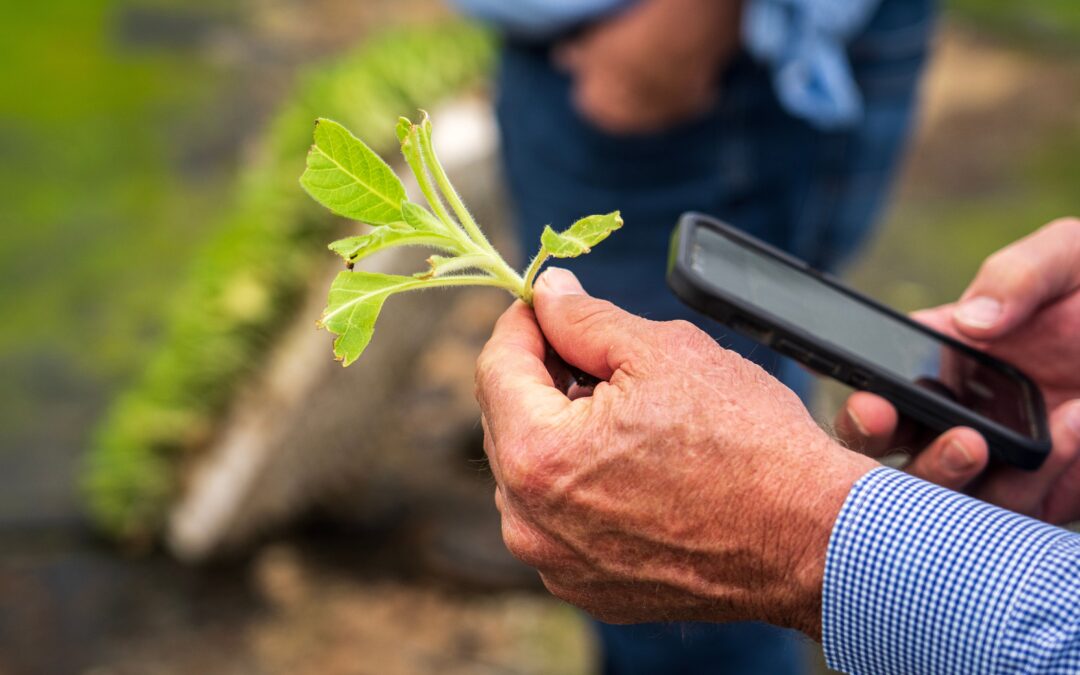
Agroecology is a farming system that relies on farmers’ innovation. Indigenous knowledge feeds agroecology, and thanks to that precious knowledge it has been able to constantly adapt and evolve. Now artificial intelligence (AI) is rapidly entering agriculture, but the question is not simply whether farmers should adopt it.
A webinar organized by the Agroecology Coalition on 16th September 2026 brought together experts and practitioners in food security, agroecology, farmer-led innovation, agricultural data governance and digitalization to discuss fundamental questions such as: who will shape the technologies, data and rules that determine if and how artificial intelligence is used in food and farming? How does that fit in a field where innovation has already been present and evolved dynamically with the communities?
Artificial intelligence for whom?
Evan Fraser, a member of the Steering Committee of the Committee on World Food Security’s High-Level Panel of Experts on Food Security and Nutrition (HLPE-FSN), referred to the background note: Harnessing AI, Digitalization and Data Governance for Food Security and Nutrition (June 2026). He explained that AI could support early-warning systems, precision agriculture, supply-chain management, and food-security decision-making. However, significant risks accompany these opportunities, such as the environmental costs of data centers, the concentration of technological power, loss of data sovereignty, extraction of community data without fair benefit-sharing, and biased or inappropriate AI outputs.
Fraser also highlighted a striking investment imbalance. Estimates suggest that around $6.7 trillion could be invested in AI data centers by 2030, compared with a United Nations estimate of approximately $300 billion needed to end hunger by 2030. This raises questions about where technological investment is directed and whether it is reaching the communities facing the greatest food-security challenges. There is also a fundamental data problem. Food-insecure regions often overlap with “data deserts”: places where there is insufficient high-quality, locally relevant data to train effective AI systems. The communities that could benefit most from AI may therefore be the least well served by current technologies.
But the costs are not only financial. Fraser also referred to the environmental costs of AI. The HLPE-FSN note documents that a single ChatGPT query consumes roughly 25 times more energy than a Google search, and that data centers accounted for around 1.5% of global electricity consumption in 2024 — a figure expected to double by 2030.
The conclusion is clear: not all AI is the same. The HLPE-FSN note distinguishes between specific-purpose AI — local, low-cost, controllable, deployable offline — and generalist AI, which is centralised, energy-intensive and prone to hallucinations. In low-resource contexts, the former deserves priority. This distinction matters because it shifts the debate from ‘should we adopt AI?’ to ‘which AI, for what purpose, and under whose control?
Data as a source of power
Lim Li Ching, co-Chair of IPES-Food, referred to the report “Head in the Cloud”. She emphasized that the central issue is who controls technology, data and the direction of innovation.
Digital agriculture is increasingly connected to large technology and agricultural corporations. Farm and community data can be collected, combined and processed through AI, creating new commercial services but potentially increasing farmers’ dependence on systems they do not control. Among the risks she identified are greater corporate concentration, technological dependency, new forms of data extractivism and the reproduction of existing inequalities between the Global North and Global South.
For agroecology, the alternative is not necessarily to reject technology. Instead, innovation should build on the knowledge, priorities and capacities of farmers, Indigenous Peoples and local communities. She also stressed the importance of including women and youth in the design and governance of these technologies, ensuring that innovation does not reproduce existing inequalities.
Farmers are already innovators
Brigid Letty of Prolinnova stressed that innovation does not have to mean sophisticated technology. Farmers and communities are already developing solutions using local knowledge and resources. Prolinnova’s approach to local innovation starts with what farmers are already doing. Through co-innovation, farmers work alongside researchers, engineers and extension workers to improve existing solutions rather than simply adopting technologies developed elsewhere. This approach reflects agroecological principles of fairness, knowledge co-creation and horizontal knowledge sharing. AI could potentially support farmers through plant-disease diagnosis, drought and weather warnings, hailstorm alerts and locally relevant agricultural advice. But such tools need reliable, locally relevant information. She also highlighted the importance of attribution. If an AI system identifies or reproduces an innovation developed by a farmer, the origin of that knowledge should not disappear. Questions of intellectual property, recognition, consent and benefit-sharing therefore need to be addressed from the beginning.
Data self-determination
Laura Staudenmann (agridata.ch) presented Switzerland’s project agridata.ch as an example of an approach on trustworthy agricultural data infrastructure. Agridata distinguishes between open data (e.g.: weather and geographic information) and protected data requiring controlled access. Rather than creating one centralized database, the project connects existing systems so information can be exchanged while data remains within its original systems. At the center of the agridata.ch approach is digital self-determination. Farmers should know what data is being shared, consent to its exchange, retain control over their information, and participate in designing the system.
Start with the farmer’s problem
Marcelo Soares Souza of Agroecology Map argued that technology development should begin with a simple question: What problem are we trying to solve? A farmer may need help diagnosing a crop disease. A cooperative may need to organize seed knowledge. An extension worker may need to search for technical documents. A community may want to preserve its knowledge. AI may be useful for some of these challenges, but not necessarily all. Sometimes a database, mobile application, community radio, or face-to-face extension may be more appropriate. Marcelo Souza favors smaller, specialized, and transparent systems. Agroecology Map is experimenting with retrieval-augmented generation (RAG), where an AI system searches a curated collection of agroecological publications and generates answers based on those sources. Users can see the sources and verify the information. He also stressed that not all knowledge should automatically be digitalized. Indigenous and traditional knowledge is often passed on through oral traditions, stories and practice. Communities should have a say in what knowledge is shared.
A public-sector example from Mexico
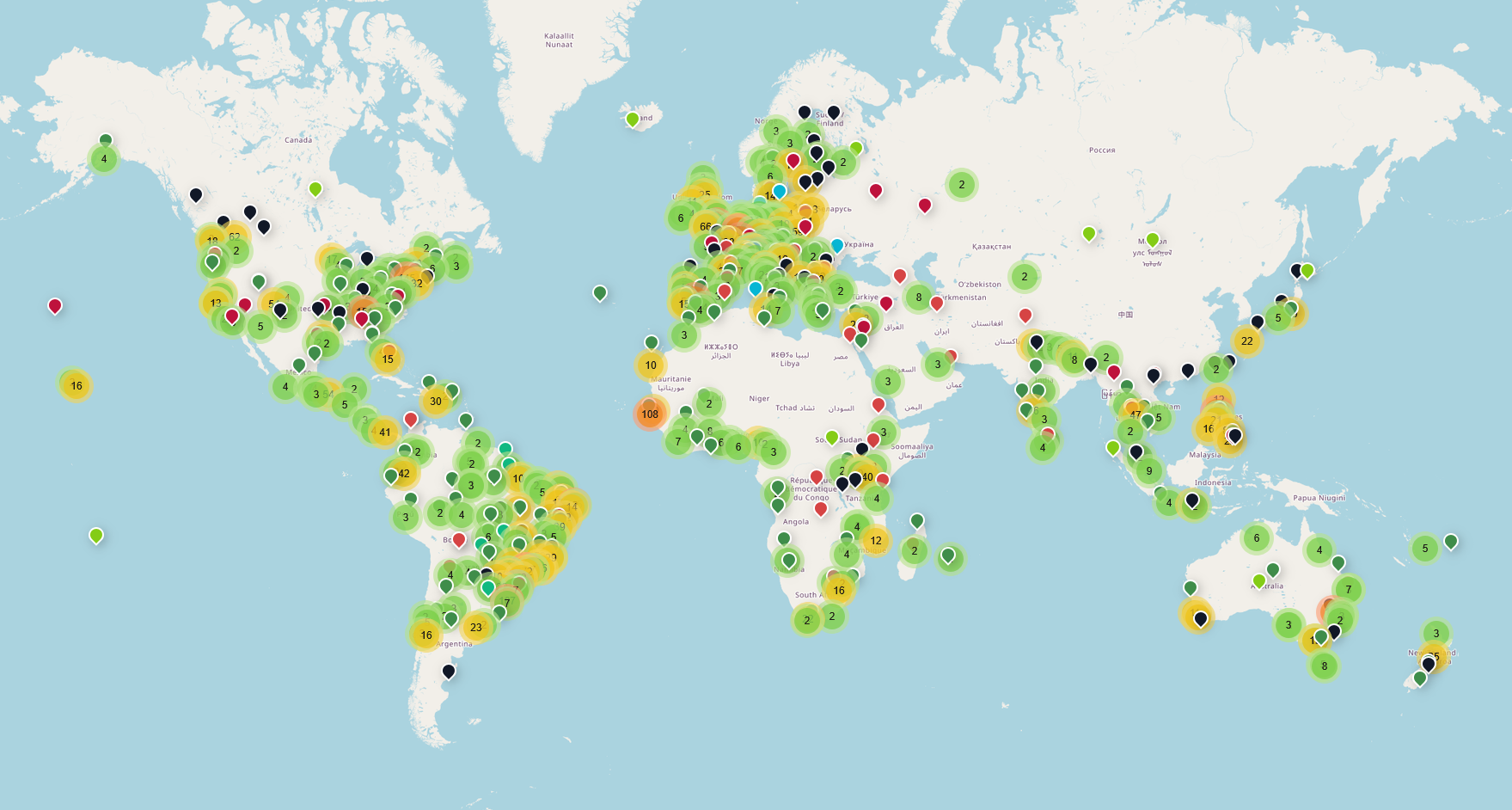
Demian Vázquez from Mexico’s Agri-food and Fisheries Information Service (SIAP), Secretary of Agriculture, presented an operational example of AI and agricultural data.
Mexico already holds extensive information on farmers, agricultural programs, crops, geographic areas, satellite imagery, climate, seeds and fertilizers. The challenge is connecting this information and turning it into useful services for producers.
The Mexican approach uses data, AI and satellite imagery to move toward more precise information at the parcel level. Potential services could provide farmers with crop information, pest and disease alerts, weather information, agricultural recommendations, and information about relevant government programs.
Vázquez emphasized that these tools should complement rather than replace human agricultural extension. He stressed the need to adapt models to Mexico’s diverse agricultural conditions and to protect personal information. But perhaps more importantly, his approach reflects a deeper principle: sitting with the people, with Indigenous communities, with farmers, as equals — not designing tools for them,
The webinar is part of a broader process. In October 2026, during the 54th CFS Plenary, two side events will take up these themes: ‘Food Systems in the Digital Age: Governance, Equity and Emerging Dependencies’ and ‘From evidence to action: policy-practitioner dialogue on inclusive innovation and digital transformation for resilient agrifood systems’. Both will explore how the CFS can ensure that innovation serves sustainable, resilient and equitable food systems.
These reflections also connect to the fourth HLPE-FSN note on Critical, Emerging and Enduring Issues (September 2026), which identifies AI and digital innovation as one of ten interconnected issues shaping the future of food security. The note highlights at least 45 interrelationships among these issues, clustered around three areas: planet, people and power.
The closing reflections, presented by Cecilia Elizondo, Co-facilitator of the Research, Education and Innovation Working Group of the Agroecology Coalition, highlighted some key lessons:
- Not all AI is the same: small, local and purpose-specific systems can have very different implications from centralized, general-purpose AI.
- Local knowledge is dynamic: AI should support farmers’ innovation rather than freeze historical knowledge or replace it.
- Data governance matters as much as technology: ownership, control, consent and benefit-sharing are fundamental.
- Digitalization is not always the answer: community radio, farmer assemblies, and face-to-face extension may sometimes be more effective and equitable.
- Language matters. AI systems often perform poorly in languages spoken in food-insecure regions, making investment in local-language data and models important.